A Front-Row Look at the Dramatic River Crossings in the Northern Serengeti Safari
 Posted on January 9, 2026 by kingsesafaris
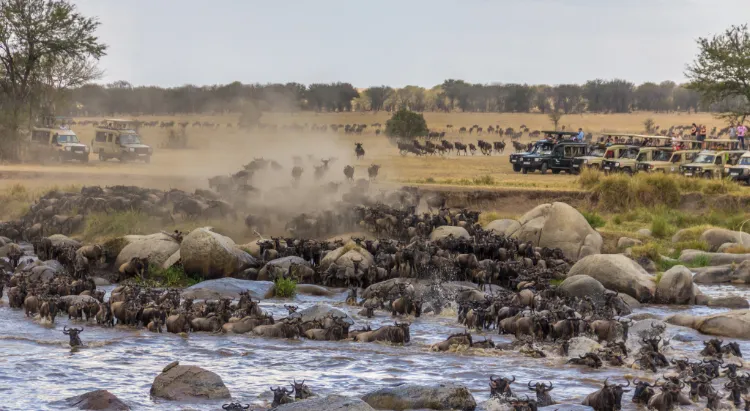
Across the Northern Serengeti, time seems to stop. Millions of wildebeests stand shoulder-to-shoulder; their immense numbers are a pure sign of instinct, yet a single wrong movement means absolute disaster down below. This high tension and this ultimate chance they must take are the central events that define the Northern Serengeti Safari. It guarantees an unforgettable Tanzania Safari Experience.
This event is why so many people book a Tanzania Safari to see survival played out near the northern edge of Serengeti National Park. There we wait together, hoping to see one of the famous Mara River Crossings.
Why River Jumps Are So Amazing
To truly see why these moments grab attention so much, we need to look at the drama involved. The animals face something truly terrifying: jumping into deep, fast water that hides huge, wild hunter crocodiles. Fear is definitely there in the animals that lead the group, causing them to stop and think.
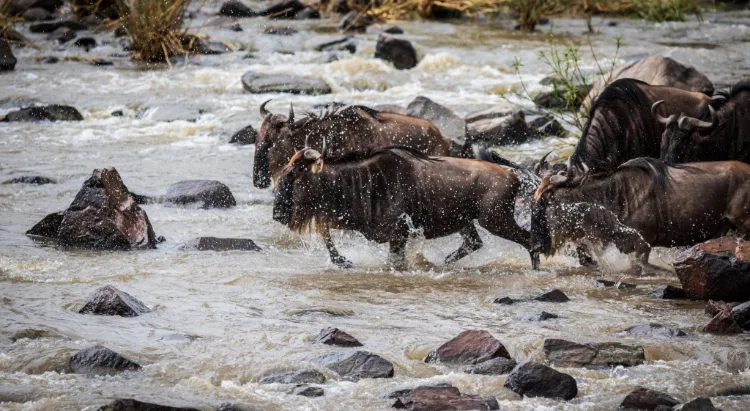
But then, the very strong pull of their natural urge, plus all the pressure from millions of animals behind them, forces them toward the water. Because of this, we can never guess exactly when a crossing will start. One minute, it is calm, and the next, the entire mass rushes forward like a tide of desperate energy.
Also, these waters hold some of the biggest crocodiles on earth. These patient hunters know exactly when and where the herds gather. They wait without moving under the surface, becoming almost impossible to see until the moment prey steps into the water. This never-ending, hidden danger makes every crossing attempt a life-and-death fight.
These Great Migration Crossings are not just something nice to see on a trip; they are battles for life fought only by instinct and need. When you book a Tanzania Safari Tour hoping to catch this sight, you must be ready for long waits broken up by unbelievably fast action. This raw urgency is what makes the Wildebeest River Crossings, Tanzania, such a lasting memory. Every experience in these Tanzania Destinations is exceptional, but this is pure drama.
What Makes the Herd Jump the River
So, how does such a giant group of animals decide that today is the right day to risk going into the river? The choice seems to come from several things working together, all pointing toward needing food right now.
Mostly, changes in the weather guide them. If the grass right across the Mara River looks greener and better fed because of rain that fell only on that side, the herds sense this difference very quickly. This tells them that better food waits just on the other bank.
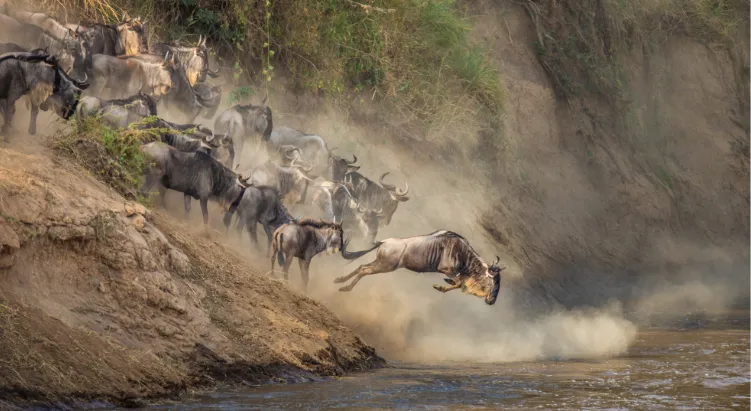
On top of that, the pressure from inside the herd acts like a natural push button. As more and more animals arrive at the crossing spot, the area gets crowded. Those animals at the back, desperate to move ahead and find food, eventually push the animals at the front past their point of doubt.
Therefore, the need to move forward becomes an unstoppable push. When movement becomes certain, the need to find fresh grass north of the river acts as the final tug. This need wins out over the very real danger hiding in the water. This tricky mix of fear, outside conditions, and group pressure decides the exact second the Great Migration Crossings begin.
Visitors seeking this view should check Tanzania Weather reports carefully, since the weather indirectly controls these starting times. Getting good Tanzania Travel Guides helps explain these patterns.
Where Crossings Happen Along the Mara River
The Mara River flows along the northern boundary of Serengeti National Park, sometimes serving as a natural boundary. While the huge herds cross in many spots, certain areas become much better known for these wild events.
Key crossing spots are often found near river curves or where the banks allow animals to step in more easily for the first time. We usually talk about these wider zones only, because the exact spots change every year based on where park staff are keeping visitors safe and what the grass looks like.
Also, the actual shape of the land plays a big role in how much observers can see. If the riverbanks are steep and muddy, people watching from higher ground might not see the initial entry clearly. However, if the areas are flatter and more open, the whole rush can unfold clearly before your eyes.
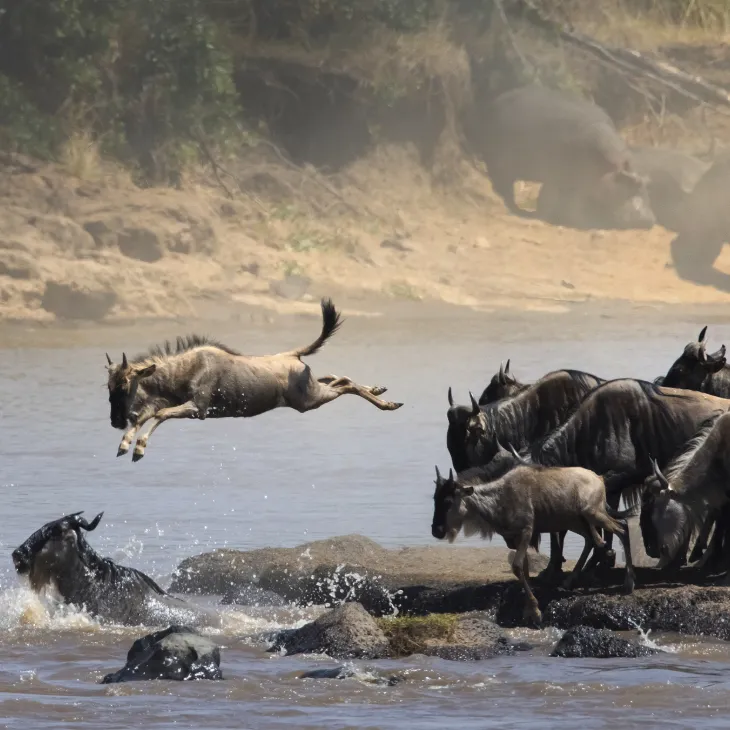
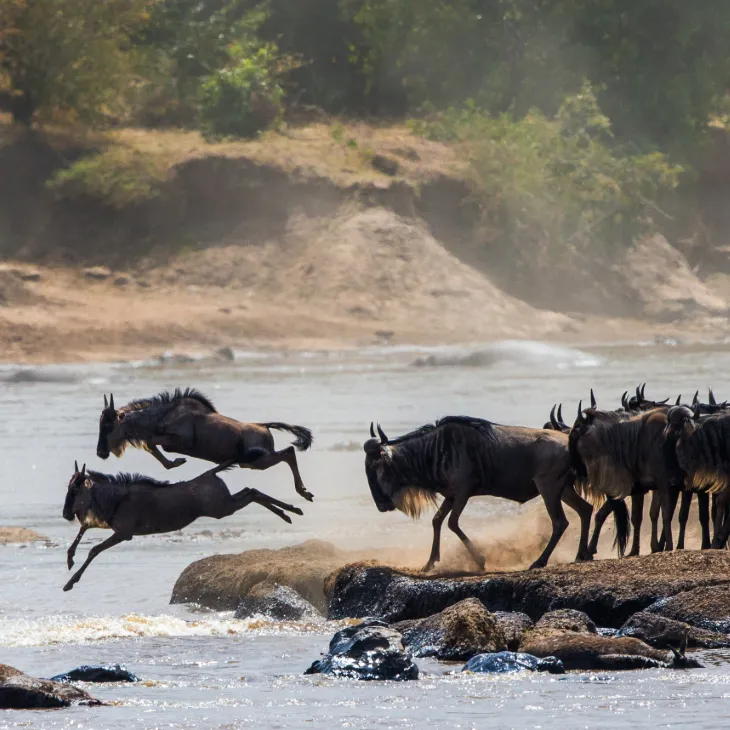
Good Northern Tanzania Safaris guides normally use their current knowledge to place you safely and ethically near known crossing zones. This maximizes your chance to see real Wildebeest River Crossings in Tanzania without upsetting the process. This careful planning is key to the best Tanzania Safari Experience. For any trips involving high-end viewing, reviewing the Tanzania Safari Cost early is wise.
Ethical Viewing Guidelines
Seeing these intense moments up close means that every visitor on a Northern Serengeti Safari must act responsibly. We must always keep in mind that we are visitors watching life-and-death struggles.
- First and most importantly, never try to shove or push the animals toward the water. Your wish to see a crossing must never cause stress to the waiting herd upstream or downstream. We must trust the animals’ own perfect timing, which nature has set over thousands of years.
- Second, always show deep respect for the park rangers and your local guides who are there. They manage where all the visitors go, keep everyone safe on both sides of the river, and enforce rules made to protect both the animals and the people. Always follow their instructions right away and without argument.
- Finally, try to keep the noise very low. Loud talking, shouting, or fast movements can easily scare the lead animals or cause panic, and this might turn a small delay into a terrible problem for the animals entering the water.
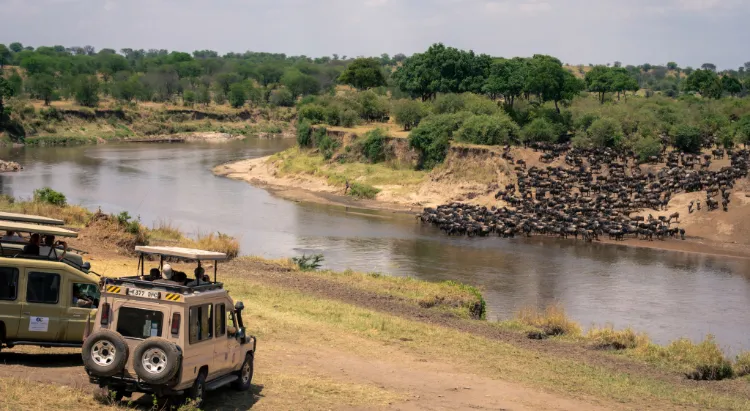
By following these simple rules, you help make sure your visit supports good, responsible watching habits across all Tanzania Safaris and Tours. Making sure you have good Tanzania Travel Insurance before you go is always smart, too.
Travel Advice for Witnessing Crossings
If watching the Mara River Crossings is the main reason for your trip, timing your arrival is critical. The Best Time To Visit Tanzania, specifically for these northern crossings, is usually from late July through October.
During these months, the herds have finished their long push north and are gathered, waiting to cross into Kenya or waiting before they turn back south. This time often matches the main dry season, bringing sunnier days. Unexpected early rain showers can sometimes change their behavior. Be ready for mornings that feel cool, which is why having a good Tanzania Safari Packing List ready is important.
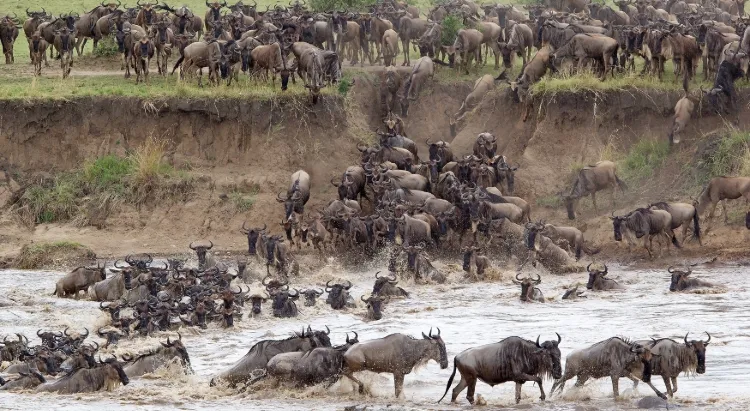
For those who want to take great pictures of these huge events, you need extreme patience. Unlike posing for a quick photo, you might wait several days before the action finally starts. Therefore, having lenses that zoom in well helps, but pure patience remains your number one tool.
Always ask your chosen Tanzania Tour Operators about realistic expectations for Tanzania Safari Cost, as travel during this most popular time is naturally more expensive. Your tour plan, whether it is a standard Tanzania Safari Package or a Serengeti Luxury Safari package, needs to allow flexibility. This is because you might end up waiting near the river for days until the group decides it is time to move. Every Northern Tanzania Safari Tour in this region is best enjoyed when prepared.
Mara River Crossings – The Ultimate Test of Survival in Tanzania
The Mara River crossings in the Northern Serengeti are one of nature’s most powerful spectacles, showcasing raw survival and instinct in real time. Each crossing is unpredictable, intense, and unforgettable. With the right timing, patience, and responsible guiding, witnessing this moment becomes the highlight of any Tanzania