South Africa and Tanzania are two of the countries people ask us about most for a first safari, and both are good answers. They're also very different trips. One has private reserves, malaria-free options and Cape Town. The other has the Great Migration, the Serengeti and Ngorongoro Crater. This is the honest comparison from an Australian company that plans both, and where we'd send a first-timer.
Two Different Kinds of Safari
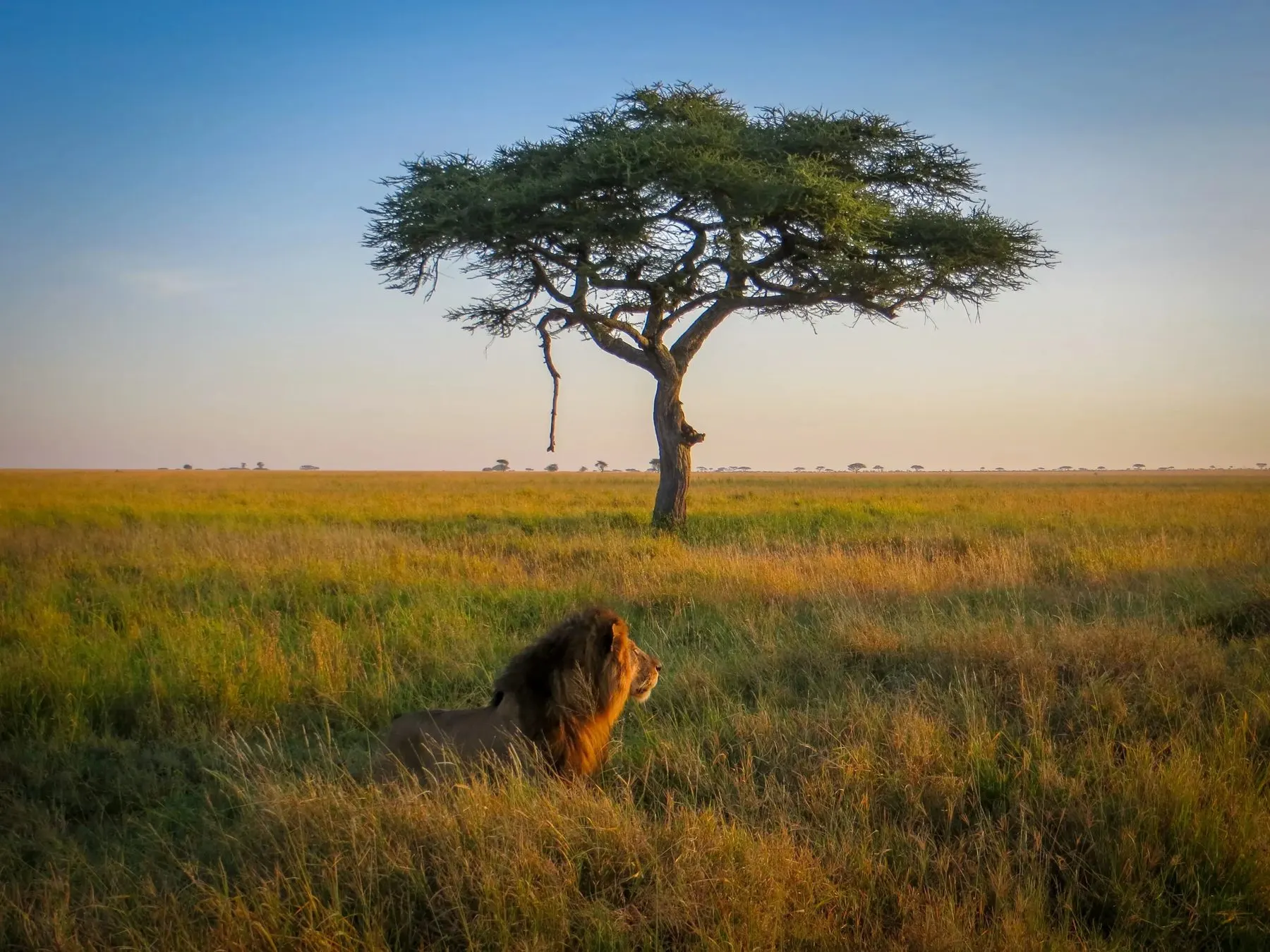
Tanzania is built on scale. The Serengeti covers 14,763 square kilometers of open plains, Ngorongoro Crater holds a huge range of wildlife in one collapsed volcano, and Tarangire adds baobabs and big elephant herds. One trip links parks that each feel different.
South Africa is several safaris in one country. Kruger National Park is close to 20,000 square kilometers and public, so you can drive yourself between rest camps. Private reserves such as the Sabi Sand and Timbavati share an unfenced boundary with Kruger, so the same animals wander through, but your lodge's ranger and tracker can leave the road, drives run after dark, and few vehicles share a sighting. Then there's Madikwe, Tswalu in the Kalahari, and Cape Town.
What Tanzania Has That South Africa Can't
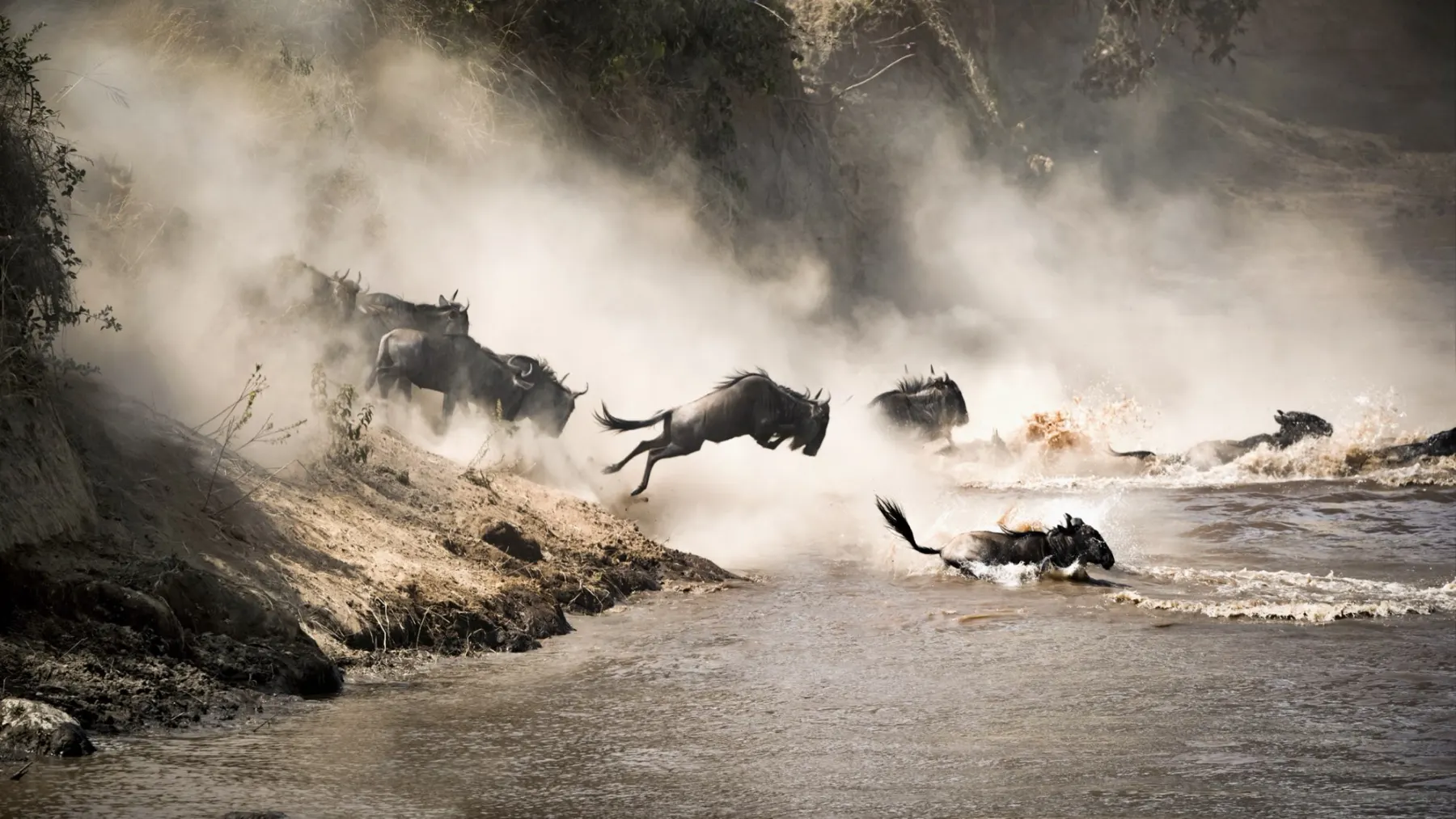
The first thing is the Great Migration. About two million wildebeest, zebra and gazelle loop around the Serengeti all year: they calve on the southern plains from January to March, the Mara River crossings begin in the north from mid-July, and September and October are the peak for crossings from the Tanzania side. Timing follows the rain, so we talk in seasons and never promise a crossing, but South Africa has nothing like it.
The second is the crater. Ngorongoro is a natural amphitheater roughly 20 kilometers across and 600 meters deep, and a dawn descent is one of the great mornings in Africa. A week on the northern circuit links it with the Serengeti and Tarangire.
The honest trade-off is that inside Tanzania's national parks you stay on the tracks and in daylight, which is where South Africa's private reserves have the edge. The best Tanzanian camps also book out early for the dry season, so six to twelve months ahead is ideal.
Where South Africa Wins
Malaria. Madikwe, Tswalu and the Eastern Cape are described as malaria-free, and the Waterberg reserves are sold that way, while the CDC lists Kruger as a malaria area and says malaria is a risk in all areas of Tanzania below 1,800 meters. For families with young children that matters, and it's a medical question for your travel doctor.
The flight. Delta flies non-stop from Atlanta and United from Newark (New York) to Johannesburg, about 15 to 16 hours. Tanzania has no non-stop from the US: the quickest route is Kenya Airways from New York JFK to Nairobi, then an hour on to Kilimanjaro, roughly 17 hours in all, and most other routes take 17 to 21 hours from the East Coast and 19 or more from elsewhere.
The city. Cape Town, the Winelands an hour away and the Garden Route give you a harbor city and wine country on the same trip, and southern right whales come into the bay at Hermanus from June to November. Tanzania's equivalent is the beach finish on Zanzibar, which is a different kind of break. Kruger also suits people who want to self-drive, and South Africa drives on the left.
Our Own Guides in Tanzania
In Tanzania we run our own guides, vehicles and team, so the people who design your trip are the people who drive it, and when plans change on the ground someone on our side makes the call. In South Africa your drives are led by each lodge's own rangers and trackers, who know their patch better than anyone, and we plan and book everything around them. Both work. If one team handling your trip from start to finish matters to you, that's a point for Tanzania.
Cost and Time From the US
A private Tanzania safari for two costs about $590 to $1,300 per person per night, with meals, park fees, your private vehicle and guide included, and a typical 7-night trip is around $6,400. South Africa depends mostly on where you sleep: private reserve lodges cost the most per night but usually include meals and drives, Kruger rest camps cost less, and Cape Town hotels sit in between. We don't have enough recent quotes to give you a fair South Africa range, so we price each trip to order. Flights from the US are extra in both.
South Africa runs on UTC+2, so it is seven hours ahead of New York in winter and six in summer, and ten ahead of Los Angeles in winter and nine in summer. Tanzania is on UTC+3, one hour further ahead again. Seven nights is a workable minimum for either, and ten is more comfortable.
Side-by-Side Comparison
| Factor | South Africa | Tanzania |
|---|---|---|
| Flagship areas | Kruger, Sabi Sand, Madikwe, Tswalu, Cape Town | Serengeti, Ngorongoro Crater, Tarangire |
| Great Migration | No | Yes: calving January to March, Mara River crossings from mid-July to October |
| Off-road and night drives | Yes, in private reserves | Not in national parks |
| Malaria | Some malaria-free reserves, Kruger is a malaria area | Safari areas are malaria areas |
| City and wine | Cape Town, Winelands, Garden Route | Beach finish on Zanzibar |
| Flights from the US | Non-stop from Atlanta and Newark, 15 to 16 hours | One or two connections, 17 hours or more |
| Best months | May to October for reserves, November to March for the Cape | June to October, or January to March for calving |
| Who guides you | Lodge rangers and trackers | Our own guides and vehicles |
| Cost | Priced to order | About $590 to $1,300 per person per night |
| Official travel advice | Check the State Department's latest advice | Check the State Department's latest advice |
So Which Should You Pick?
Pick Tanzania if: it's your first safari and you want the migration, the Serengeti and the crater, you like the idea of one team running your trip, or you want a Zanzibar beach finish.
Pick South Africa if: malaria-free reserves matter to you (check with your doctor), you want Cape Town and wine on the same trip, you'd rather have a non-stop flight, or you want to add Victoria Falls or Botswana.
You can combine them, but there's no non-stop between Kilimanjaro and Johannesburg, so linking the two costs a connection and about a day. For a first trip we'd usually choose one. Our honest answer for most travelers is Tanzania, because the migration and the crater don't exist anywhere else and we run it ourselves. But South Africa is a fine first safari, not a consolation prize.
If you're still weighing it up, tell us your dates and who's traveling and we'll say which we'd book. Get in touch whenever you're ready. Want the two side by side with a real from-price for each? See South Africa or East Africa: which safari is yours? You can also compare Kenya and Tanzania, or see real trips with the real prices and how booking works.
Continue Reading
Frequently Asked Questions
Is South Africa or Tanzania better for a first safari?
For most Americans we'd start in Tanzania, because the Great Migration, the Serengeti and Ngorongoro Crater have no South African equivalent, and our own guides run your trip there. South Africa is just as good a first safari if malaria-free reserves, Cape Town or a non-stop flight matter more. It's a fit question, not a ranking.
Is South Africa cheaper than Tanzania?
It depends mostly on where you sleep. A private Tanzania safari costs about $590 to $1,300 per person per night, and a typical 7-night trip is around $6,400. South African private reserve lodges cost the most per night but usually include meals and drives, Kruger rest camps cost less, and we price each trip to order. See our Tanzania cost guide and African safari cost guide.
Are South African safaris malaria-free?
Some areas are. Madikwe, Tswalu and the Eastern Cape are described as malaria-free, and the Waterberg reserves are sold that way, though health agencies have noted occasional cases in the western Waterberg. Kruger is a malaria area. It's a medical question, so see a travel doctor and check the CDC's travelers' health page.
Can I see the Big Five in both?
Yes. Kruger, the private reserves beside it and Madikwe all have the Big Five, and so do the Serengeti, Tarangire and Ngorongoro Crater. The difference is the setting: South Africa's private reserves allow off-road tracking and night drives, while Tanzania gives you scale and the migration.
How long is the flight from the US to each?
Delta flies non-stop from Atlanta and United from Newark (New York) to Johannesburg, about 15 to 16 hours. Tanzania has no non-stop flight from the US, so expect one or two connections and roughly 17 to 21 hours from the East Coast, or 19 or more from elsewhere. Schedules change, so we check them when we build your trip.
When is the best time to go?
Both are strongest in the dry months. South Africa's reserves are best from May to October and Cape Town from November to March, so September and October suit both. Tanzania's dry season and river crossings run from June to October, and January to March is calving season. See our best time to visit Tanzania guide.
Which is better for young children?
Many families choose South Africa's malaria-free reserves for that reason, and it's worth raising with your doctor. Lodges set their own age rules in both countries: at Impodimo in Madikwe, children under six aren't permitted on the regular drives, while many Tanzanian lodges welcome children from around five. See our guide to safari with kids.
Can I combine South Africa and Tanzania?
You can, but there's no non-stop flight between Kilimanjaro and Johannesburg, so linking them costs a connection and about a day. For a first safari we'd usually pick one.