Two million wildebeest, zebra and gazelle. A circuit covering over three thousand kilometres through Tanzania and Kenya. One of the most dramatic wildlife spectacles on earth, repeated year after year with extraordinary reliability. The Serengeti Great Migration is not a single event you can tick off a calendar. It is a constant, slow-moving journey driven entirely by rain and grass. Understanding how it actually works is the difference between watching empty plains and being at a river crossing when the first wildebeest commits to the water.
I've spent a lot of time on these plains, and so has our senior guide Pete Nanyaro, who guides in the Serengeti and lives the seasons rather than reading about them. The single biggest mistake people make is treating the migration like a fixed date. They book "the migration" for a week in July and feel let down when the herds are still a day's drive south. The herds don't run to our schedule. They run to the rain. The whole point of this guide is to show you where they actually are, month by month, so you can pick your window with your eyes open and land in the right camp for the time you travel.
What Is the Great Migration?
The Great Migration is a continuous, circular movement of approximately two million large herbivores through the Serengeti-Mara ecosystem. The herds are composed predominantly of wildebeest (around 1.5 million), along with Burchell’s zebra (approximately 300,000) and Thomson’s gazelle. They follow the rains clockwise. South through Tanzania for the calving season, then northwest through the Serengeti toward Kenya’s Maasai Mara, then back south again as the short rains arrive. The circuit never stops. The animals are always somewhere.
Predators follow the herds. The extraordinary concentration of prey means that Serengeti big cat sightings in and around the migration corridor are some of the most reliable anywhere in Africa. The six-week calving season produces 400,000 to 500,000 calves, more than enough to sustain the entire predator community and still leave most calves surviving. It is this extraordinary reproductive surplus that keeps the system functioning.
What surprises most first-timers is how slow it all is up close. The migration isn't a stampede across an open plain on a single afternoon. It's a vast, grazing tide that drifts a few kilometres a day, splits into columns, doubles back when a thunderstorm greens a patch of grass behind it, and stalls for days on a riverbank working up the nerve to cross. The drama is real, but it's punctuation in a long, slow sentence. Knowing that changes how you plan. You're not chasing one moment, you're putting yourself in the path of a system that's moving in a known direction.
1.5 million
Wildebeest
3,000 km
Annual circuit
Sep to Oct
Peak crossings
Jan to Feb
Calving season
Approximately 1.5 million wildebeest complete a 3,000-kilometre circuit through the Serengeti-Mara ecosystem each year, following the rains with extraordinary consistency.
What it costs
What a migration safari costs, per person
Per person, twin share, for your time on the ground: private guide and 4x4, lodges, and every park fee. International flights sit on top. Where you land depends on your lodges, the season and group size.
Budget
AUD 7,000-9,000
per person
Comfortable lodges and tented camps in good locations. The essentials done properly, with a private guide and vehicle throughout.
Mid-range · most popular
AUD 9,000-14,000
per person
Characterful lodges and classic camps in prime locations, timed to the migration. Where most Kingse trips land.
Luxury
AUD 14,000+
per person
The marquee camps, fly-in between parks, private everything. Singita, &Beyond, Four Seasons and their peers.
Get Your Real Quote
Tell us about your trip
Your dates, your group, what you want from the experience. We'll come back with real costs built around your specific trip, not a generic starting price.
The Year on the Plains
Follow the Herds, Month by Month
Scroll through the year and watch the herds move across the map, from the calving plains in the south up to the Mara crossings in the north and back again. Every month tells you where they are, what's happening on the ground, and how we'd play it.
Jan – MarSouthern plains · Ndutu
Southern plains · Ndutu
Where the herds are now Season markers
Map tiles: Esri, National Geographic. Migration route is indicative.
January to February
Calving on the southern plains
The herds are spread across the short-grass plains south of Seronera, centred on Ndutu in the Ngorongoro Conservation Area. This is calving season. Several hundred thousand calves are born over a roughly six-week window, the bulk of them in February. The grass is short and green, the plains are open, and the predators are right there with the herds. Cheetah on the move, lion on fresh kills, hyena working the edges. For sheer wildlife density it rivals anything the dry season offers.
Our take: A quieter, often better-value window than the famous crossings, and a brilliant first safari. We'd put you in a camp positioned for the Ndutu plains and time your game drives around the morning births. Book six to nine months ahead.
March to May
Green season, herds drifting north
The long rains arrive and the herds begin moving north and northwest through the central Serengeti as the southern plains lose their goodness. The Serengeti turns intensely green, the light is soft and dramatic, and the birdlife peaks as European migrants pass through. There are far fewer vehicles out here now. Some camps close and a few tracks get genuinely sticky in a heavy rain week, but the trade is real value and landscapes most people never see.
Our take: The thinking traveller's window. If you don't need a river crossing and you do want space, soft light and lower prices, this is a beautiful time to be here. See our best time to visit Tanzania guide for how the seasons trade off.
June
The Western Corridor and the Grumeti
The dry season begins and the herds push into the Serengeti's Western Corridor, heading toward the Grumeti River. This is the first river to test them. The Grumeti crossings happen through June, less famous than the Mara crossings up north but real, and with far fewer vehicles around them. The resident crocodiles in the Grumeti are some of the largest in Africa. It's also rutting season, so the bulls are noisy and the columns are tight.
Our take: A strong, uncrowded window, and it lands right in the Australian June school-holiday break. We rate this highly for families who want the herds on the move without the peak-season crowds.
July
First northern crossings begin
From mid-July the leading herds reach the northern Serengeti around Kogatende and start the northbound Mara River crossings. It's early in the season, so volumes are lower and the crossings are less predictable than they'll be in a month or two, but the herds are here and the dry-season game viewing is excellent. Think early arrivals and first crossings rather than the full peak.
Our take: A good value entry to the crossing season, still inside the Australian July school holidays. We'd set expectations honestly: you're here for the early movers and superb general game, with crossings a strong bonus rather than a certainty.
August
Herds in full strength
By August the herds are in the north in full strength and the northbound Mara crossings are happening regularly. The northern Serengeti between now and October holds the highest concentration of large mammals in East Africa. It's a touch less statistically reliable than September and October, but make no mistake, this is fully a crossing month, and a very good one. Camps around Kogatende are busy and need to be locked early.
Our take: Big herds, peak dry-season viewing and crossings on the cards. Camps at Kogatende get booked twelve to eighteen months ahead for these dates, so this is the window where lead time really matters.
September to October
Peak Mara River crossings
This is the most reliable crossing window of the year. The herds are concentrated around the Mara River at Kogatende, and crossings happen often, sometimes several in a day. The Mara is one river. The herds cross it northbound through September, and from late October they start crossing back southbound, all of it visible from the Tanzania side. You do not need to add a stay in Kenya to see a Mara River crossing. September in particular is a little overlooked, with the herds still crossing hard and slightly fewer vehicles than the absolute peak.
Our take: If a river crossing is the whole reason for the trip, this is the window to aim for. We position most clients here on the Tanzania side. See our Maasai Mara vs Serengeti comparison for why.
November to December
The long journey back south
The short rains arrive in November and the herds begin the long movement south through the eastern Serengeti, heading back toward Ndutu for the next calving season. December into early January can be genuinely excellent as the short rains ease and the first calves start appearing on the southern plains. Prices drop well off peak, the landscape is green and beautiful, and the central Serengeti's resident predators stay very active year-round.
Our take: An underrated, well-priced window that closes the loop right back where the year began. A good choice over the Australian Christmas break if you want green-season value and the very start of calving.
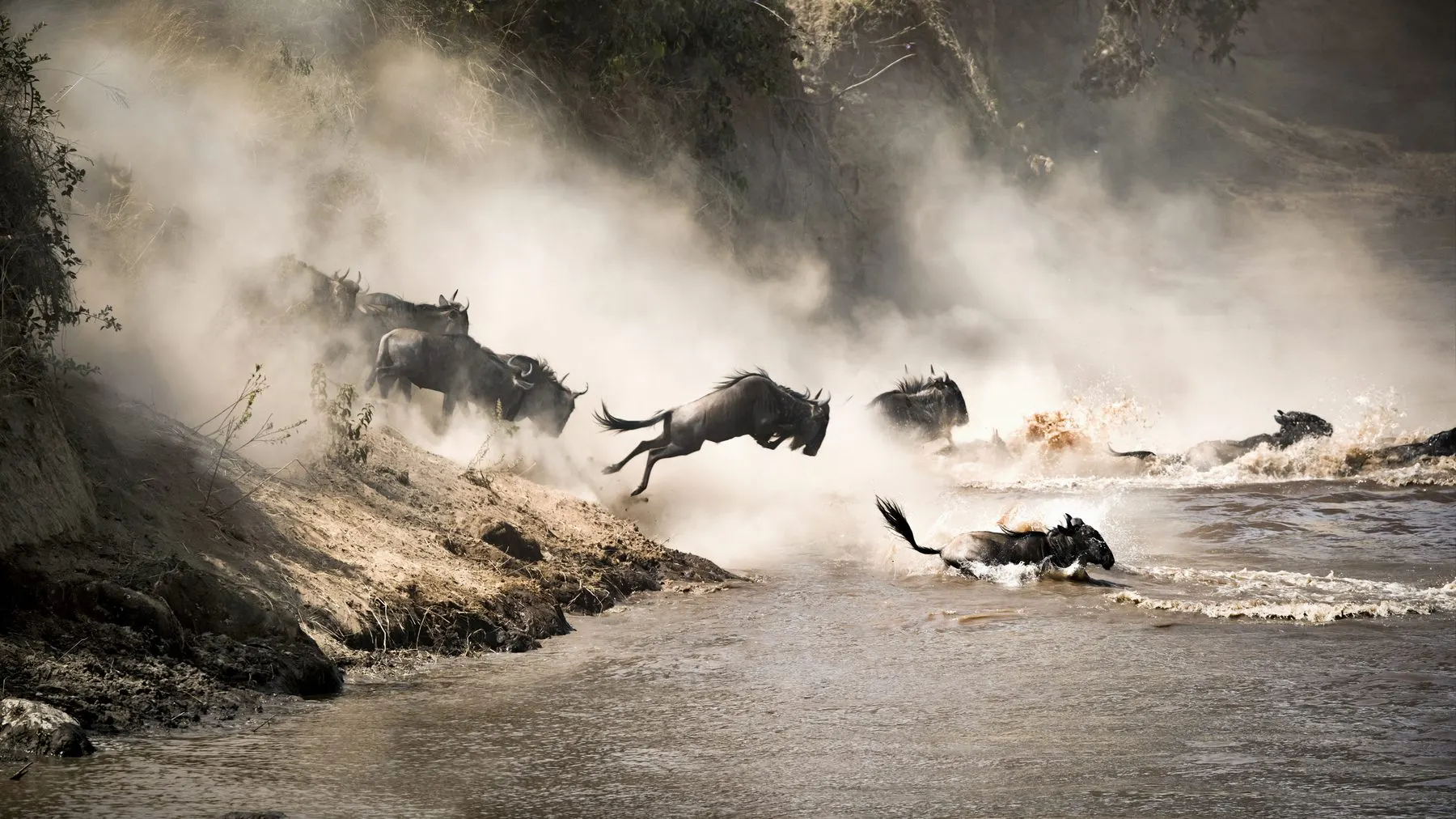
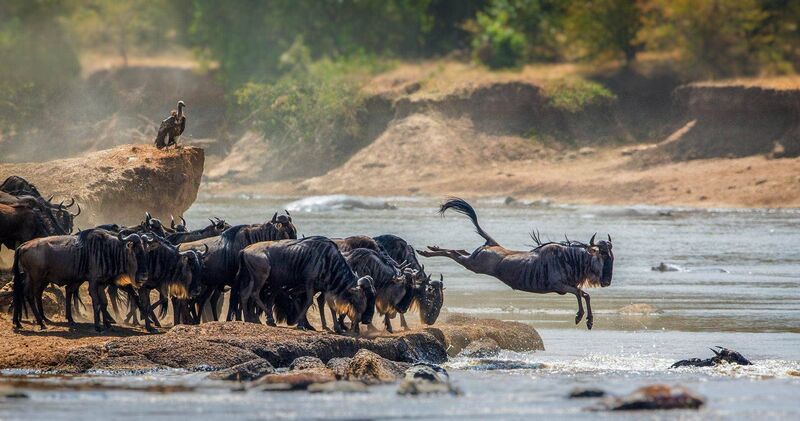
The Mara River crossing, once the first animal commits, thousands follow within seconds. The chaos lasts twenty minutes and then it is over. The herds graze calmly on the far bank as if nothing happened.
The River Crossing Reality
Let's be straight about the crossings, because there's a lot of misinformation out there. A Mara River crossing is one of the great wildlife events on the planet, and it's also one of the least predictable. The herds will gather on the bank for hours, sometimes days, edging forward and pulling back. Then something tips them, often nothing you can see, and the first animal commits to the water. Once one goes, thousands follow within seconds. The chaos lasts twenty minutes and then it's over. The herds graze calmly on the far bank as if nothing happened.
You can't book a crossing for a specific morning. What you can do is stack the odds. Travel in the right window. September and October are the most reliable, August is very good, July is early. Stay in a camp positioned for the crossing points rather than hours away. And travel with a guide who's working the radio network and reading the herds, not stopping at a crossing point for fifteen minutes and hoping. The difference between those two trips is everything. This is exactly where running our own ground operation pays off. Pete and the team are out on the plains every day in season, so we know which way the herds are leaning before you arrive.
The other myth worth killing: the idea that you have to go to Kenya for the crossings. You don't. The Mara River runs through the northern Serengeti, and the Kogatende crossing points sit right on it. Crossings here happen in both directions and are fully visible from the Tanzania side. We'll add a Kenya leg if someone specifically wants the Maasai Mara, but we never tell a client they need to leave Tanzania to see the river.
The Best Camps by Season
Where you stay matters as much as when you travel. The migration moves, and the camps that are perfectly positioned in August may be hours from the action in February. Here is how we think about camp placement:
January to February (calving): Ndutu Safari Lodge, Serengeti Under Canvas (Ndutu), Ubuntu Migration Camp
July to October (Mara crossings): Sayari Camp, Asilia’s Olakira, &Beyond Klein’s Camp, Sanctuary Kusini (northern)
Year-round (central Serengeti): Four Seasons Serengeti, Serengeti Serena, Singita Sasakwa
Mobile camps that move with the migration exist and can work well, but they require accepting more variability in accommodation quality. Fixed-position camps at the right location for your travel dates are our default recommendation. We pick the exact property to your dates, not to a brochure, which is the whole point of building a trip rather than buying a package.
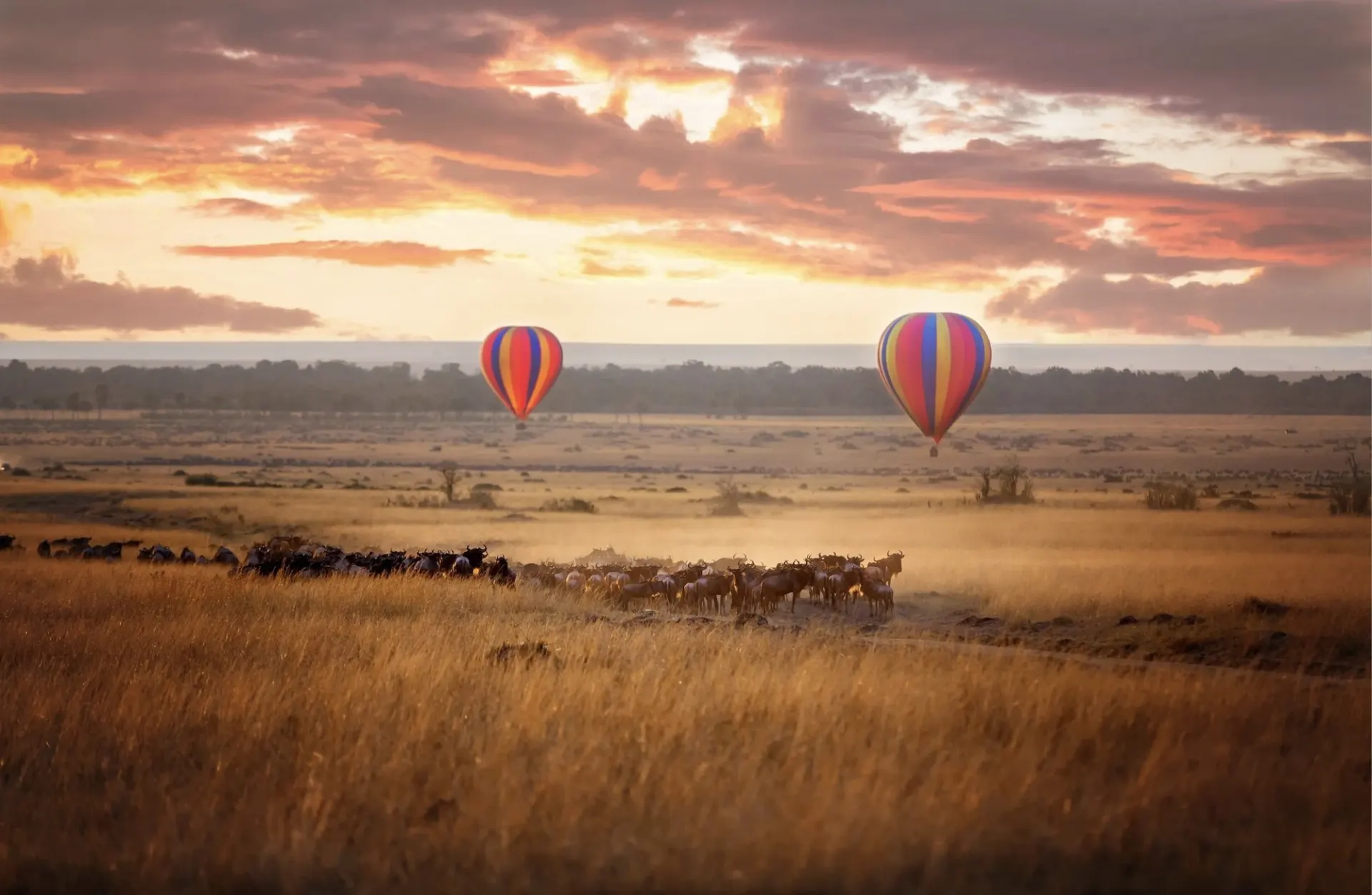
A balloon flight at dawn over the Serengeti offers a perspective on the migration herds that no game drive can match, and champagne breakfast on the plains when you land.
The Australian Angle: When to Go, When to Book
Most of our clients are Australian, so this part matters. The good news is the calendar works in your favour. The June and July school-holiday break lands squarely in the Western Corridor and early northern-crossing window. The weather is dry, the herds are on the move toward the Mara, and the kids are out of school. For a family trip, that's a strong combination. You won't be in the absolute peak crossing weeks of September and October, but you'll have herds in motion, excellent general game, and far fewer crowds than the spring peak.
The catch is lead time. Australians typically plan over the December and January break for travel the following June to October, which means the best camps for that window get spoken for early. Booking nine to twelve months ahead is normal, and for the peak crossing dates at the marquee northern camps you want twelve to eighteen months. It feels far out when you're sitting on the Gold Coast in January, but the rooms in the right camps genuinely do fill that early. The earlier you commit, the better your options, and the more time we have to build the trip properly around your dates.
Getting there is simpler than people expect. You'll route through Nairobi or Kilimanjaro, then a short connection or a light aircraft hop straight into the Serengeti airstrips. We'll lay out the exact flight plan once we know your dates. If you want a sense of what a trip like this runs to, our Tanzania safari cost guide breaks down what goes into the price.
How We Place You Right
Here's what "no third parties, no middlemen" actually means for your migration trip. We design the trip from Australia and we run it on the ground in Tanzania ourselves. Our guides are our own team, and they're in the Serengeti right through the season. There's nobody between us and the plains. When the herds shift, we know, and we can move your plans to follow them rather than waiting on a faceless operator three countries away.
That's the real value of timing this properly. You can read every month-by-month guide on the internet, and they'll all tell you September is the peak. What they can't tell you is where the herds were last Tuesday, which camp has the right line on the river this week, or whether the rains have come early and pulled the columns somewhere unexpected. That's the part we add. You tell us your dates and what matters most to you, the crossings, the calving, a family-friendly window, the quiet green season, and we build the trip around being in the right place at the right time.
Not sure which month suits you? Tell us roughly when you can travel and we'll tell you honestly what the herds will be doing and where we'd put you. Start a conversation or run a quick estimate to see what's involved.
Planning Your Migration Safari: Key Questions
What month gives the best chance of a river crossing?
July, August, September and October are the crossing window, with September and October offering the highest probability of witnessing a full crossing. July can be excellent but the herds sometimes arrive later in the month. August is a strong, reliable crossing month in its own right. September is often overlooked, with slightly fewer vehicles and the herds still crossing actively. By late October the crossings become less frequent as the herds begin moving south, though that's also when you can catch the southbound crossings.
Should I combine Serengeti with Ngorongoro?
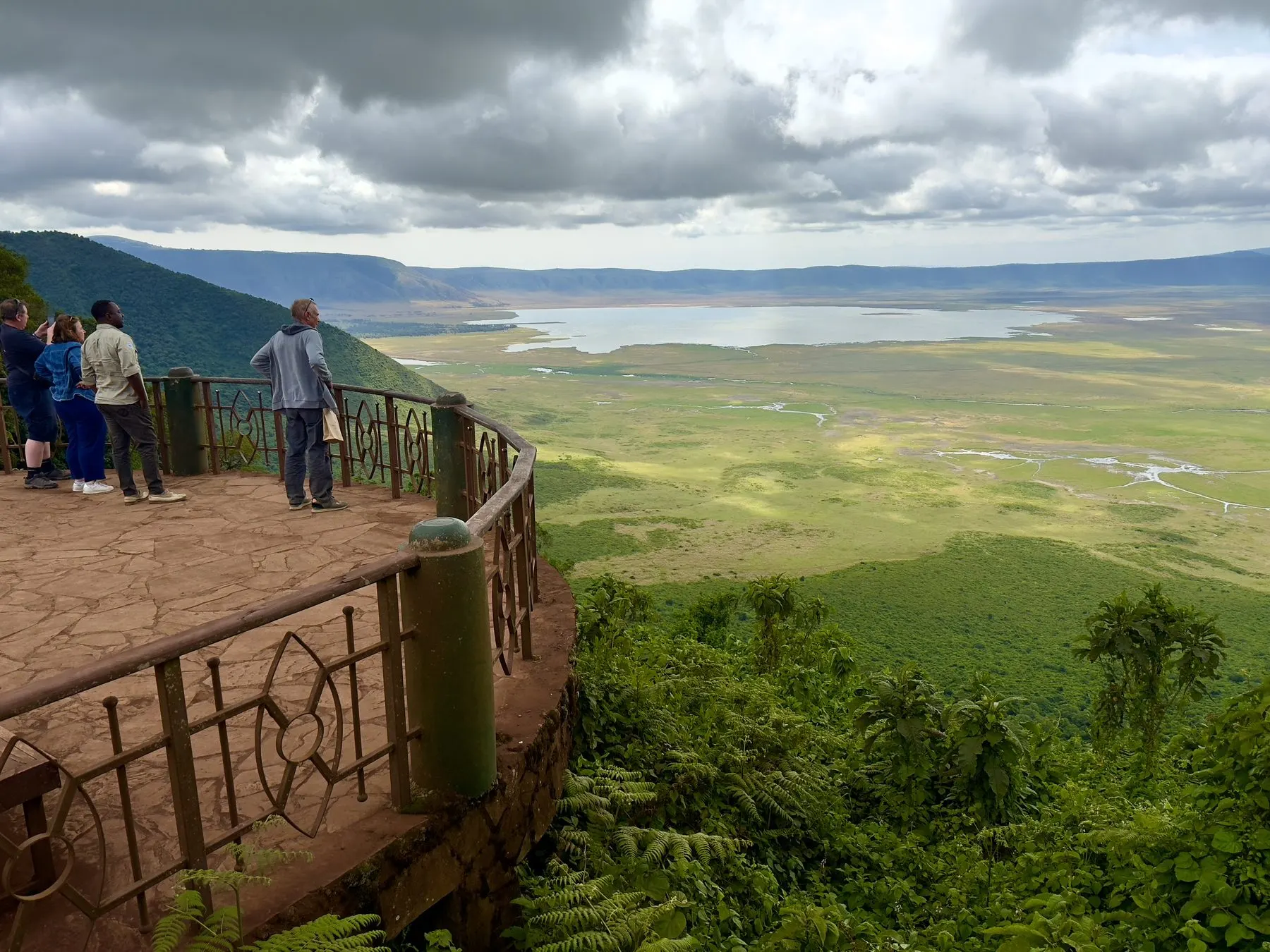
Yes, always. The Ngorongoro Crater is the natural complement to the Serengeti. Different terrain, different wildlife density, and the best rhino sighting opportunity in East Africa. A minimum seven-day northern circuit gives you meaningful time in both.
How far in advance should I book?
For peak season (July to October), twelve to eighteen months ahead for first-choice camps. For January to February calving season, nine to twelve months. Outside these windows, six months is usually sufficient, though the best rooms in the best camps fill earlier. Australian families planning around the June-July school holidays should treat this as a nine-to-twelve-month booking.
What is the difference between the Serengeti and the Maasai Mara?
The migration crosses from Tanzania’s Serengeti into Kenya’s Maasai Mara typically from July onward. The Mara has a higher vehicle density and smaller area, which means crowded crossing points in August. The Serengeti side (Kogatende) offers a similar experience with more space. We predominantly position clients on the Tanzania side for the crossings, adding a Kenya extension for those who want the Mara context. Our Maasai Mara vs Serengeti guide goes deeper on the trade-offs.
Frequently Asked Questions
Is the Great Migration guaranteed?
The presence of the herds in a given region during the right season is essentially guaranteed. They follow the rains with remarkable consistency. A specific event like a river crossing is not guaranteed on any individual day; it depends on predator pressure, water levels, and animal behaviour. A good guide positioned at the right crossing point during August or September gives you a strong probability. A five-minute stop at a crossing point does not.
Can I see the migration outside Tanzania?
Yes, the northern herds cross into Kenya’s Maasai Mara from July onward and return to Tanzania in October to November. Mara River crossings can be viewed from the Kenyan side as well as from Kogatende in Tanzania.
How many wildebeest are in the migration?
Approximately 1.5 million wildebeest, along with 300,000 zebra and 500,000 Thomson’s gazelle. Total: approximately 2 million animals. The wildebeest population has been relatively stable for several decades after recovering from the rinderpest epidemic of the 1890s that nearly wiped them out.
When are the Mara River crossings?
The Mara River crossings run from July through October in the northern Serengeti around Kogatende. The northbound crossings begin from mid-July, build through August, and reach their most reliable window in September and October. July can be excellent but the herds sometimes arrive later in the month, and by late October the herds start drifting south again with the first short rains.
What is the best month for the calving season?
Late January through February is the heart of the calving season on the southern Serengeti and Ndutu plains. Several hundred thousand calves are born across a roughly six-week window, which draws intense predator activity. It is one of the strongest wildlife months of the year, it is quieter than the dry-season crossings, and it usually prices below peak.
Can I see the river crossings from the Tanzania side?
Yes. The Mara River is a single river, and the crossing points near Kogatende in the northern Serengeti sit right on it. The herds cross northbound here from July, and from late October they cross back southbound, all visible from the Tanzania side. You don't need to add a stay in Kenya to see a Mara River crossing. We position most clients on the Tanzania side and add a Kenya extension only when someone specifically wants the Maasai Mara context.
When is the best time for an Australian family to see the migration?
The Australian June and July school-holiday break lines up neatly with the Western Corridor and the early northern crossings, which makes it a strong family window with good weather and the herds on the move. Most Australian families plan over the December and January break for travel the following June to October, so booking nine to twelve months ahead is normal and gives you first choice of camps.
Ready to Experience This?
Let us plan your trip
Every safari we build is tailored to you, the right parks at the right time, guides who know exactly where to be. Tell us your dates and we’ll take it from there.
Pick up the phone if you'd rather talk it through. We spend a good part of the year moving between Australia and Africa, so if we miss you, WhatsApp Samara and we'll come back to you whatever the time zone.
Safaris · enquiries & bookings
Samara Imhoof
Bookings & Client Care
Whether you're just kicking around ideas or already booked. Dates, lodges, costs, changes, payments, flights.