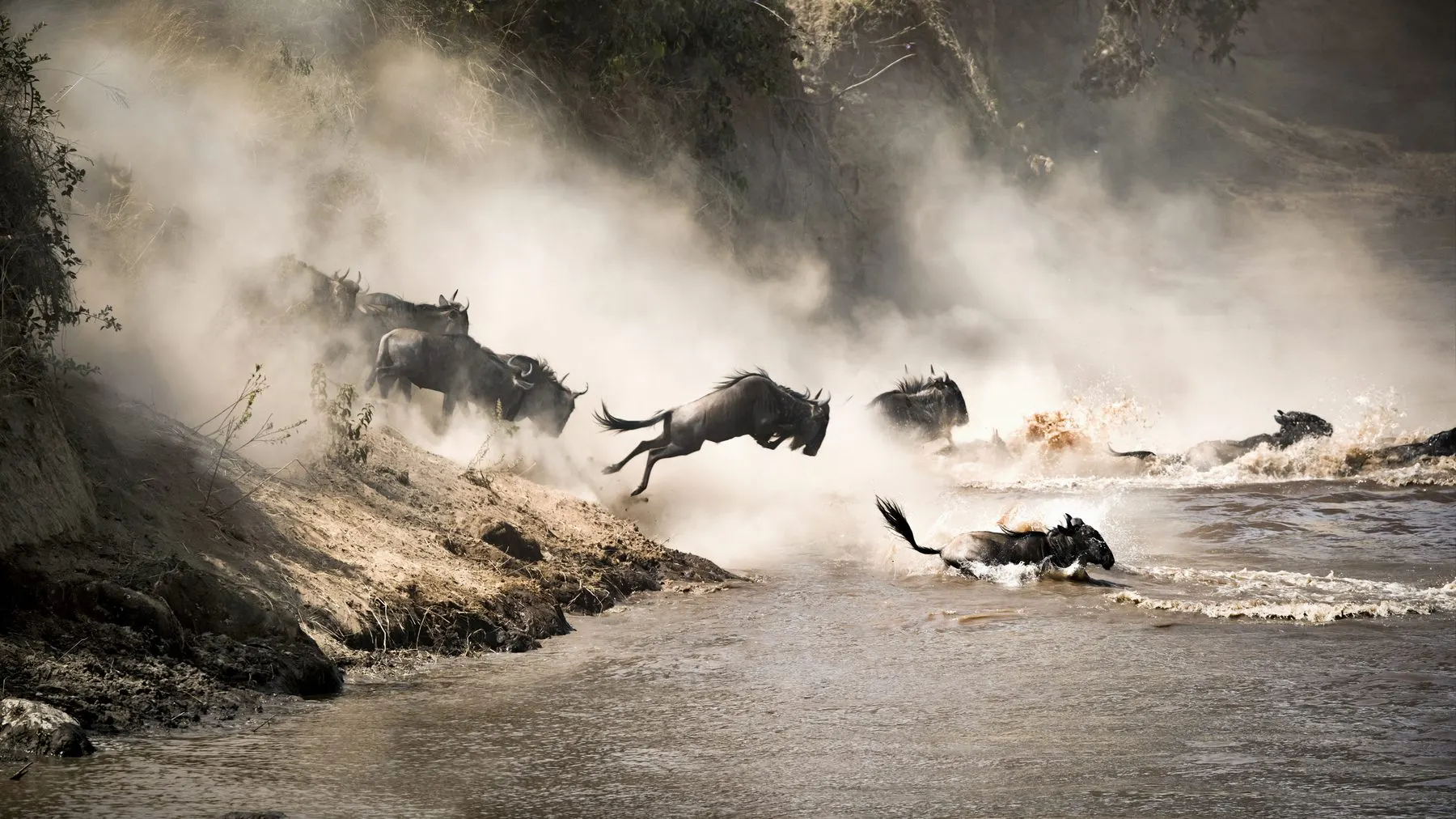
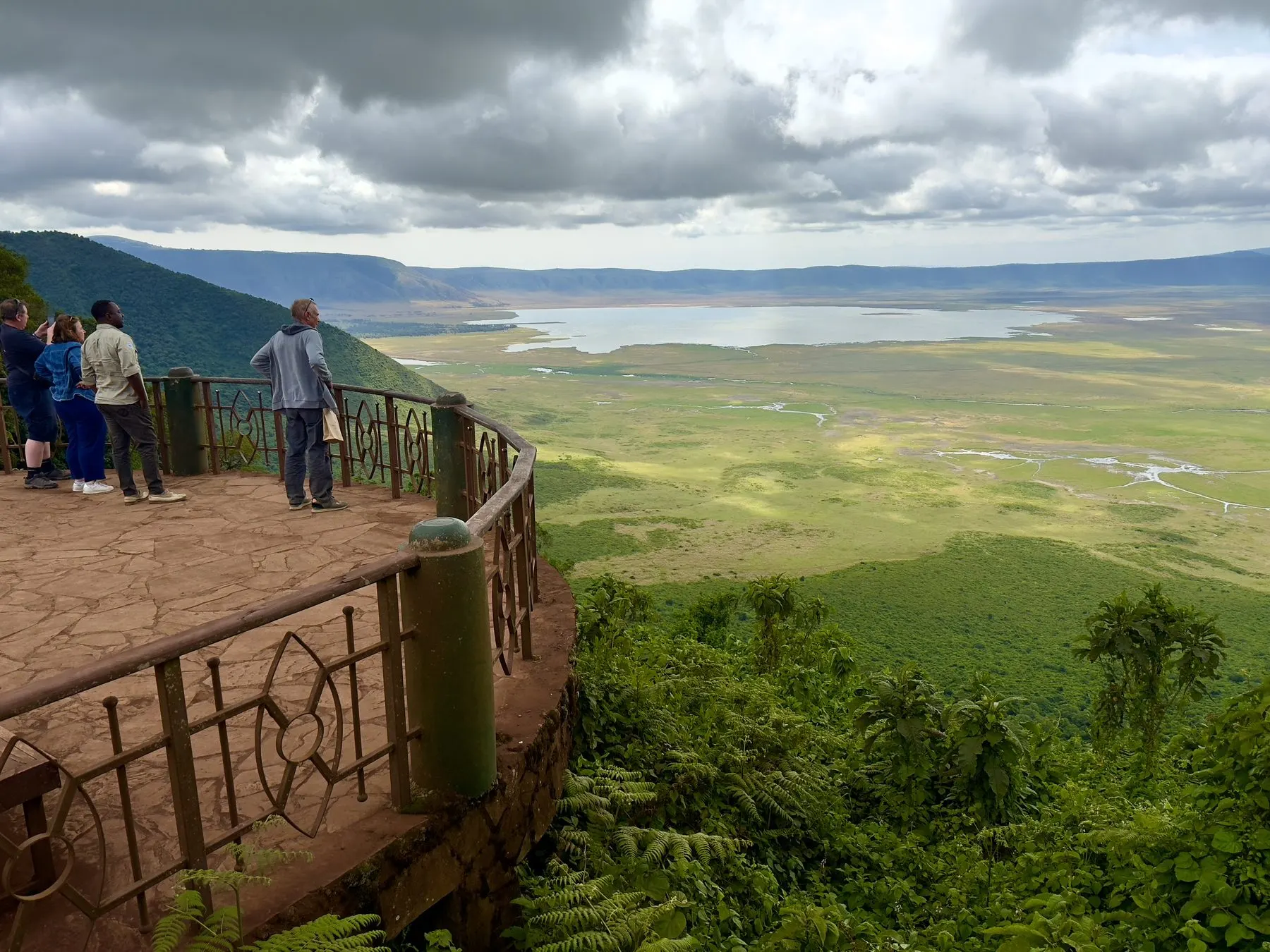
The Ngorongoro Crater is not a national park in the conventional sense. It is a collapsed volcano, a caldera, roughly 20 kilometres across and 600 metres deep, containing its own self-sustaining ecosystem completely enclosed by the crater walls. Wildlife cannot easily enter or leave. What is inside has been there for generations, isolated and remarkably concentrated. You can see all of the Big Five in a single morning. Many guests report it as the most intense wildlife experience of their entire safari.
The Basics: What Is Ngorongoro Crater?
The Ngorongoro Conservation Area covers 8,292 square kilometres in Tanzania’s northern highlands, approximately three hours west of Arusha by road. The crater floor sits at roughly 1,800 metres elevation, enclosed by rim walls that rise a further 400 to 600 metres. The rim temperature is significantly cooler than the Serengeti. Pack a warm fleece, especially for early morning descents. The mist that hangs over the crater wall in the early hours creates extraordinary light and atmosphere before it burns off by mid-morning.
Access to the crater floor is through a single descent road on the western wall, which takes approximately 30 minutes. All vehicles must leave the crater by sunset. Park regulations restrict the number of vehicles on the floor at any one time, though this is more loosely enforced than it sounds. The compact size of the crater means you can cover a significant amount of ground in a half-day drive, but a full day allows you to be on the floor as the light arrives and stay until the golden late-afternoon session.
The Ngorongoro Conservation Area is worth understanding as distinct from the national park model. Maasai communities have the right to graze cattle within the Conservation Area (though not on the crater floor itself), and the area is managed jointly for wildlife conservation and human habitation. This is part of what makes it unique: you drive through Maasai bomas and cattle herds to reach one of the world’s great wildlife spectacles.
Wildlife: What You Will See on the Crater Floor
The crater holds approximately 25,000 large animals within 264 square kilometres, all of them essentially resident, trapped by the walls in a concentration that has no equivalent in East Africa. The density is comparable to the finest southern African reserves, but in a much more compact and reliably accessible area. On a good day in the crater, you will see more large mammals than in a week in most other parks.
Black Rhino. The Rarest Sighting in East Africa
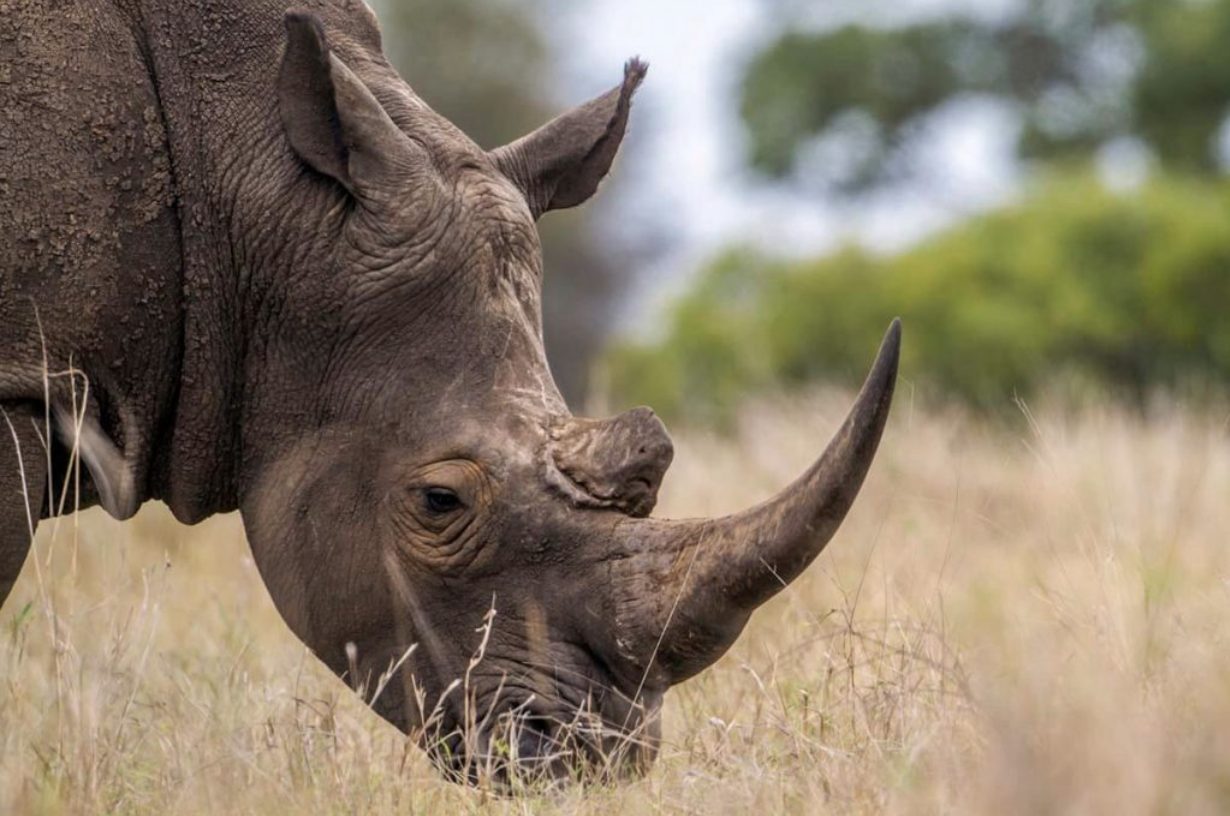
The Ngorongoro Crater is the single best place in East Africa to see black rhinoceros. Approximately 25 to 30 individuals live permanently on the crater floor, a significant population of a species with fewer than 6,500 individuals remaining in the wild. Sightings are most reliable near the swampy ground in the western section of the crater, particularly around Mandusi and Ngoitokitok springs. They are typically seen in the early morning before the vehicle traffic builds. In the crater, a black rhino sighting is not guaranteed but it is far more probable than anywhere else you will visit in East Africa.
Lions. Some of the Most Studied in the World
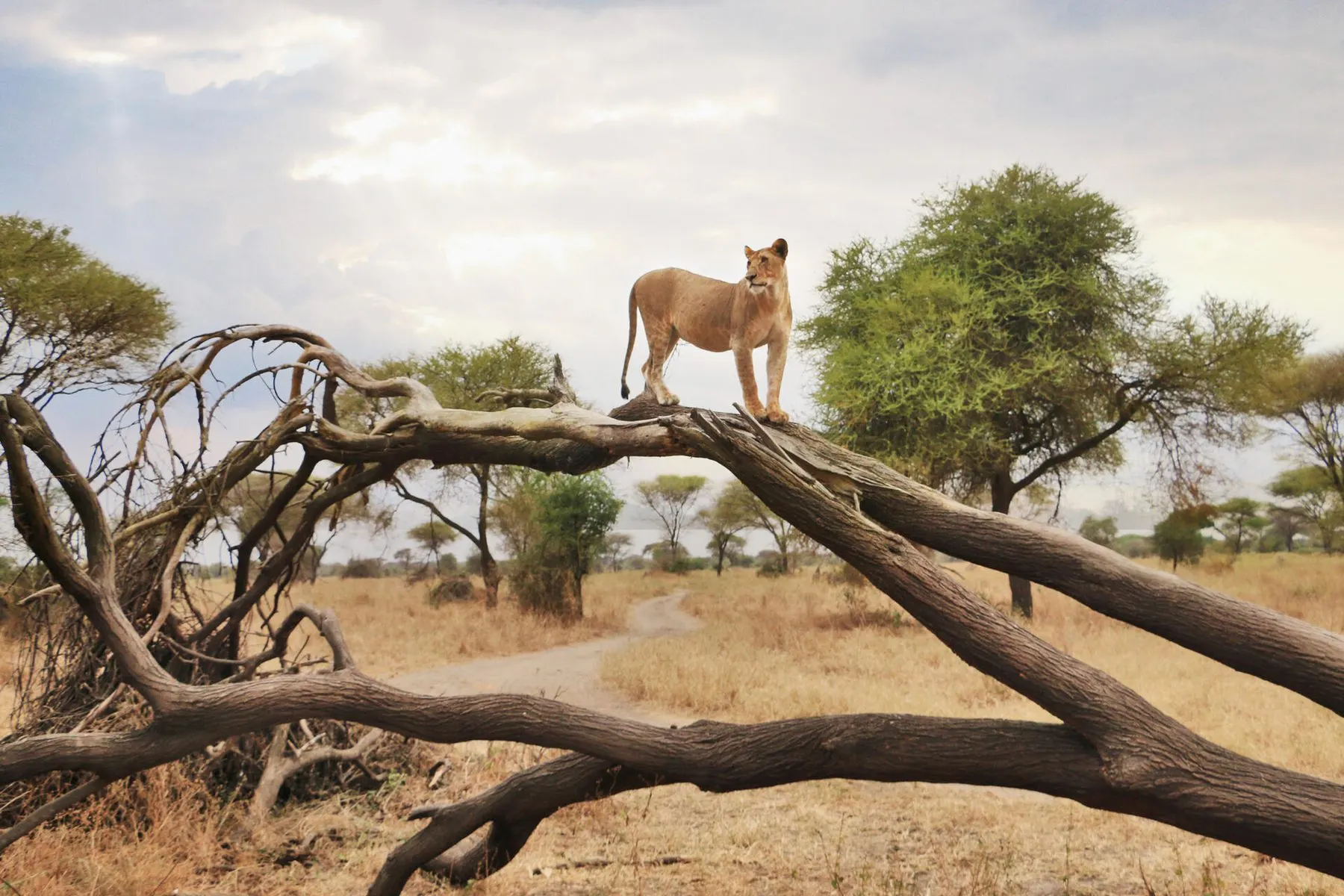
The crater lion population is one of the most intensively studied in the world. The enclosed landscape limits genetic exchange with outside populations, creating some degree of inbreeding, but the prides remain healthy and extremely visible. There are typically 60 to 70 lions on the crater floor, organised into multiple prides with clearly defined territories. Lions here are habituated to vehicles and go about their business with complete indifference. Sightings are as close to guaranteed as anything in safari.
Spotted Hyena
The crater has one of the highest hyena densities in Africa, estimated at over 400 individuals. They are visible throughout the day but most active at dawn and dusk. The clan structure here is particularly complex and well-studied, and the interaction between hyena clans and lion prides on the crater floor is one of the great ongoing dramas of African wildlife.
Flamingos at Lake Magadi
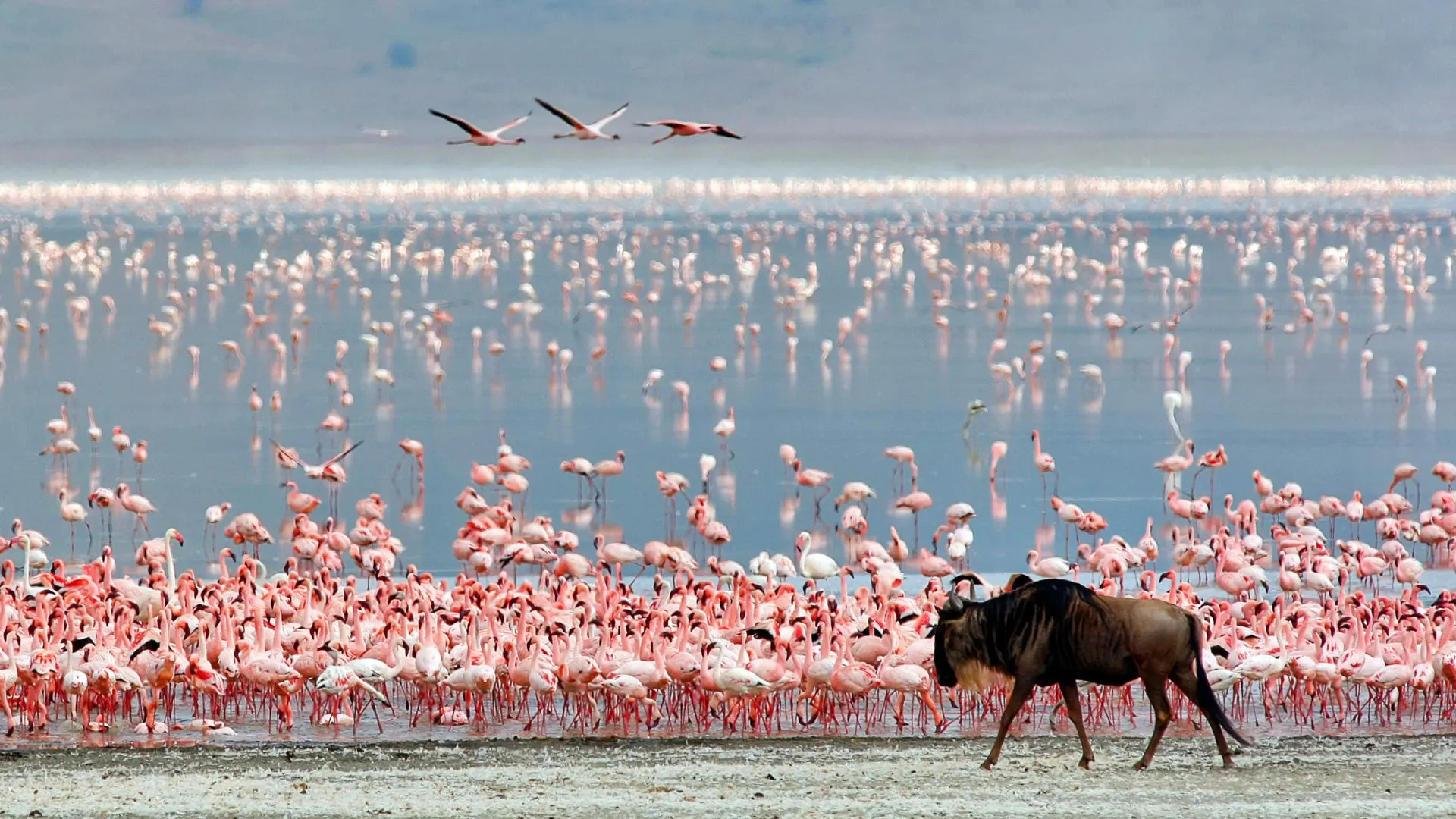
Lake Magadi, the crater’s alkaline soda lake in the south of the floor, turns pink when flamingo populations are high. The numbers fluctuate significantly with water levels and food availability, sometimes thousands, occasionally very few. The visual of pink water set against the deep green of the crater floor and the dark forested rim walls is one of the most photographed scenes in Africa.
Elephant. The Tuskers
The crater’s elephant are bulls, mature males, some with exceptional ivory. The breeding herds prefer the more open highlands outside the crater. The old bulls that come down to the floor are some of the most impressive elephant you will see on any Tanzania safari, moving between the forest edges and fresh water with characteristic unhurried authority.
The Broader Wildlife Picture
Beyond the headline species, the crater holds eland, wildebeest, zebra, Grant’s and Thomson’s gazelle, buffalo in large herds, hippo in the pools around Ngoitokitok, golden jackal, serval, and over 500 recorded bird species. The birdlife alone justifies a full day on the floor, the crater is on the Great Rift Valley flyway and the variety of waterbirds, raptors and endemic species is exceptional.
How to Structure Your Day on the Crater Floor
The difference between a good Ngorongoro experience and an outstanding one is largely about timing. Here is what we build into every itinerary:
Descend early. Vehicles can enter from 7:00am. The first hour on the floor, before most vehicles have descended, is the most productive. Predators are still active, the light is exceptional, and the crater floor has a quality of stillness that disappears as traffic builds. A 7:00am descent means leaving your lodge by 6:30am at the latest.
Work the western circuit first. Drive to the Mandusi and Ngoitokitok area in the west, which is the most reliable for rhino sightings. Then move south to Lake Magadi for flamingos and wading birds. The Lerai Forest in the south often holds elephant and large bird species in the canopy.
Lunch at the hippo pool. The picnic site at Ngoitokitok spring is one of the great safari lunch stops. Hippos surface and surface within metres of the tables, black kites steal food from inattentive guests, and elephant sometimes wander through. Expect chaos. Bring a good lid for your lunch box.
Stay until last light. Vehicles must leave by 6:00pm. The late afternoon session, roughly 4:00 to 6:00pm, when the sun drops toward the crater rim and everything turns gold, is arguably the best photography window of the day. Lions become active again, and the low-angle light transforms the landscape.
Beyond the Crater: The Ngorongoro Conservation Area
Most visitors spend their entire time in or around the crater and miss the broader Conservation Area, which rewards exploration. The Ngorongoro Highlands that surround the crater rim are traditional Maasai grazing territory, and a morning walk with a Maasai guide through the highland grasslands, past bomas, livestock and the vast views north toward Kilimanjaro on clear days, is one of the genuine cultural experiences of northern Tanzania.
Empakaai Crater, 35 kilometres northeast, is a smaller water-filled caldera with flamingos on its floor and extraordinary rim views extending to Lake Natron and, when the air is clear, Kilimanjaro. It is rarely visited and completely unspoiled. The walk down to the crater floor is one of the finest short hikes in the Conservation Area.
Oldupai Gorge (historically called Olduvai) is within the Conservation Area and holds one of the world’s most significant paleoanthropological sites. Early hominid fossils dating back 1.8 million years were discovered here by Louis and Mary Leakey in the 1950s and 60s. The museum at the site is small but well-curated and the guided walk to the actual excavation site takes around 45 minutes. It is a worthwhile addition for guests with an intellectual curiosity about human origins. Driving past without stopping feels like a missed opportunity.
Where to Stay: Crater Rim vs Karatu
Accommodation divides into two broad categories, each with distinct advantages.
Crater Rim Lodges
A stay on the crater rim gives you highland views and a convenient base for an early descent. Mornings can be cold and misty. Properties vary considerably in price and position, so we check what is operating and available for your dates before recommending a lodge. Karatu is another option when comfort and value matter more than a rim view.
Karatu Town Properties
Karatu, just outside the Conservation Area on the eastern approach, offers quality mid-range and boutique properties at considerably better value. Gibb’s Farm, a working coffee farm with beautiful gardens and excellent food, is one of the most charming properties in northern Tanzania and consistently rates highly among guests who value character over spectacle. The trade-off is the 45 to 60 minute drive to the crater descent road each morning.
Photography Tips: Getting the Most from Ngorongoro
The enclosed nature of the crater creates unique photographic conditions. The morning mist rolling off the rim gives the first hour a quality of light that is quite different from the Serengeti’s open plains. A 100 to 400mm zoom covers most situations; the crater’s compact size means animals are often closer than expected. The backlight in late afternoon, when the sun moves behind the western rim and the floor is illuminated by reflected golden light, is extraordinary. For rhino, bring the longest lens you can manage: sightings are often in open grassland with no cover, but distances can be unpredictable.
Practical Information
- Opening hours: Vehicles must descend after 7:00am and leave before 6:00pm
- Vehicle requirements: Only 4WD vehicles are permitted on the crater floor; your safari vehicle will be equipped
- Altitude: Rim at 2,300m, floor at 1,800m. no altitude sickness issues but bring layers for the rim
- Fees: Conservation Area fees are included in your itinerary; crater floor fees are additional and payable per vehicle entry
- Best time: Year-round. The enclosed ecosystem means wildlife density is consistent across seasons. Avoid the heaviest rain weeks (March to April) when the descent track can be difficult
- How long to spend: 1 full day minimum on the crater floor; 2 nights at the rim is ideal and allows an early morning and late afternoon session
How Ngorongoro Fits Into a Northern Tanzania Itinerary
Ngorongoro works best as part of a 7 to 10 day northern circuit. The standard combination. Tarangire, Ngorongoro and Serengeti. shows three completely different sides of Tanzania within a week: the elephant-dense riverine woodland of Tarangire, the volcanic spectacle of Ngorongoro, and the vast open plains of the Serengeti. Adding a Zanzibar extension afterward is the classic finish.
If you are specifically interested in the Great Migration, the positioning of your Ngorongoro visit relative to Serengeti matters. We build the crater into every northern circuit and position guests with enough time to descend early and stay until last light, not an in-and-out half day, which undersells what the crater can deliver.
Frequently Asked Questions
Can you see the Big Five in Ngorongoro?
Yes. The Ngorongoro Crater is one of the most reliable places in Africa to see all five: lion, leopard (in the Lerai Forest), elephant, buffalo, and black rhino. Leopard is the most difficult; the others are seen on almost every full-day visit.
Is it worth spending more than one day in the crater?
Most guests visit the crater for one full day, but a second descent is genuinely worthwhile if your schedule allows. The crater changes character between sessions: animal behaviour, light, and vehicle density all differ, and a second day significantly increases your chances of a rhino sighting and of witnessing predator behaviour.
How does Ngorongoro compare to the Serengeti?
They are complementary rather than comparable. The Serengeti offers space, scale and the Migration. Ngorongoro offers density, reliability and the black rhino. Both should be on any northern Tanzania itinerary. The Serengeti typically takes the top spot for guests choosing between them, but Ngorongoro is often what guests remember most vividly.
Do I need malaria prophylaxis for Ngorongoro?
The crater rim sits at about 2,300m, above the main malaria zone, but most Tanzania itineraries also include lower areas where malaria is present. What you need is your travel doctor's call, so take your full itinerary to them before you go.
Ready to Experience This?
Let us plan your trip
Every safari we build is tailored to you, the right parks at the right time, guides who know exactly where to be. Tell us your dates and we’ll take it from there.