A Namibia self-drive is one of the great road trips on earth, and it's genuinely doable. You collect a vehicle in Windhoek, you drive yourself, and over a fortnight you string together the red dunes of Sossusvlei, the foggy Atlantic coast, the desert wilderness of Damaraland and the game-packed pans of Etosha. Namibia is quiet, well organised and you drive on the left like home. That's why so many of our Australian clients ask about it. The trick is doing it properly, because the road reality is real and the distances are long. This is the honest version: what it actually is, who it suits, and how we build it so nothing goes sideways.
I'll be straight with you up front. A self-drive isn't for everyone, and that's fine. It rewards people who like the freedom of their own pace, who don't mind a few hours of gravel between stops, and who'd rather pull over for a photo than sit in the back of someone else's vehicle. If that's you, it's hard to beat. If you'd sooner hand the driving to a guide and watch the country roll past, we'll build you a guided trip instead, or a hybrid that does both. Either way, the route below is the spine of how a great Namibia trip runs.
10-14 days
Ideal length
Drive left
Same as Australia
May to Oct
Best window
High-clearance 4x4
The right vehicle
What a Namibia Self-Drive Actually Is
Picture a loop. You land at Windhoek, collect a fully kitted 4x4, and head south and west to the dunes at Sossusvlei. From there you swing up to the coast at Swakopmund, then north into the raw desert mountains of Damaraland, and finally up to Etosha for the game before looping back to Windhoek. Roughly two thousand kilometres over ten to fourteen days, broken into manageable legs with two nights in most places so you're not packing and unpacking every morning.
The driving is part of the experience, not a chore to endure. Namibia's roads are quiet to the point of being eerie. You can drive for an hour and pass three cars. The landscapes change completely from one leg to the next, from apricot dunes to a fog-bound coastline to red rock canyons. People who've done it almost always say the drives were a highlight rather than dead time between stops. The vehicle is set up for it, the route is planned to your dates, and the country does the rest.
It suits independent travellers, couples and families who want a sense of having earned the place rather than being delivered to it. It also tends to cost less than a fully guided equivalent, because you're not paying for a guide and a second vehicle every day. What it asks of you in return is a willingness to drive sensibly on gravel and to plan ahead. That's the deal, and it's a good one.
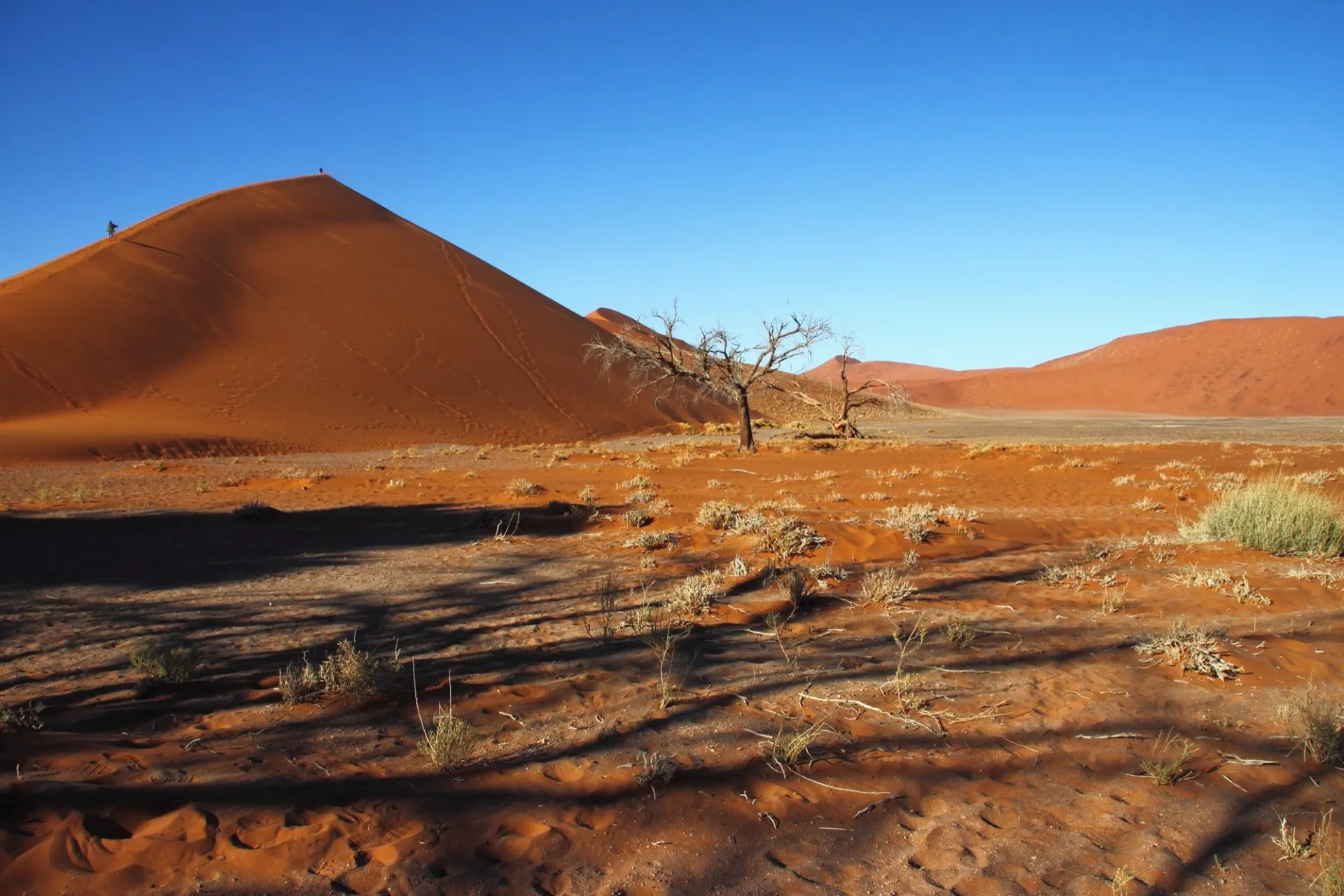
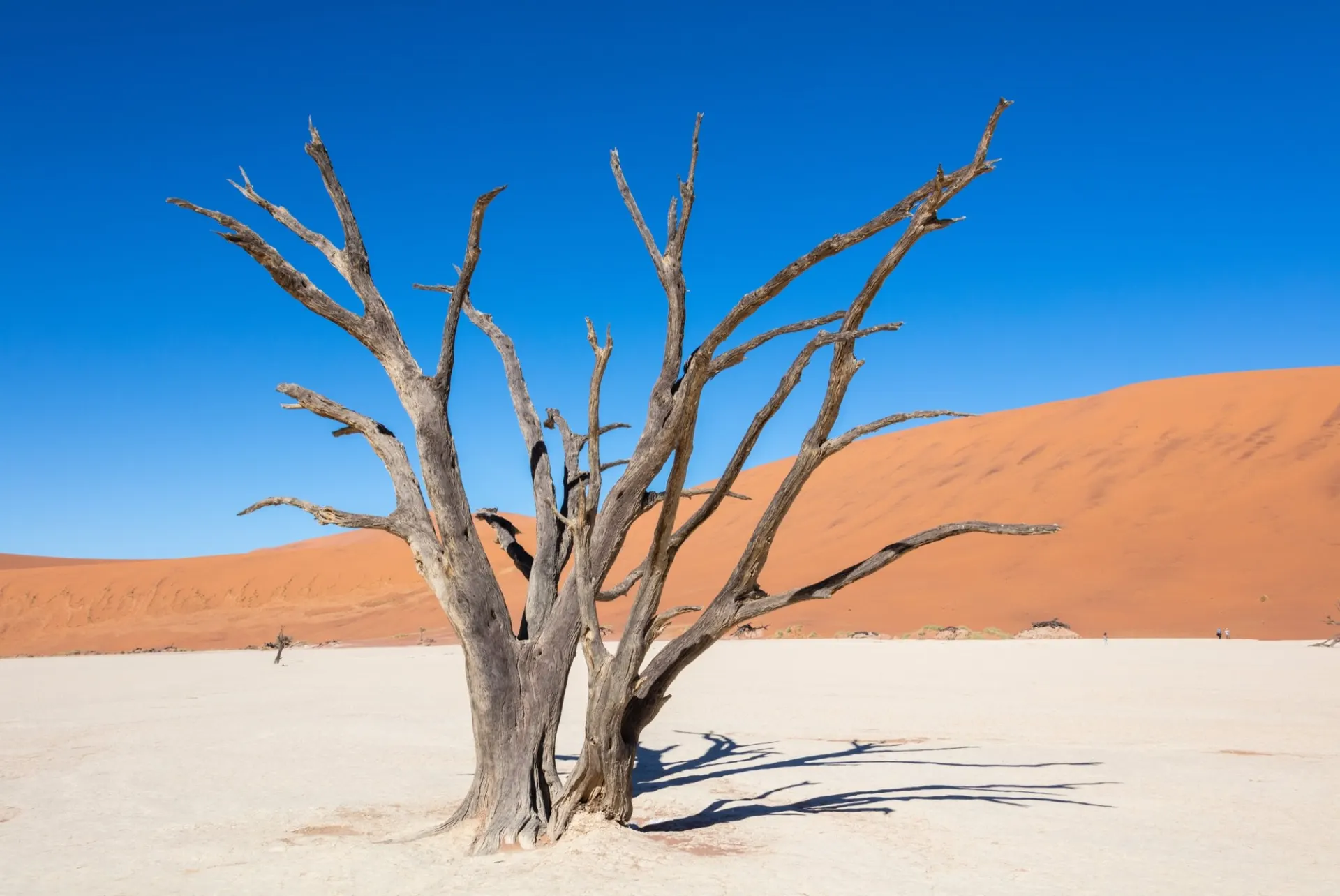
Sossusvlei at first light. The last few kilometres to the famous dunes run on soft sand, which is exactly why the 4x4 matters.
The Honest Road Reality
Here's the part the glossy brochures skip. Most of a Namibia self-drive is on gravel, not bitumen, and gravel drives differently. It's perfectly safe with the right habits, and people of all ages do it every season, but you have to respect it. Get this right and the trip is a joy. Get cavalier and you can turn a great holiday into a long wait for recovery.
Slow down on gravel. Keep your speed sensible and well under the open-road limit. Gravel is loose, corners catch people out, and a blowout at speed is the single most common way self-drives go wrong. There's no prize for arriving early.
Never drive after dark. Kudu and other animals come onto the roads at dusk and a collision is serious. We plan every leg to land you well before sunset, with the day's drive done by mid-afternoon.
Treat a tyre change as normal. Gravel chews tyres. A puncture isn't a crisis, it's part of the trip. We make sure your vehicle carries the gear and that you know how to use it before you leave Windhoek.
Carry the cover. Tyre and windscreen damage is the most common claim in Namibia, so we book vehicles with proper tyre and windscreen cover included, not the stripped-back rate that looks cheaper and bites later.
Fuel up at every town. Distances between stations are long and the next pump can be a couple of hours away. The rule is simple: see a station, fill the tank, even if you're only half down.
The other honest point is the vehicle itself. You need a high-clearance 4x4. A standard car can manage the main tar roads between the big towns, but it can't reach the parts of Namibia people fly across the world to see. The final stretch into Sossusvlei is soft sand, and the D-roads through Damaraland are rough enough that low clearance gets you into trouble. We never put a client in anything less than a proper 4x4 with the right tyres, recovery gear and a second spare.
The Route, Leg by Leg
The map below moves with you. Scroll through the legs and watch your position travel the route, from Windhoek down to the dunes, up the coast, into Damaraland and on to Etosha. Each leg tells you the drive, what's there, and how we'd play it. It's the same loop we plan for clients, give or take a night here and there to suit your dates.
Your Self-Drive, Stop by Stop
Follow the Route, Windhoek to Etosha
Scroll through the drive and watch your position move along the route, from Windhoek down to the Sossusvlei dunes, up the coast to Swakopmund and on through Damaraland into Etosha. Every leg tells you where you are, what's there, and how we'd play it.
Day 1Windhoek · arrive
Windhoek · arrive
Where you are on the route Stops on the drive
Map tiles: Esri, National Geographic. Route is indicative.
Day 1
Windhoek and the handover
Arrive: fly in via Johannesburg or direct to Windhoek, Hosea Kutako (WDH), then a short tar run into town
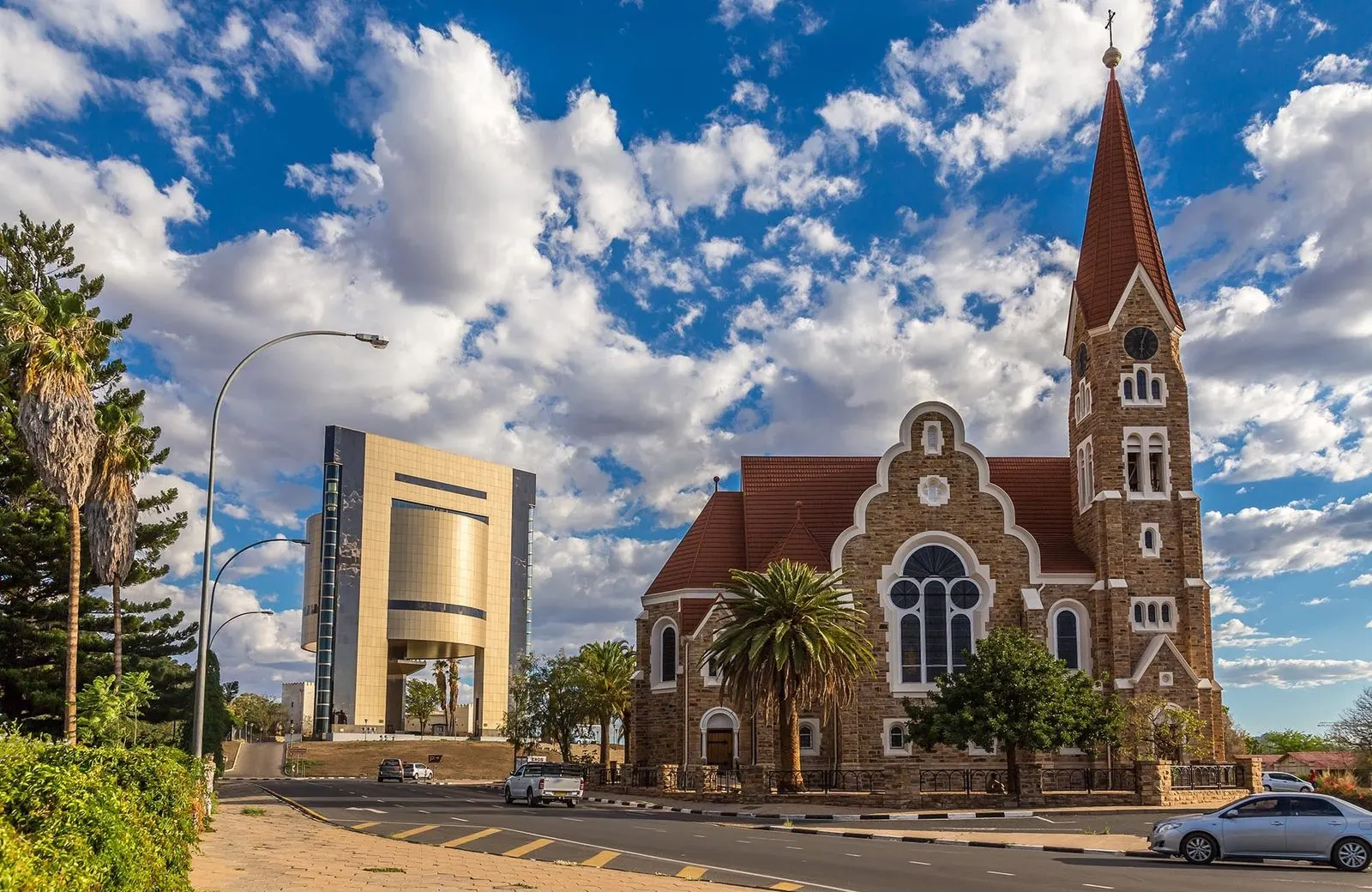
You land at Hosea Kutako, the airport about 45 kilometres of easy tar from the capital. This is collection day. You meet our self-drive partner, get walked through the vehicle, the recovery gear and the route, and stock up on water and supplies before the towns thin out. Windhoek is small, calm and a gentle place to find your feet and shake off the flight before the real driving starts tomorrow.
Our take: Don't rush the handover. We build in a full briefing on the gravel, the spare tyres and the day-by-day plan so you leave town confident rather than guessing. A night in Windhoek beats trying to drive on arrival day.
Day 2 to 3
Sossusvlei and the red dunes
Drive: around 350 km, mostly gravel, with the final stretch on soft sand · 2 nights
South and west to Sesriem, the gateway to the Namib-Naukluft and the tallest dunes in the world. You climb Dune 45 at sunrise, walk out to the cracked white floor of Deadvlei with its ancient camel-thorn trees, and at night the sky is as dark and full of stars as anywhere on the planet. The final run to the dunes is soft sand, which is exactly why you're in a 4x4. Two nights lets you do the dunes properly at dawn rather than in a rush.
Our take: Go at first light, before the heat and the day-trippers. We time your stay so you're at the gate when it opens, and we pick a base positioned for an early start rather than a long pre-dawn drive.
Day 4 to 5
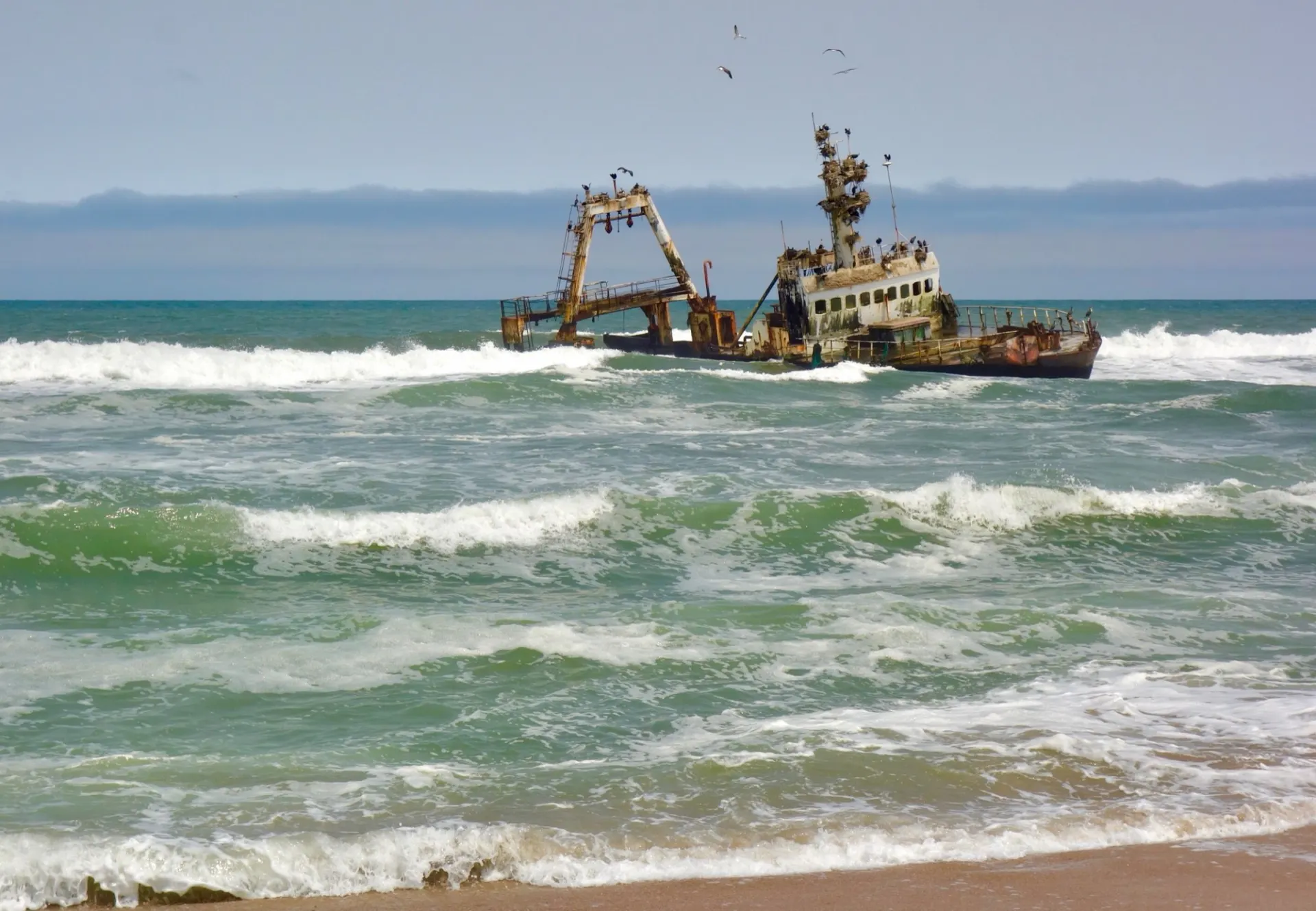
Swakopmund and the coast
Drive: around 345 km of gravel via Solitaire and the Kuiseb Pass · 2 nights
North-west through the Solitaire crossroads and over the Kuiseb Pass to the Atlantic. The landscape shifts from desert heat to cool coastal fog in a single day, thanks to the cold Benguela current offshore. Swakopmund is an old seaside town that's a welcome break from the gravel. You can take a Living Desert tour to find the small creatures of the dunes, kayak with seals near Walvis Bay, or just walk the beach and eat well. Pack a warm layer, the coast stays cool while the interior bakes.
Our take: This is the rest stop in the middle of the trip, and we use it that way. A couple of nights in a proper town, the car gets a break, and you line up an activity or two before heading back inland for the wild stuff.
Day 6 to 7 · the feature
Damaraland and the desert elephants
Drive: around 360 km, tar then rougher gravel D-roads · 2 nights
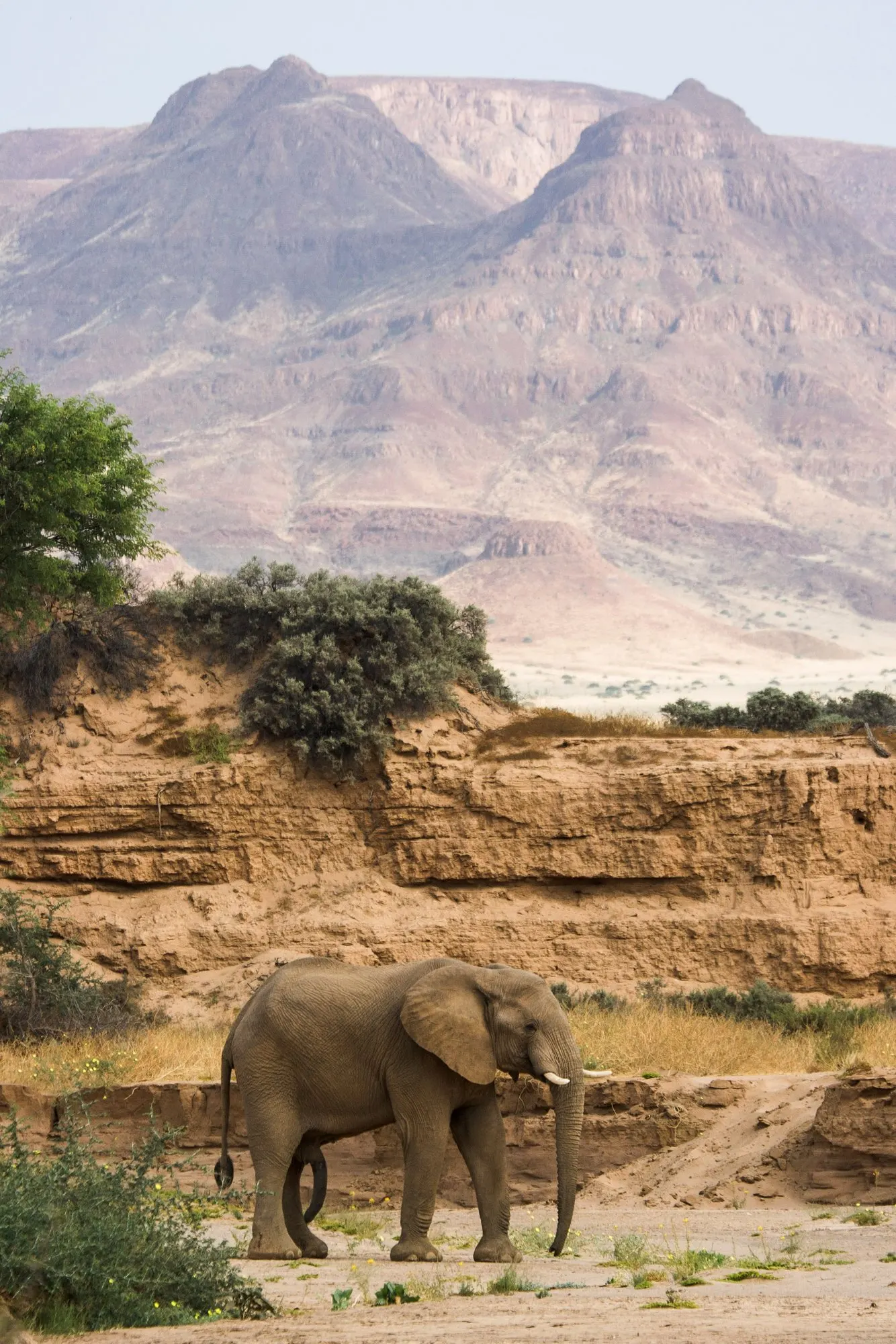
This is the leg people remember. Damaraland is raw, empty desert mountain country, and it's home to the desert-adapted elephants that live in the dry Huab and Hoanib riverbeds. You track them on foot with a local Damara guide, not from your own vehicle, and black rhino move through the same country. There's ancient rock art at Twyfelfontein too. The D-roads in here are rougher, which is the other reason the 4x4 earns its keep. Note that Palmwag needs a self-drive transit permit picked up at the gate.
Our take: The elephants are the reason to come, and you don't want to leave it to luck. We build the guided tracking in around your stay so you're with someone who knows where the herds are, rather than driving the riverbeds hoping. Best from June to October.
Day 8 to 10
Etosha and the waterholes
Drive: around 439 km, gravel then tar, in via the Anderson Gate · 2 to 3 nights
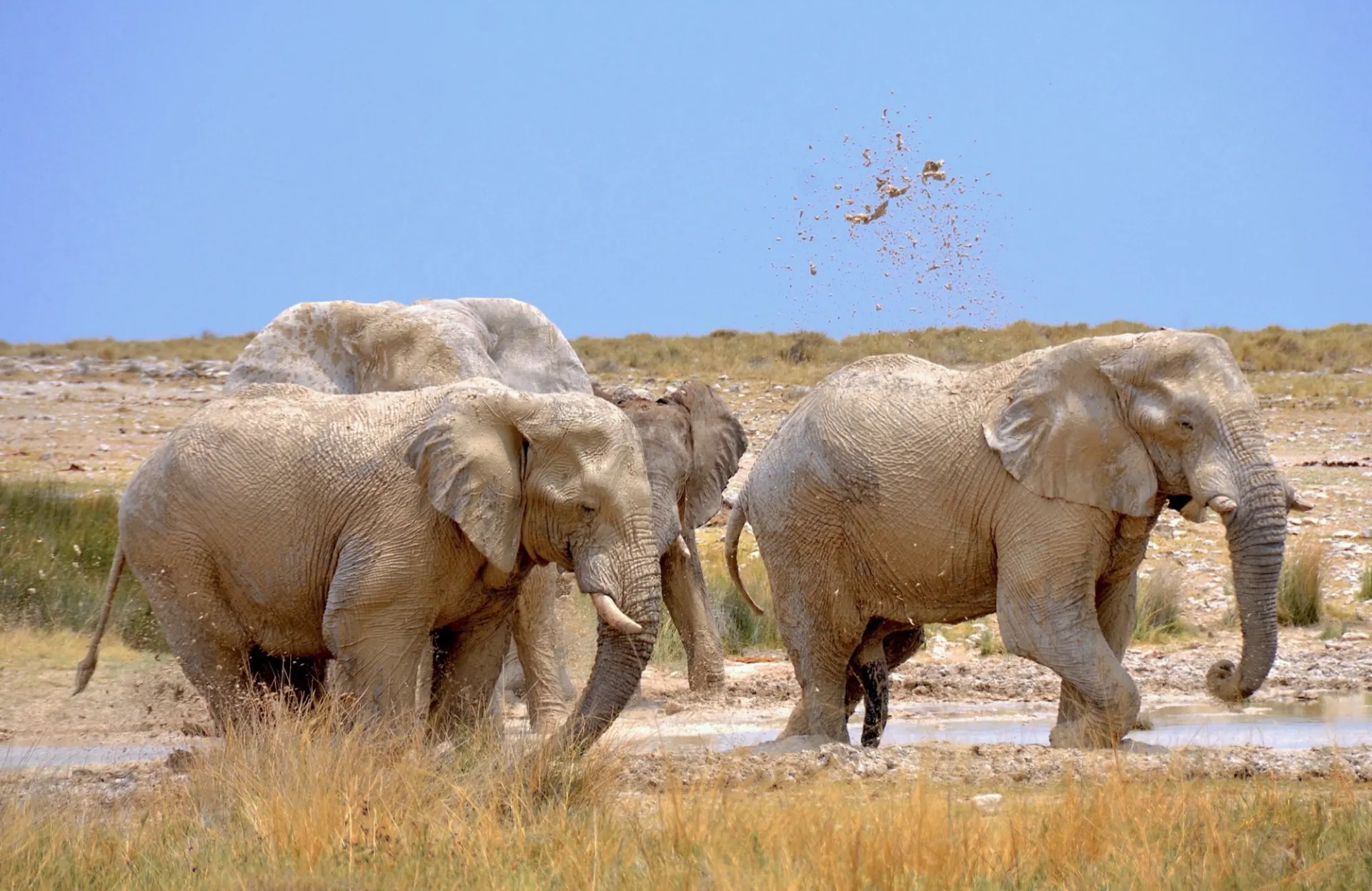
North and east to Etosha, the salt pan so vast you can see it from space, ringed by waterholes that draw the game in. In the dry season you can park at a single waterhole and watch elephant, giraffe, zebra, oryx and the odd lion come and go for hours. This is the easiest self-drive game viewing in Africa, all on good roads inside the park. Stay near Okaukuejo for the floodlit waterhole at night, where rhino often come down to drink after dark. Two or three nights gives you time to settle in and let the animals come to you.
Our take: Etosha is where a self-drive really shines, because you can sit at a waterhole on your own clock. We position you for the best gates and the night-lit waterhole, and time the visit for July to October when the game concentrates.
Day 11 and beyond
The road back, or fly the far north
Drive: around 400 km of tar on the B1 south, closing the loop · or extend by air
From Etosha it's a straightforward tar run south on the B1 back to Windhoek, the easiest driving of the whole trip and a gentle way to wind down. If you've got the days and the budget, this is also where we'd suggest adding a fly-in extension to the remote northern Skeleton Coast and the Hoanib valley, country you can't reach by self-drive. Hoanib Valley Camp is a joint venture with the Giraffe Conservation Foundation, and the flight in over the desert is worth it on its own.
Our take: The northern Skeleton Coast and Hoanib are fly-in only, so we'd never send you driving up there. If that wild north appeals, we add it as a guided air extension at the end and you drop the car in Windhoek first.
Damaraland's desert elephants follow the dry riverbeds. You track them on foot with a local guide, not from the car.
The Desert Elephants: The Highlight Worth Planning Around
If there's one thing that lifts a Namibia self-drive from a beautiful road trip to something you'll talk about for years, it's the desert-adapted elephants of Damaraland. These are wild elephants that have learned to live in one of the harshest places on the continent, moving long distances along the dry Huab and Hoanib riverbeds in search of water and the few green trees that survive out there. Watching a herd pick its way through red rock and sand, miles from anything, is a different kind of wildlife encounter to a packed waterhole.
You don't find them from your own vehicle, and you shouldn't try. They're tracked on foot or in a guided vehicle with a local Damara guide who knows the riverbeds and reads the signs. Black rhino move through the same country, tracked the same careful way. The late dry season, roughly June to October, is the time to come, when the animals follow predictable routes between water and are easier to locate. The further north you go, into the Hoanib, the more remote and special it gets, and that deep north is fly-in country rather than self-drive.
This is exactly the kind of thing we plan around rather than leave to chance. We build a guided tracking session into your Damaraland stay so the one part of the trip that genuinely needs local knowledge is in the hands of someone who has it. You self-drive everything else and let the experts handle the elephants.
When to Go
The dry winter, roughly May to October, is the default and for good reason. The weather is comfortable for the long drives, the gravel roads are dependable, and the wildlife is at its best as Etosha's pans dry and the game crowds the waterholes. Game viewing peaks from July to October, and the Damaraland elephants are best from June to October. Nights get genuinely cold in June and July, so pack warm layers for early starts.
MayThe shoulder into winter. Landscapes still hold a little green, temperatures are mild, prices sit below peak, and the roads are dry. A lovely, quiet month for a self-drive.
June to JulyPeak winter. Crisp clear days, very cold nights, dependable gravel everywhere. Etosha game is building strongly. School-holiday demand pushes prices up, so book early.
August to OctoberThe best game window. Etosha's waterholes are busy, the desert elephants follow predictable routes, and the weather is reliable. Peak season, lock in your vehicle and stops well ahead.
November to AprilThe green summer. Dramatic skies behind the dunes, lower prices and far fewer travellers, but real heat and the odd gravel road washed out after a storm. Game viewing is harder. Better for return visitors.
For the detail on how each region trades off through the year, our best time to visit Namibia guide goes month by month. If you're weighing up the budget, the how much does a Namibia safari cost guide breaks down what goes into the price. One planning note for East Africa fans: if you want to pair Namibia with Tanzania in the same year, do Namibia first, because the two dry-season peaks overlap.
Etosha in the dry season. Park at a waterhole and let the game come to you, all on good roads inside the park.
Getting There
From Australia the cleanest routing is via Johannesburg, then a short connection on to Windhoek at Hosea Kutako International, the WDH airport about 45 kilometres from the capital. Nairobi and Addis Ababa also connect through to the region if your wider trip routes that way. Once you're on the ground, the self-drive starts the moment you collect the vehicle, and the only flying inside Namibia is the optional light-aircraft hop to the remote far north, which can't be reached by road.
The handover in Windhoek is the part that sets the tone. You collect the vehicle, run through the gear and the route, stock up, and spend a night in town before you drive. Trying to fly in and drive the same day is how tired mistakes happen, so we always build in that first night.
How We Make It Bulletproof
Here's what "no third parties, no middlemen" means for a self-drive. We design the route from Australia and we run it on the ground in Namibia through our own self-drive partner in Windhoek, who operate their own fleet and run 24-hour support. There's no faceless booking site between you and the people who'll pick up the phone if a tyre goes on a Sunday afternoon two hours from town. That matters more on a self-drive than on any other kind of trip, because you're the one behind the wheel.
The planning is where the real value sits. We spec the right vehicle, with high clearance, the correct tyres, recovery gear and a second spare, and we book it with proper tyre and windscreen cover rather than the cheap stripped-back rate. We plan each leg so the day's drive is done by mid-afternoon and you're never on gravel after dark. We sort the Sossusvlei sunrise timing, the Damaraland elephant tracking, the Etosha waterhole positioning and the permits like the Palmwag transit pass before you ever leave home. And we leave you a clear day-by-day plan plus the partner's emergency line, so if anything does come up, help is one call away.
That's the difference between a self-drive that's a holiday and one that's a worry. You get the freedom of your own vehicle and your own pace, and we take care of everything that could go wrong behind the scenes. You drive the good roads, we handle the hard parts.
Thinking about a Namibia self-drive? Tell us roughly when you can travel and how you like to road-trip, and we'll lay out an honest route, the right vehicle and where we'd add a guided leg. Start a conversation or run a quick estimate to see what's involved.
Self-Drive or Guided? An Honest Steer
Plenty of people ask whether they should self-drive at all, and the honest answer is that it depends on you. A self-drive gives you freedom, a slower pace, a real sense of the country, and usually a lower price. A guided trip hands the driving and navigation to someone else and puts a guide in the vehicle to read the bush, which suits travellers who'd rather not deal with gravel or who want expert eyes on the wildlife. Neither is better, they're different trips.
A lot of our clients land on a hybrid, and it's often the smartest call. You self-drive the scenic touring legs, the dunes, the coast, Etosha, where the roads are easy and the freedom is the whole point, then add a guided fly-in for the remote north where the driving stops making sense. We'll talk it through with you based on your group, your driving confidence and what you most want out of the trip, and we'll tell you straight if we think a self-drive isn't the right fit. Better to have that conversation now than halfway up a D-road.
The remote northern Skeleton Coast is fly-in country, the natural add-on at the end of a self-drive loop.
Frequently Asked Questions
Is a Namibia self-drive safe and doable?
Yes. Namibia is one of the most self-drive friendly countries in Africa. The roads are quiet, the main routes are well signed, and you drive on the left like Australia. The catch is the gravel. Most of the touring is on gravel roads, which need a different driving approach to bitumen: keep your speed sensible, never drive after dark, and treat a tyre change as part of the trip. With a properly specified vehicle and a planned route, ordinary travellers do this every season without trouble.
Do I need a 4x4 in Namibia?
For a proper self-drive, yes. A high-clearance 4x4 is the sensible choice for the gravel touring, and it's genuinely needed for the soft sand on the final stretch into Sossusvlei and for the rougher D-roads in Damaraland. A standard car can manage the main tar routes between the big towns, but it can't reach the parts of Namibia people come to see. We always put clients in a high-clearance 4x4 with full tyre and windscreen cover.
How long do I need for a Namibia self-drive?
Ten to fourteen days is the sweet spot. Namibia is vast and the legs between highlights are long, so a rushed trip means too much time behind the wheel. Two weeks lets you take in Sossusvlei, the Swakopmund coast, Damaraland and Etosha at a sensible pace with proper rest days. A week can cover the dunes and Etosha if you fly some legs rather than drive everything.
When is the best time for a Namibia self-drive?
The dry winter, roughly May to October, is the default. The weather is comfortable for the long drives, the gravel roads are dependable, and Etosha game crowds the waterholes, peaking July to October. The desert elephants of Damaraland are best from June to October. The green summer from November to April brings dramatic skies and lower prices but tougher game viewing and the odd washed-out road. Book nine to twelve months ahead for the peak winter window.
Can I see the desert elephants on a self-drive?
Yes, and they're a highlight of the route. The desert-adapted elephants live in the Huab and Hoanib riverbeds of Damaraland and are tracked on foot with a local Damara guide rather than from your own vehicle. Black rhino move through the same country. They're easiest to find in the late dry season, June to October, when they follow predictable routes between water. We build the guided tracking in around your Damaraland stay so you're not hoping to stumble on them yourself.
Should I do a guided trip or a self-drive in Namibia?
It depends on how you like to travel. A self-drive gives you freedom, a slower pace and a real sense of the country, and it usually costs less than a fully guided trip. A guided trip hands the driving and the logistics to someone else, which suits travellers who'd rather not navigate gravel roads or who want a guide reading the bush for them. Plenty of our clients land on a hybrid: self-drive the scenic touring legs, then add a guided fly-in for the remote north. We help you choose honestly based on your group and your comfort.
Ready to Experience This?
Let us plan your route
Every trip we build is tailored to you, the right vehicle, the right stops, the gravel and the permits all sorted before you leave home. Tell us your dates and try the trip estimator, and we'll take it from there.
Pick up the phone if you'd rather talk it through. We spend a good part of the year moving between Australia and Africa, so if we miss you, WhatsApp Samara and we'll come back to you whatever the time zone.
Safaris · enquiries & bookings
Samara Imhoof
Bookings & Client Care
Whether you're just kicking around ideas or already booked. Dates, lodges, costs, changes, payments, flights.