Namibia is a year-round destination, but it isn't a classic Big Five safari country, so the usual dry-season rules only half apply. It's a place of vast landscapes: the towering red dunes of Sossusvlei, the game-rich pans of Etosha, the desert wilderness of Damaraland, and the eerie fog of the Skeleton Coast. The right time to go depends on whether you're chasing wildlife, light or solitude. Here's an honest look at each season.
The Quick Answer
Best overall: June to October, the dry winter. The most comfortable weather for the long drives a Namibia trip involves, and the best game viewing as wildlife concentrates at Etosha's waterholes. Best for dramatic skies and solitude: November to March, the hot summer, when storm clouds gather behind the dunes and crowds thin out. Peak game: August and September.
Understanding Namibia's Seasons
Namibia has a dry winter and a wetter summer, but it's one of the driest countries on earth, so even the rainy season is modest by safari standards. The dry winter runs roughly May to October, with cool nights, mild days and clear skies. The summer, November to April, brings heat and the chance of afternoon thunderstorms, mostly in the north and east. The far west, along the coast, follows its own rhythm: cool, foggy and dry all year thanks to the cold Benguela current offshore.
Because so much of a Namibia trip is about scenery and self-drive-style touring rather than dawn-to-dusk game drives, weather comfort matters more here than in a pure safari country. That's why the dry winter, when the days are pleasant and the roads are dependable, is the default choice.
May to October: The Dry Winter
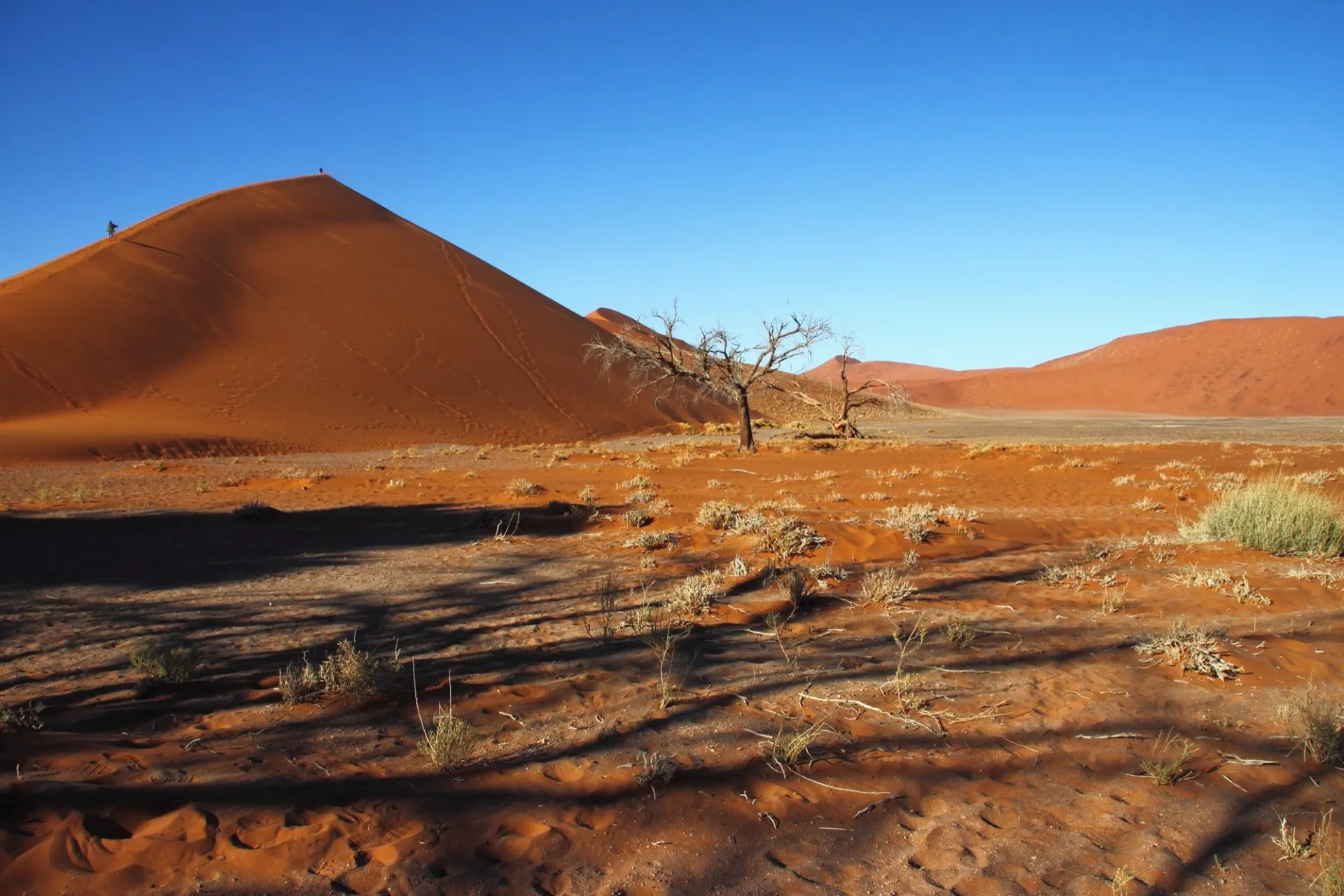
This is Namibia's prime season. The skies are clear, the days are comfortable, and the nights are cold, particularly in June and July when desert temperatures can drop near freezing. For touring the long distances between Sossusvlei, the coast, Damaraland and Etosha, this is by far the easiest weather to travel in.
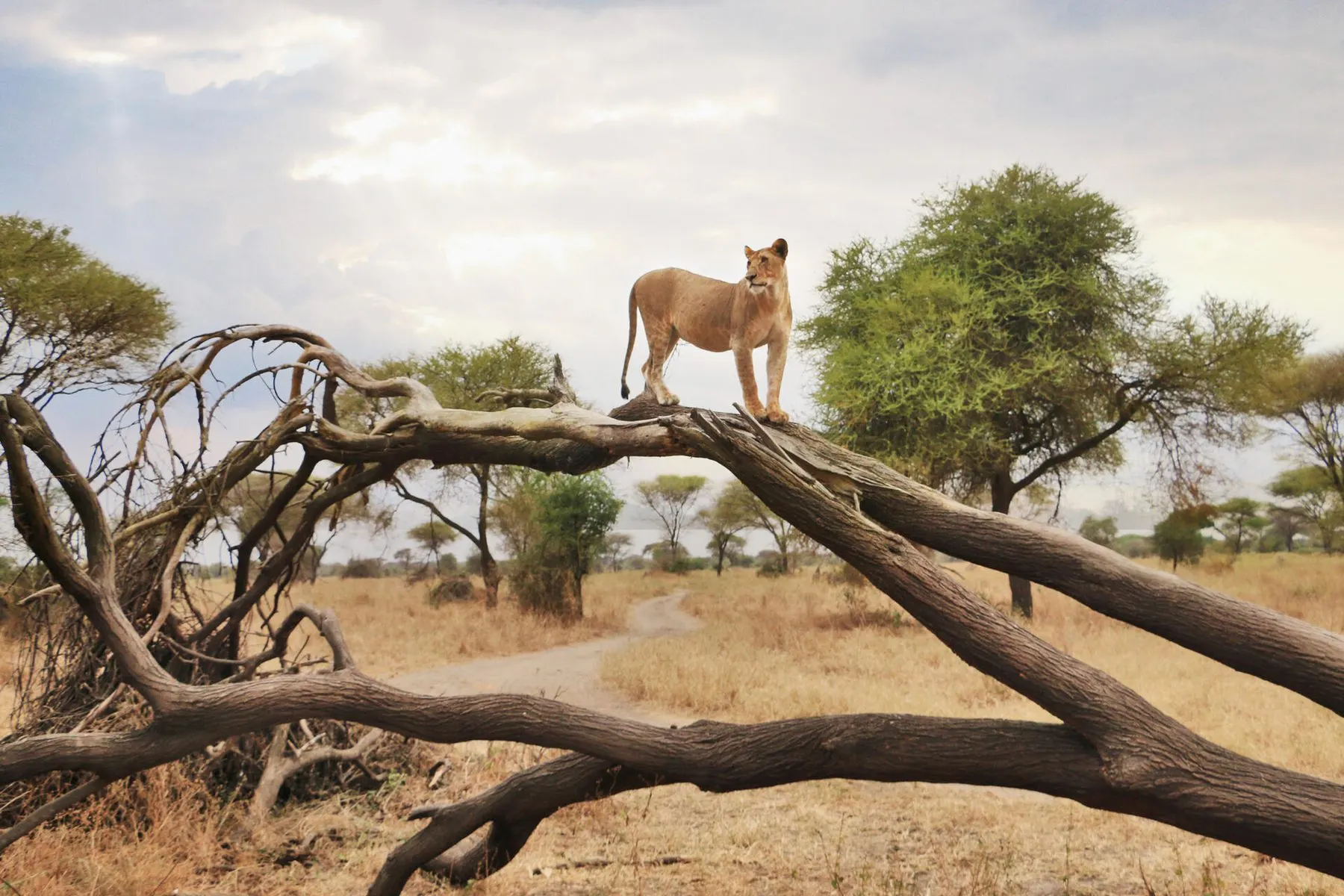
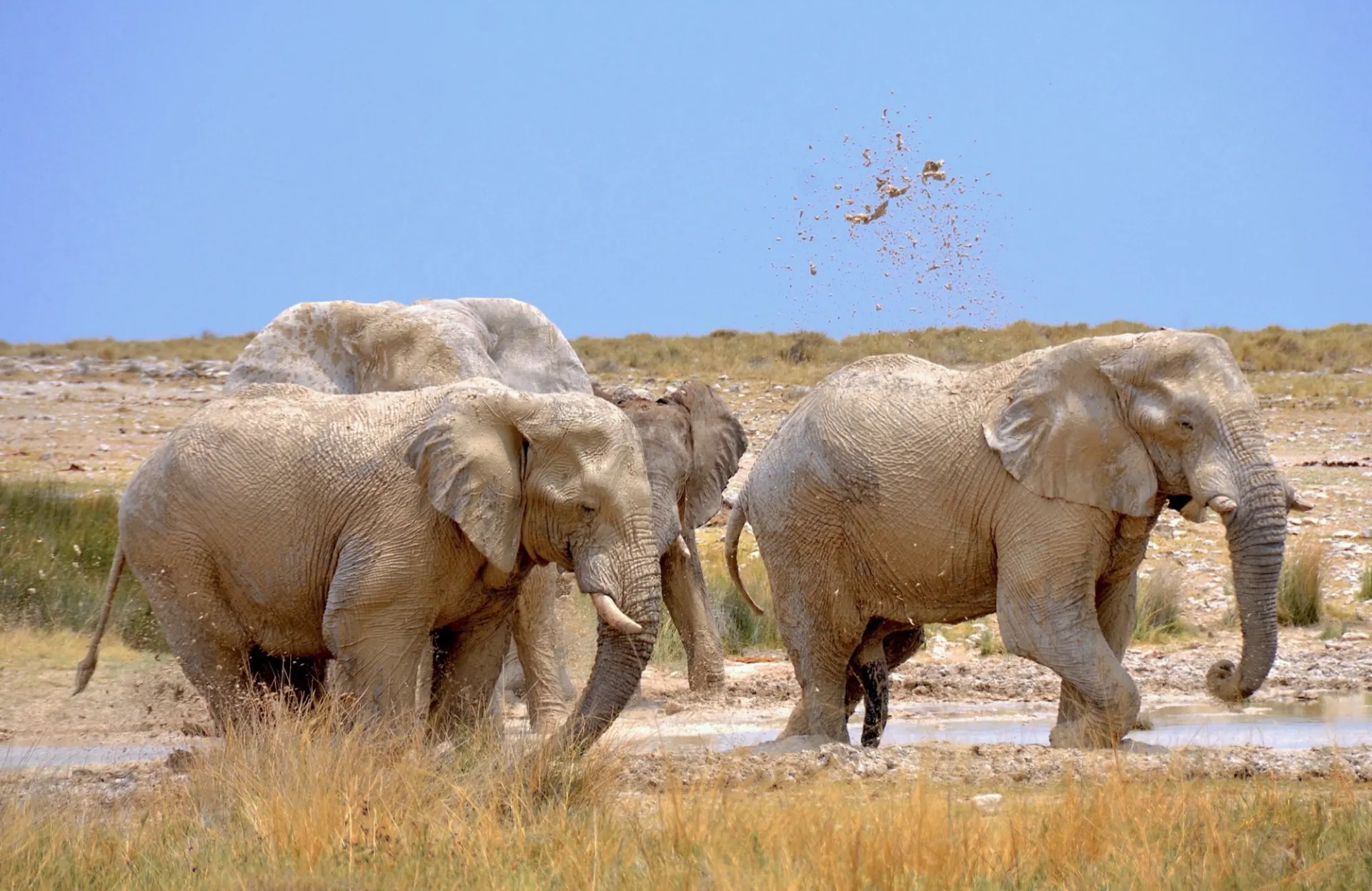
It's also the best window for wildlife. As the dry season deepens, Etosha's seasonal pans dry up and the bush thins, so animals are forced to the permanent waterholes. By the late dry season you can sit at a single waterhole and watch a parade of elephant, giraffe, zebra, oryx and predators come and go.
The trade-offs: June to September is the most expensive and most popular period, the best lodges at Sossusvlei and in Etosha book out well ahead, and winter mornings on open vehicles and at the dunes are genuinely cold. A good operator books the gateway lodges early and times your dune visits for sunrise, when the light and temperature are perfect.
November to April: The Summer
Summer in Namibia is hot, sometimes intensely so, with daytime temperatures climbing well into the high thirties inland. The rains, when they come, fall as short afternoon thunderstorms rather than steady downpours, and they're concentrated in the north and east. It's the country's quiet season, and it has a real and different appeal.
The skies are the headline. Towering storm clouds build behind the red dunes at Sossusvlei and over the rock formations of Damaraland, giving photographers the dramatic light the dry season simply can't offer. In a good rain year the desert greens up, springbok and zebra drop their young, and the normally bone-dry pans can briefly hold water, a rare and striking sight. Migrant birds arrive and birding peaks. Prices fall and the popular sites are far less crowded.
The trade-offs are heat and harder game viewing. With water scattered across the landscape, Etosha's animals disperse and are tougher to find. Some gravel roads can wash out briefly after a heavy storm. This window suits photographers, birders and return visitors who already know Namibia, more than a first-timer chasing easy wildlife.
By Region: When to Go
Sossusvlei and Deadvlei
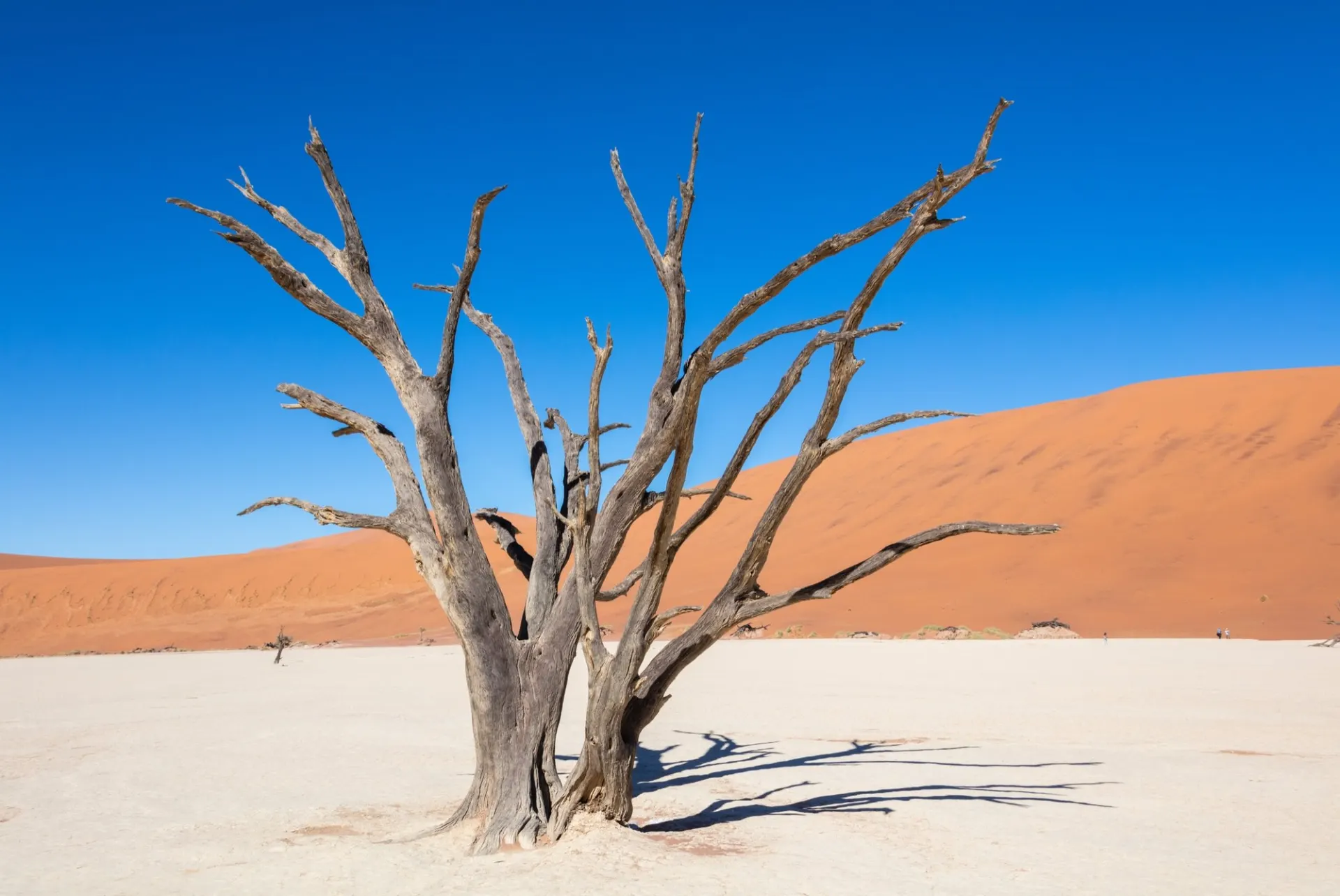
Year-round, but the experience shifts with the season. The dry winter gives clear, cool sunrises that are perfect for climbing the dunes and shooting Deadvlei's ancient camel-thorn trees. Summer brings dramatic storm skies and, very occasionally, water in the pan. Whatever the season, go at dawn before the heat and the day-trippers arrive.
Etosha National Park
Best July to October for the country's strongest game viewing, when wildlife crowds the waterholes. The green summer is quieter and good for birding and newborns, but the animals scatter and are harder to find. For the classic waterhole spectacle, come in the late dry season.
Damaraland
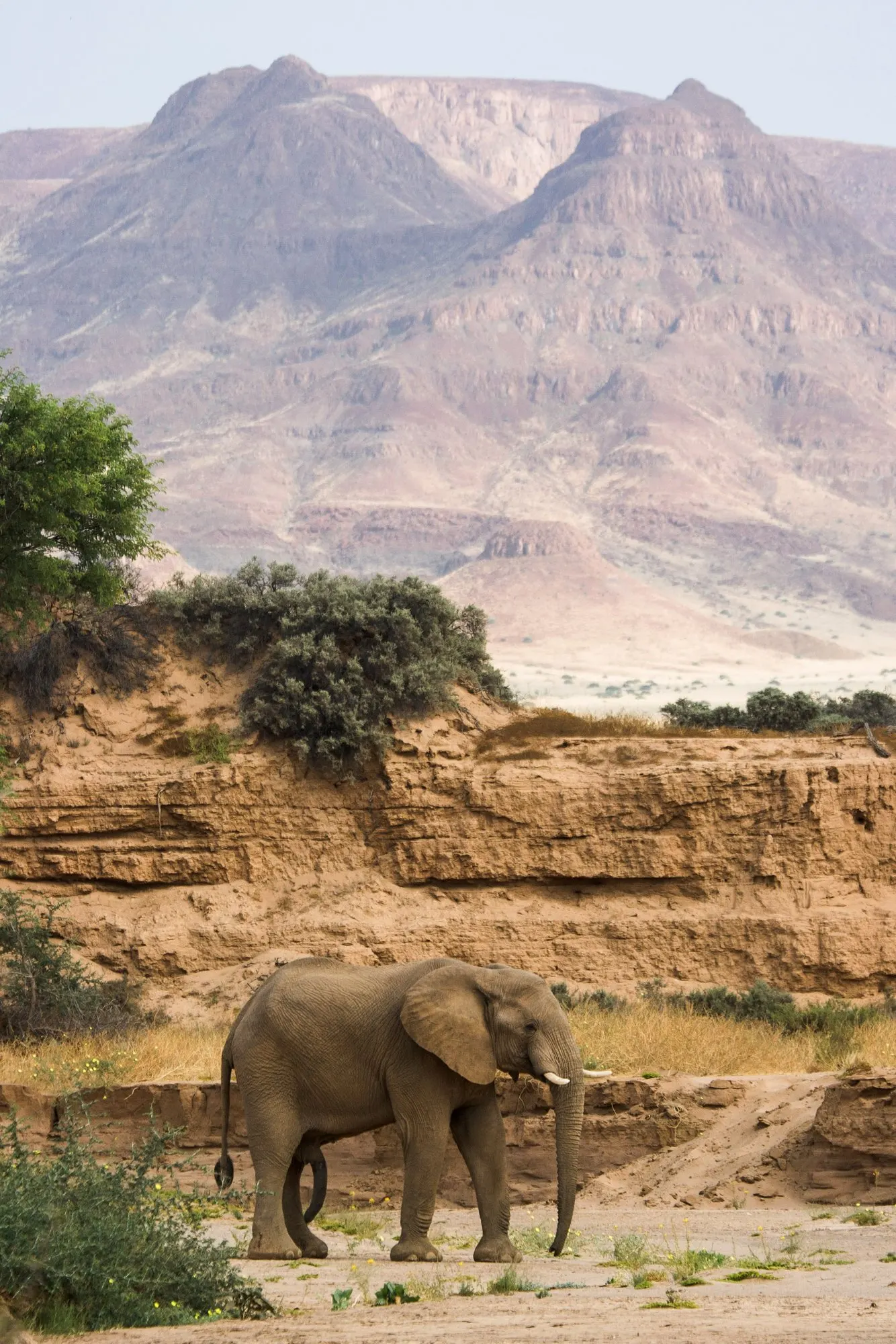
Best June to October for tracking the famous desert-adapted elephants and rhino, which move along the dry riverbeds and are easier to locate when water is scarce. The ancient rock art and dramatic geology are worth the trip in any season, but the late dry season concentrates the wildlife along predictable routes.
Skeleton Coast and Swakopmund
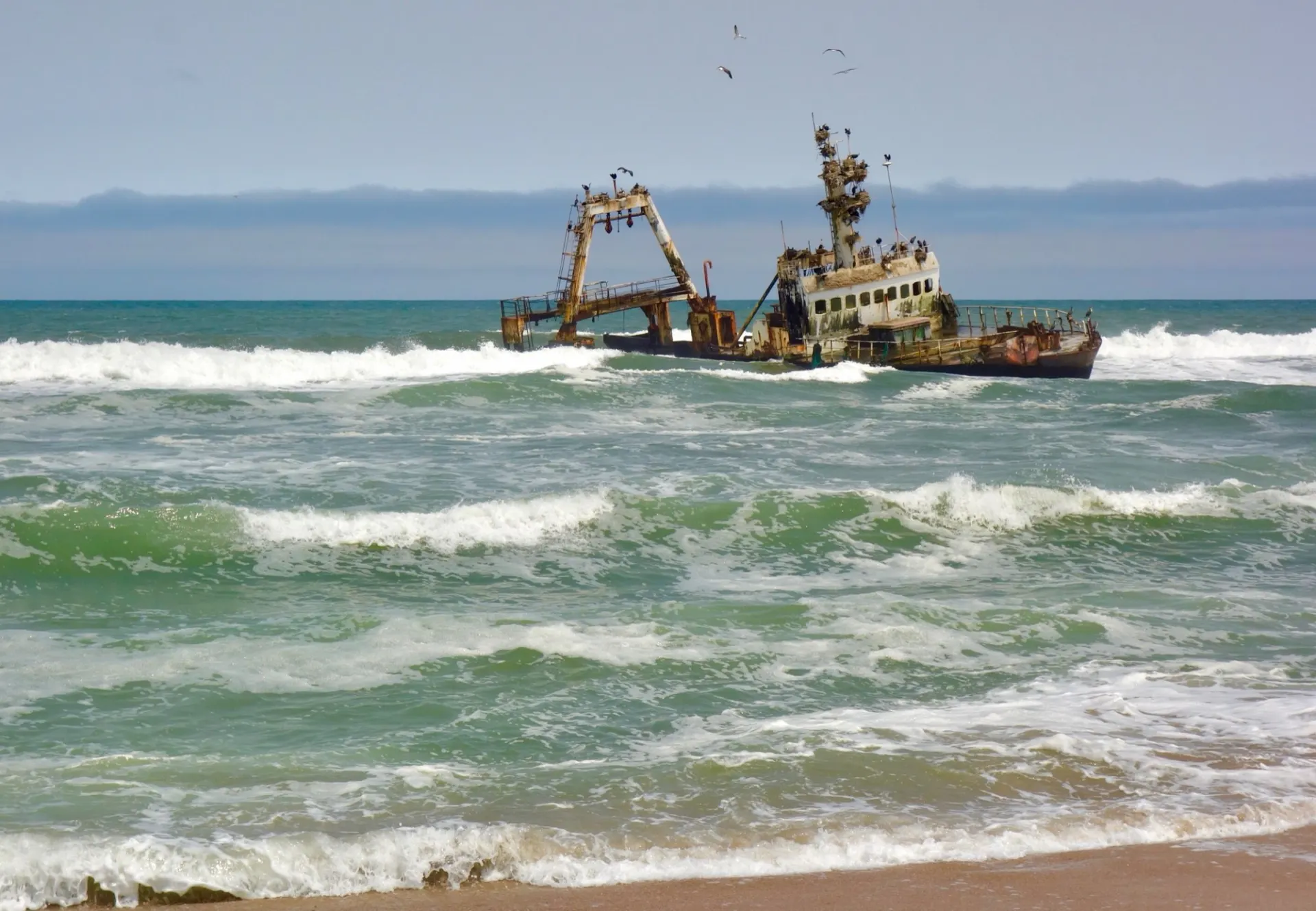
Any time. The coast is cool, dry and often foggy year-round because of the cold Benguela current, so it offers welcome relief when the interior is baking in summer. The shipwrecks, seal colonies and stark dunes-meet-ocean scenery are constant. Pack a warm layer even in midsummer, the coast stays cool while the rest of the country bakes.
Practical Planning Considerations
How far in advance should I book?
For June to September peak season, 9 to 12 months ahead, as the best lodges at Sossusvlei and in Etosha are limited and fill early. For the shoulder months (May, October), 6 to 9 months is sensible. For the summer, 4 to 6 months is usually fine.
What about flights?
From Australia, the cleanest routing is via Johannesburg, then a connection to Windhoek (Hosea Kutako International). Nairobi and Addis Ababa also connect through to the region. Within Namibia, the distances are long, so we often build in light-aircraft transfers between Sossusvlei, the coast and Etosha to save a full day of driving.
How long do I need?
Ten to fourteen days is the sweet spot. The country is huge and the highlights are spread out, so a rushed schedule means too much time in the vehicle. Two weeks lets you take in Sossusvlei, the Swakopmund coast, Damaraland and Etosha at a sensible pace.
Frequently Asked Questions
What is the best month to visit Namibia?
June to October, the dry winter, is the best window for most travellers. Etosha's wildlife concentrates at the waterholes and is easy to find, the days are clear and comfortable for the long drives a Namibia trip involves, and there's almost no rain. August and September are the peak game-viewing months. If you mainly want the dunes and dramatic skies rather than big game, the summer months work well too.
When is the best time for game viewing at Etosha?
July to October. As the dry season deepens, the bush thins and the seasonal pans dry up, so wildlife is forced to the permanent and artificial waterholes that ring Etosha. You can sit at a single waterhole and watch elephant, giraffe, zebra, oryx and predators come and go. By the late dry season the concentrations are extraordinary.
When is the best time to visit Sossusvlei?
Sossusvlei works year-round, but each season has a different mood. The dry winter (May to October) gives clear cool mornings, perfect for climbing the dunes at sunrise, with comfortable daytime temperatures. The summer months (November to March) bring dramatic storm skies behind the red dunes and the rare chance of water in the pan, though the heat is serious by midday.
Is Namibia good to visit in summer?
Yes, with the right expectations. November to April is hot, with occasional afternoon thunderstorms, mainly in the north and east. The upside is dramatic skies over Sossusvlei and Damaraland, lush green desert after rain, far fewer travellers, and lower prices. Game viewing at Etosha is harder because the animals disperse to scattered rain pools. It suits photographers and return visitors more than a first trip.
How many days do you need in Namibia?
Ten to fourteen days is the sweet spot. Namibia is vast and the distances between highlights are long, so a rushed trip means too much time in the vehicle. Two weeks lets you take in Sossusvlei, the Swakopmund coast, Damaraland and Etosha at a sensible pace. A week can cover the dunes and Etosha if you fly some legs.
When is the best time to see desert-adapted elephants in Damaraland?
The dry season, roughly June to October, is best for tracking the desert-adapted elephants and rhino of Damaraland, when they move along the dry riverbeds in search of water and are easier to locate. The scenery is striking year-round, but the late dry season concentrates the wildlife along predictable routes.
Does it rain on the Skeleton Coast?
Almost never. The Skeleton Coast is one of the driest places on earth and gets most of its moisture from coastal fog rather than rain. It's cool and often misty year-round because of the cold Benguela current offshore, so you can visit any time. Pack a warm layer even in summer, as the coast stays cool while the interior bakes.
Ready to Experience This?
Let us plan your trip
Every safari we build is tailored to you, the right places at the right time, with the long drives and light-aircraft legs sorted so you spend your days on the dunes and at the waterholes. Tell us your dates and try the trip estimator, and we'll take it from there.