Namibia Safari from Australia: Sossusvlei & Etosha | Kingse
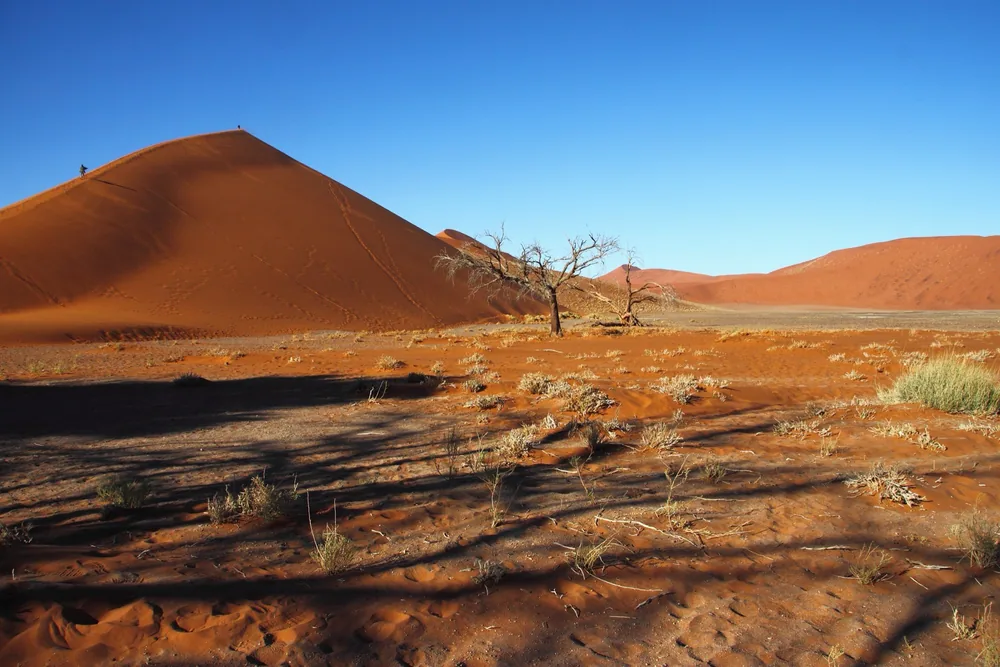
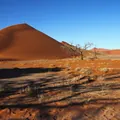
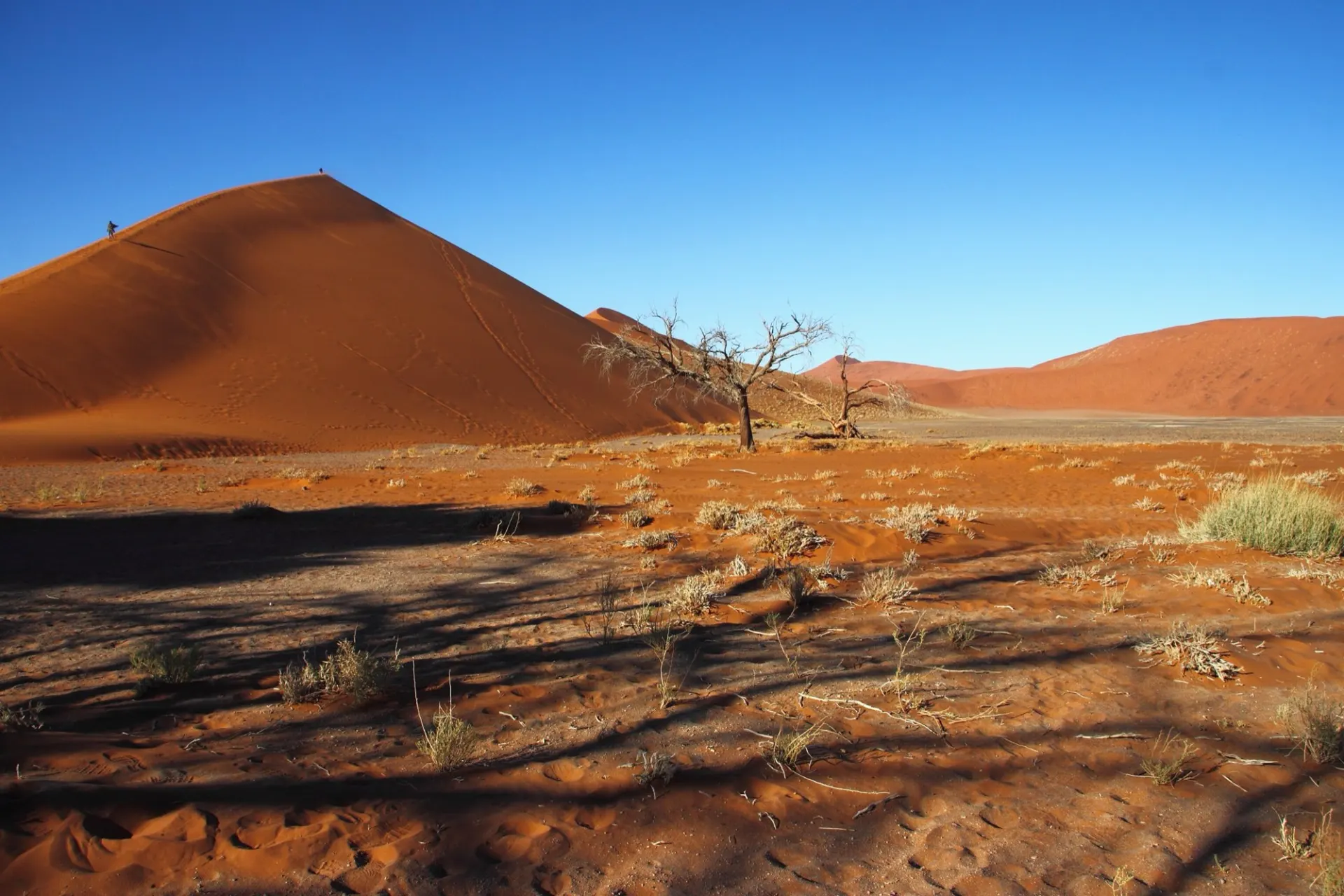
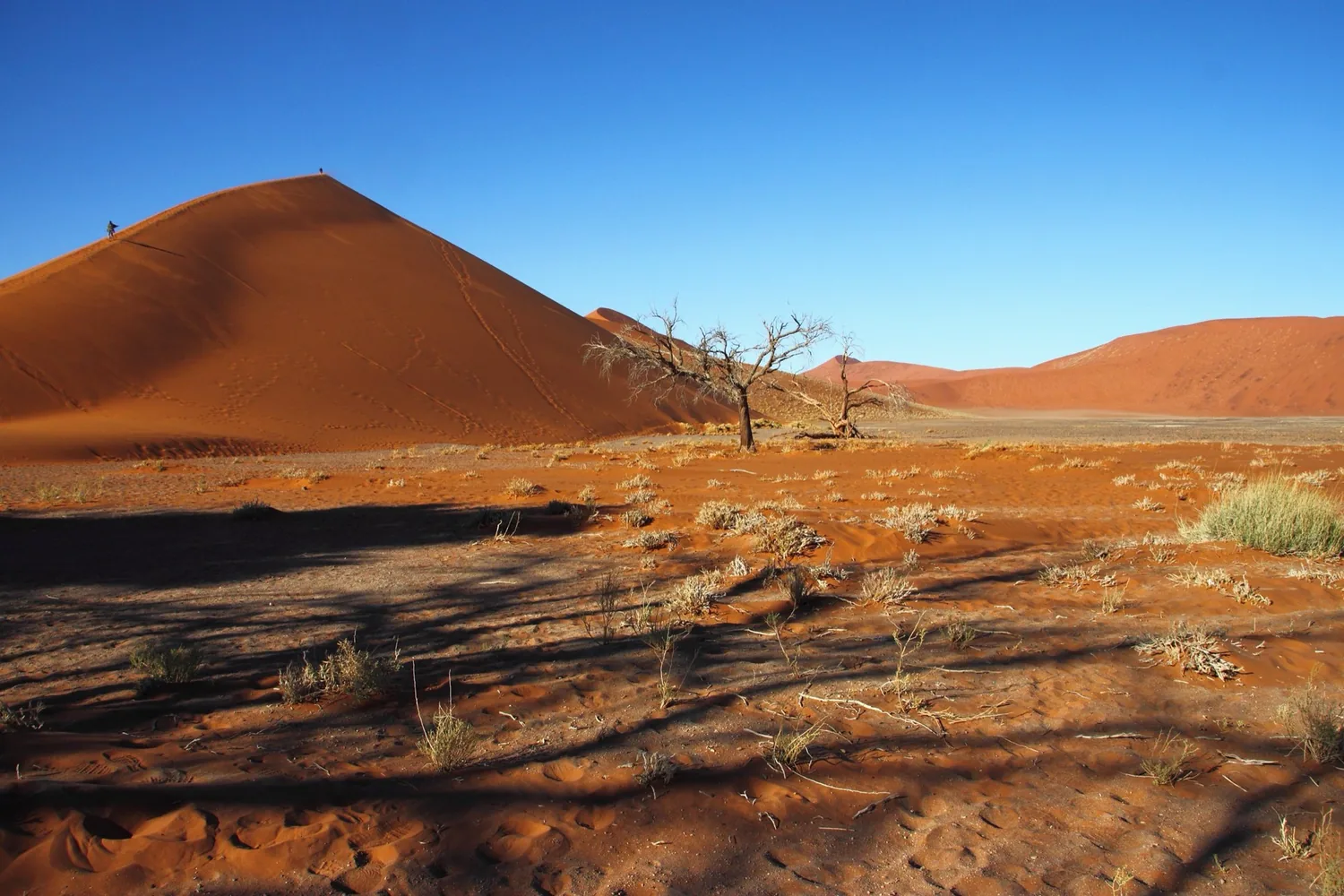
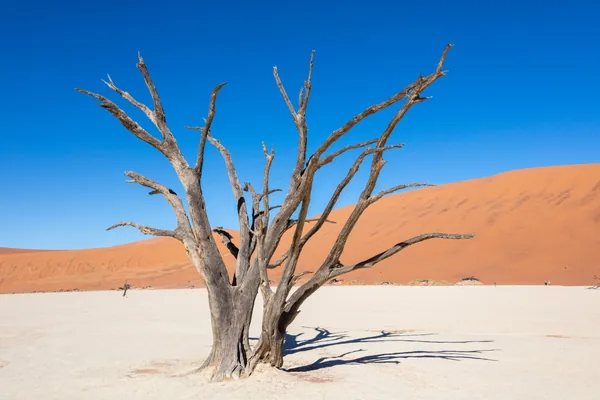
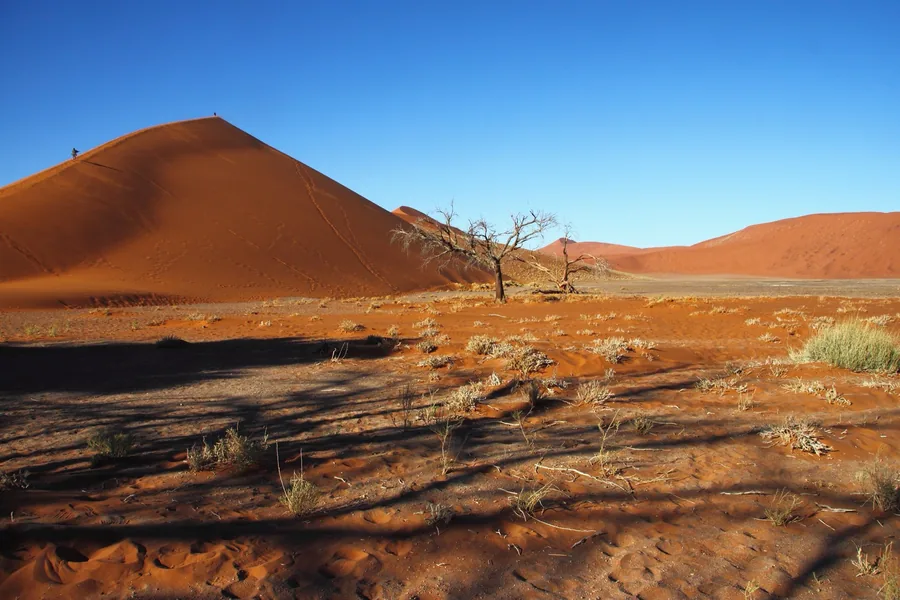
A dead camelthorn tree on the white clay pan of Dead Vlei, with a red Sossusvlei dune behind it

Sossusvlei · Etosha · Damaraland · Skeleton Coast

Namibia Safari

Private trips through the desert, by guided 4WD, light aircraft or your own wheel, planned from the Gold Coast and priced in Australian dollars.

Five stars. 5.0 on Google and Tripadvisor37 five-star reviews, every one of them

The Safari for People Who Want Space

Endless dunes · Big herds · Roads with little traffic

Namibia is the safari for travellers who want big country without the crowd. It's one of the least densely populated countries on earth, so long stretches of road carry little other traffic, and the landscape changes hour by hour: rust-red dunes at Sossusvlei, a vast salt pan at Etosha, granite mountains and desert-adapted elephants in Damaraland, and the Atlantic's strangest coastline at the Skeleton Coast. It's also the one safari country where driving yourself can be the better way to go, for the right traveller, though for a first visit we usually suggest a private driver-guide or light aircraft between regions.

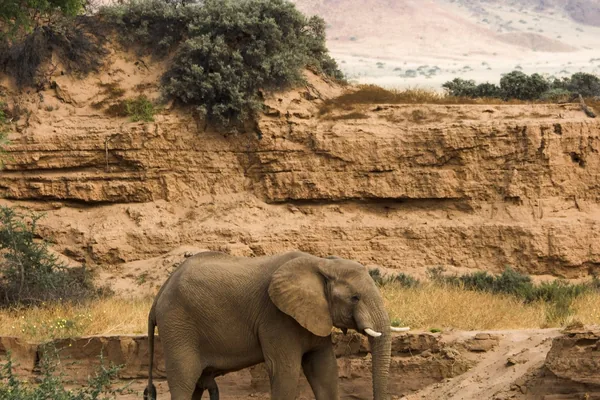
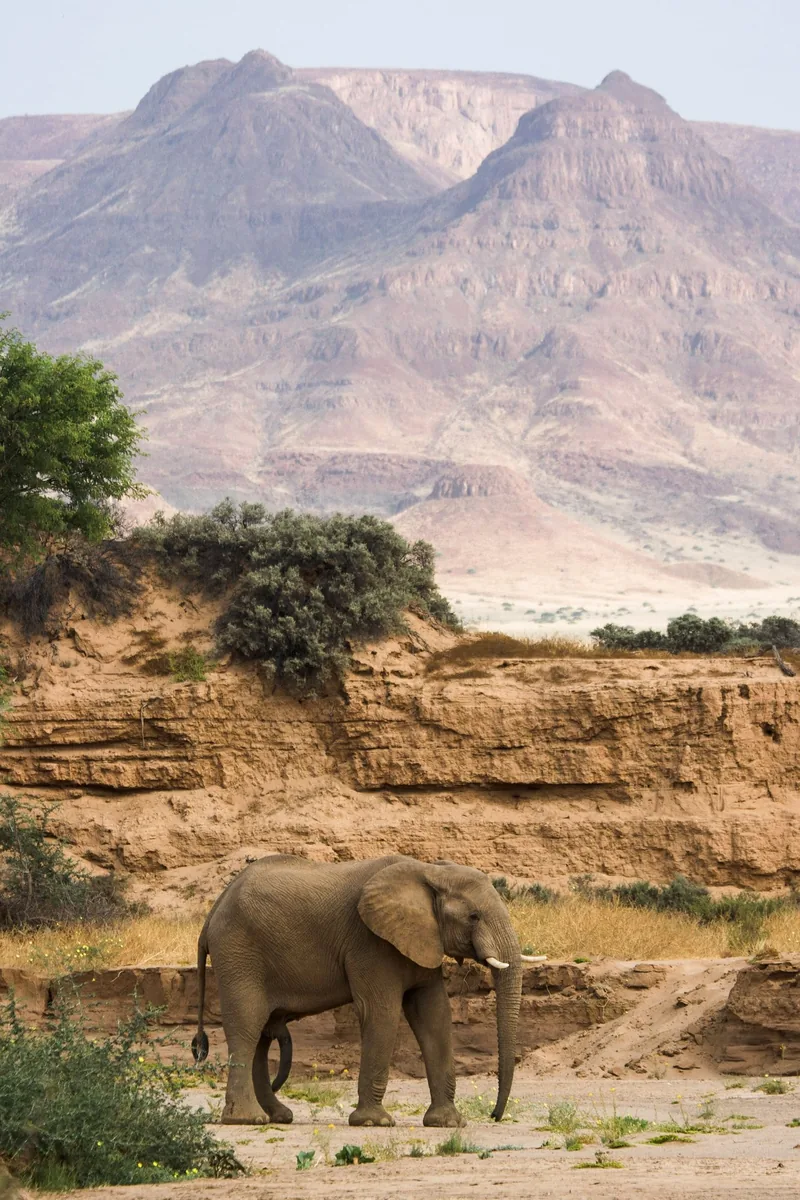
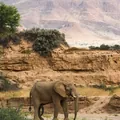
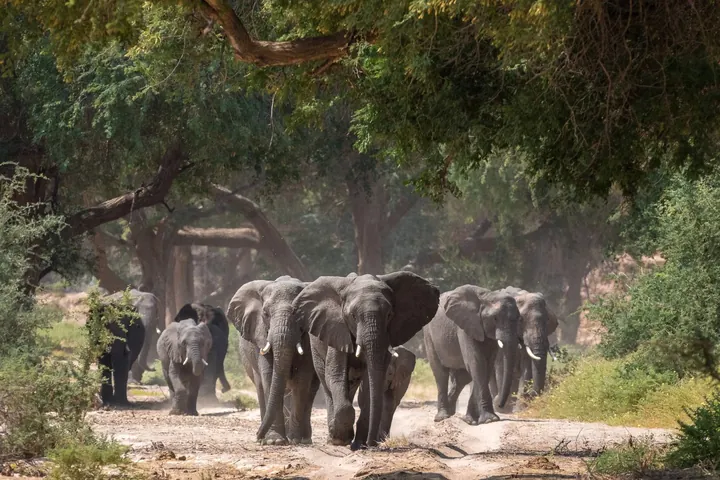
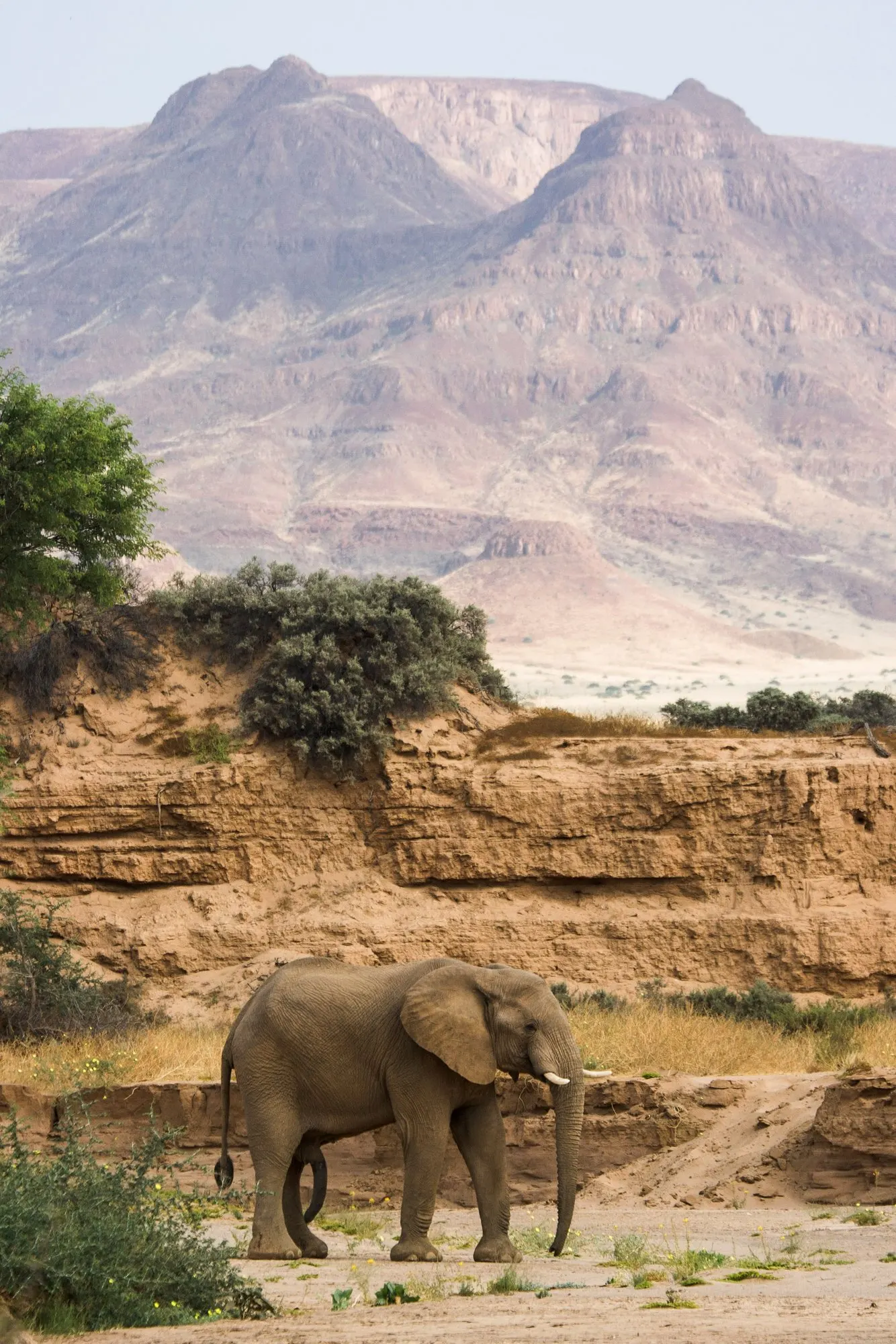
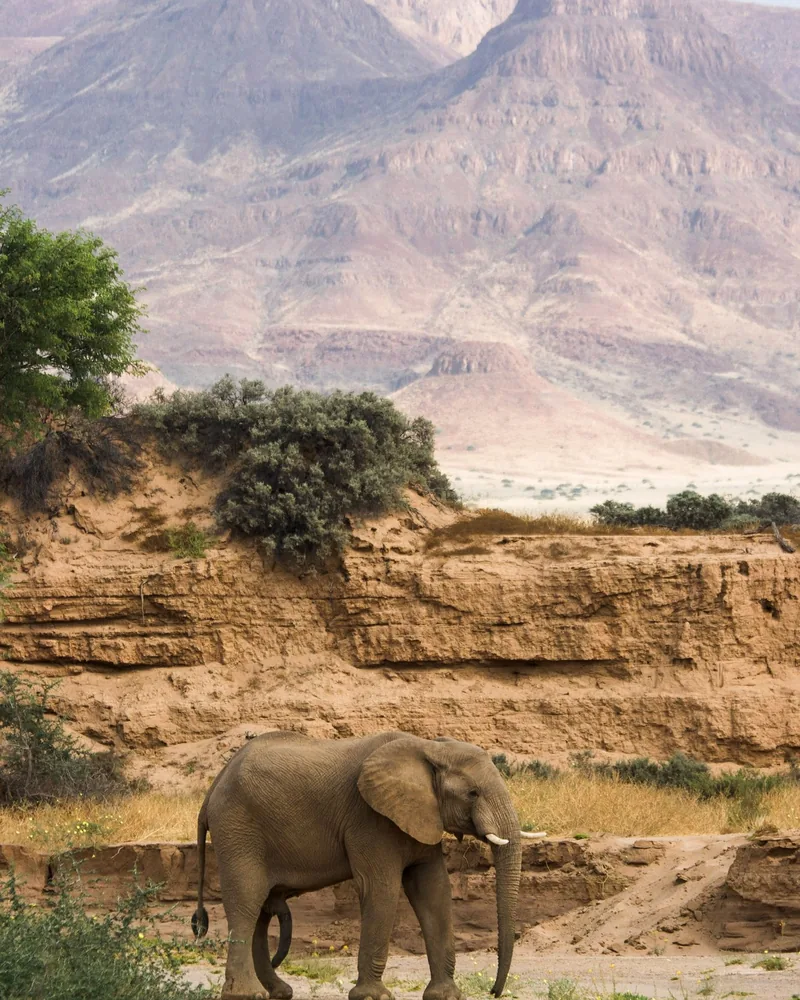
A desert-adapted elephant standing in a dry riverbed below sandstone cliffs in Damaraland
A desert-adapted elephant in a dry riverbed, Damaraland.

Namibia at a glance

  • Best monthsJune to OctoberThe dry winter; August and September are the peak game months
  • Typical trip10 to 14 nightsSeven covers the dunes, the coast and Etosha if you fly
  • Flying time14 to 15 hoursSydney to Johannesburg non-stop, then a short flight to Windhoek
  • Time difference8 hours behind BrisbaneUTC+2 all year, no daylight saving
  • Highlights
    • Sossusvlei dunes
    • Etosha waterholes
    • Desert elephants
    • Skeleton Coast
    • Dark skies

Who you're dealing with

We're an Australian company on the Gold Coast. We design the whole trip, book it, and look after you from first call to flight home, on one contract and one invoice from Kingse Safaris Pty Ltd (ABN 37 698 821 886). On guided trips a private driver-guide covers the road days, and each lodge's own guides lead your drives and walks.

How booking works →
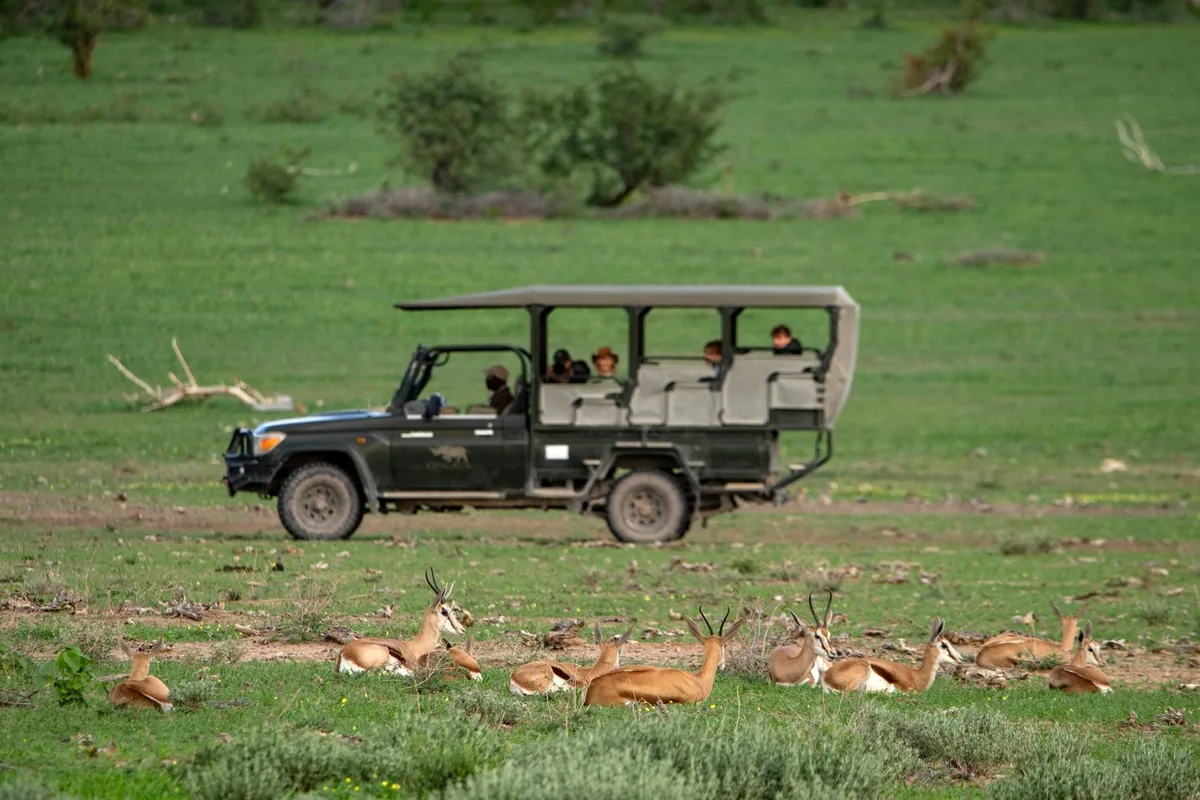
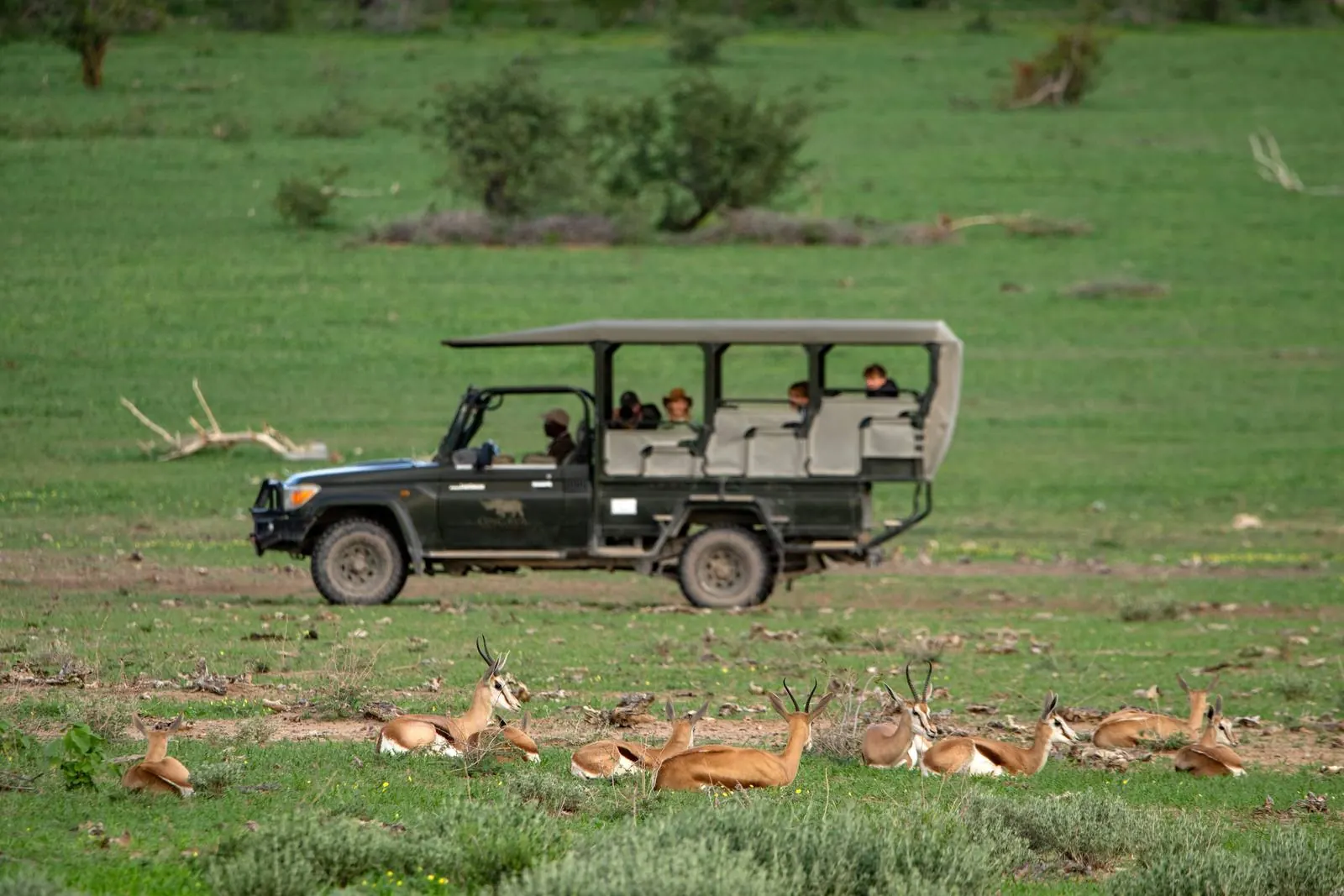
Guests in an open game-drive vehicle on the green plain at Ongava, beside Etosha, with springbok in the grass

In a guest's words

Jackson was professional and knowledgeable right from the beginning.

Five stars. Amanda Thomas, Tanzania, June 2026, on Tripadvisor

Namibia, Region by Region

Tour the Regions

Scroll, and the map follows you from region to region.

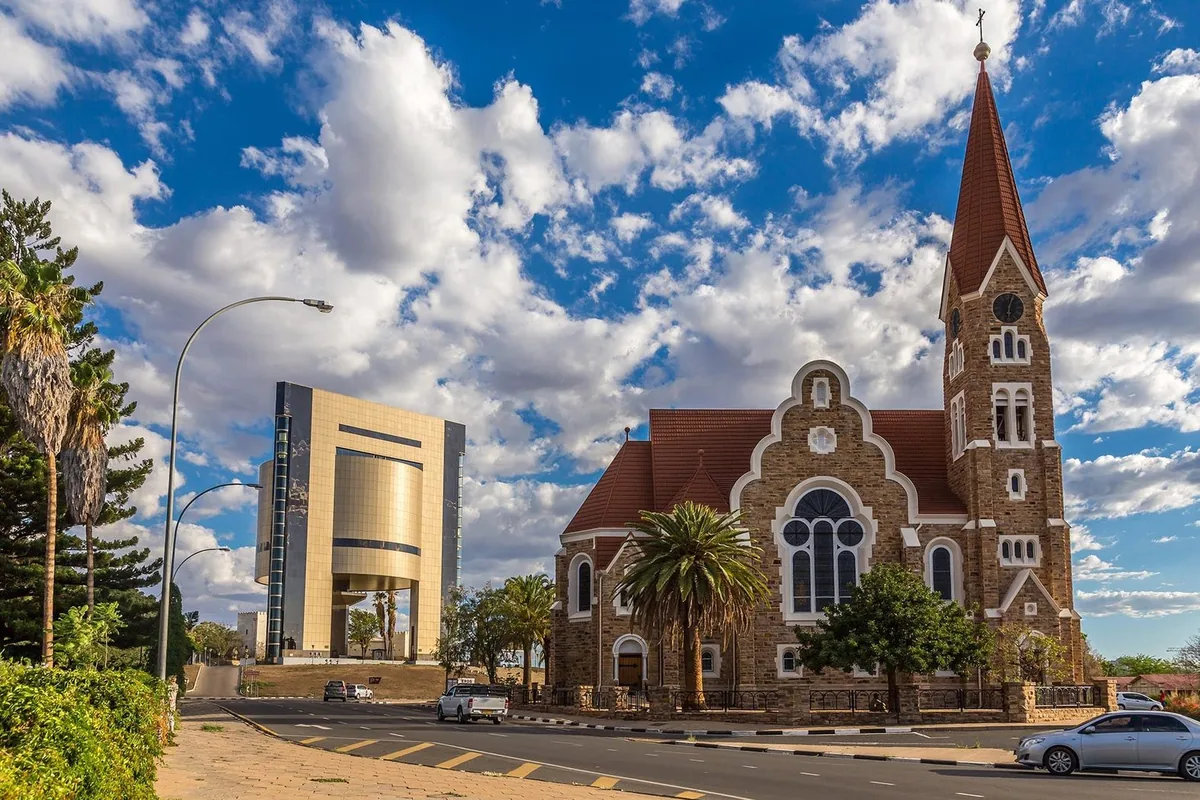
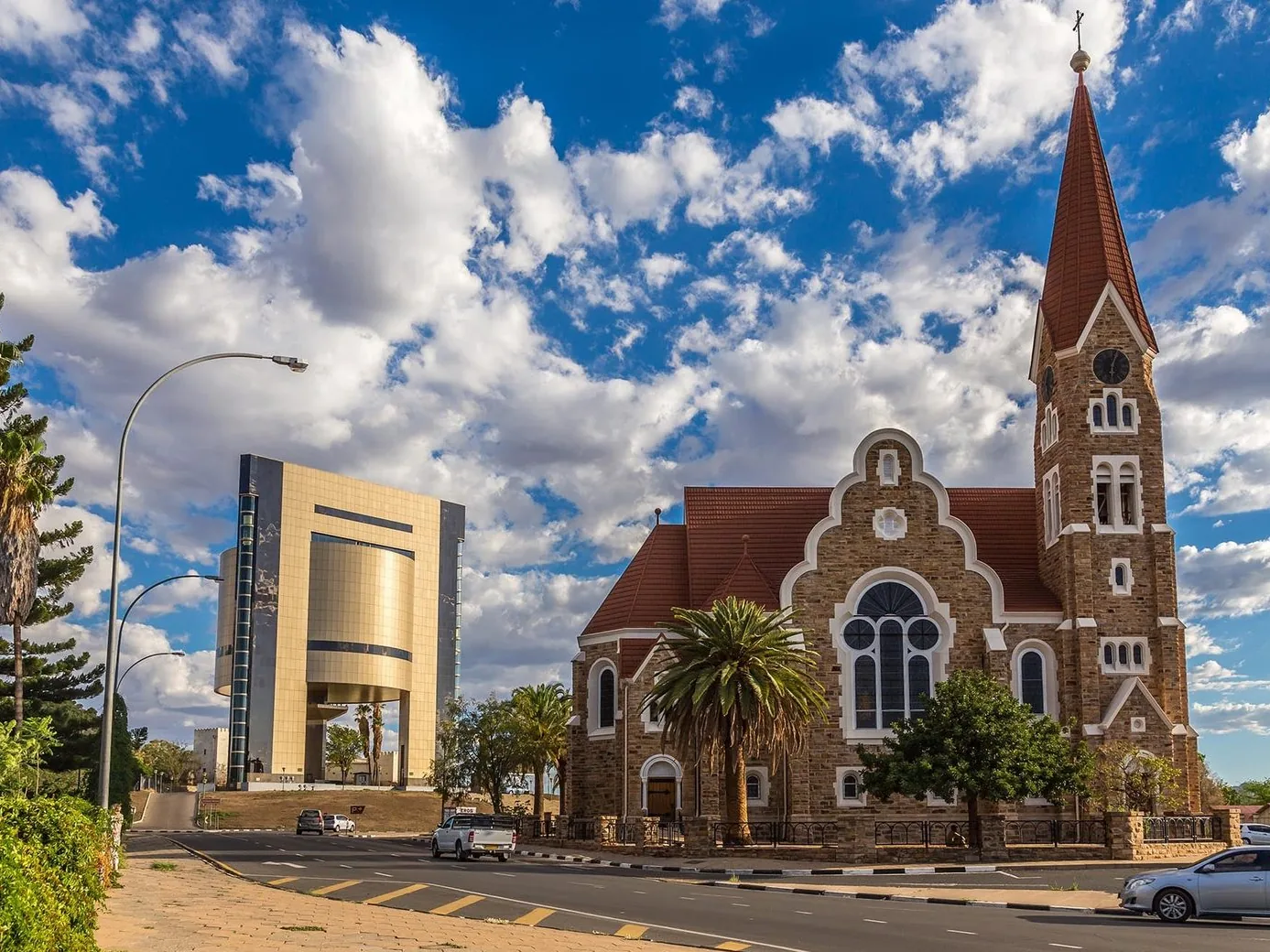
The Christuskirche and the Independence Memorial Museum in central Windhoek

The capital · First stop

Windhoek

Most Namibia trips start and finish here. The airport, Hosea Kutako, sits about 45 kilometres of easy tar from the capital, so your first night is a rest night in town before the desert.

  • Arrival night
  • Hosea Kutako airport
  • Vehicle handover
  • Easy tar roads

Best monthsAny month; the trip starts hereFrom AustraliaVia Johannesburg, then a short flight to Windhoek

The self-drive route guide
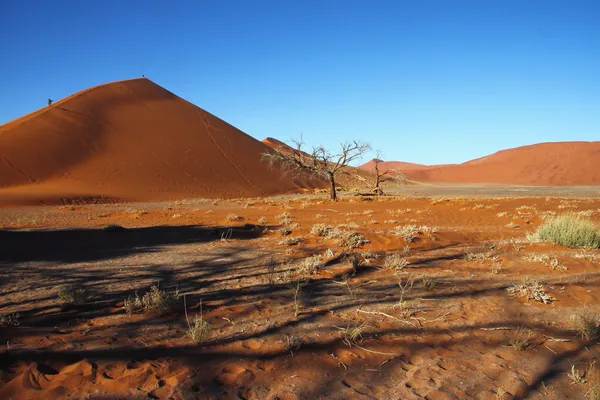
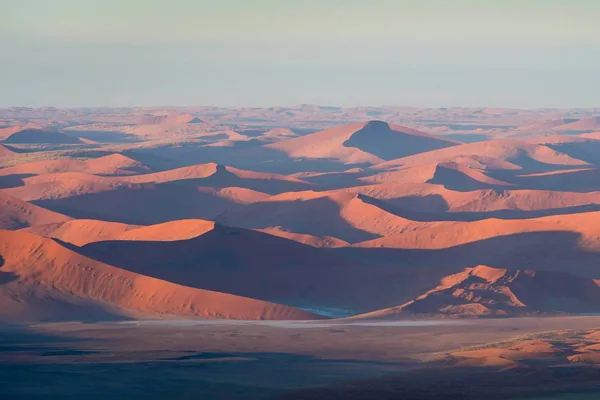
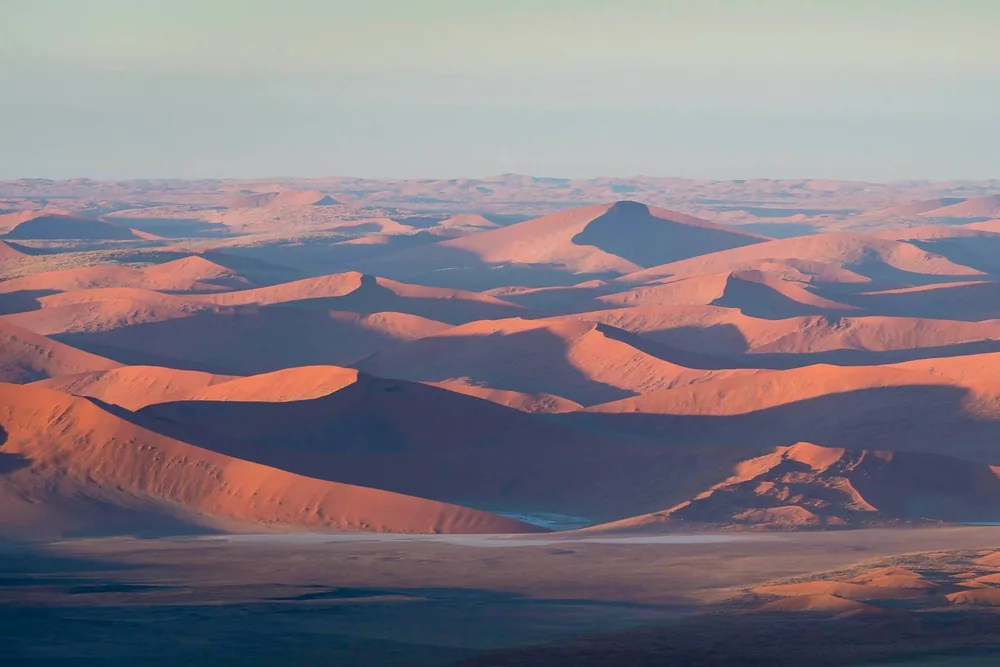
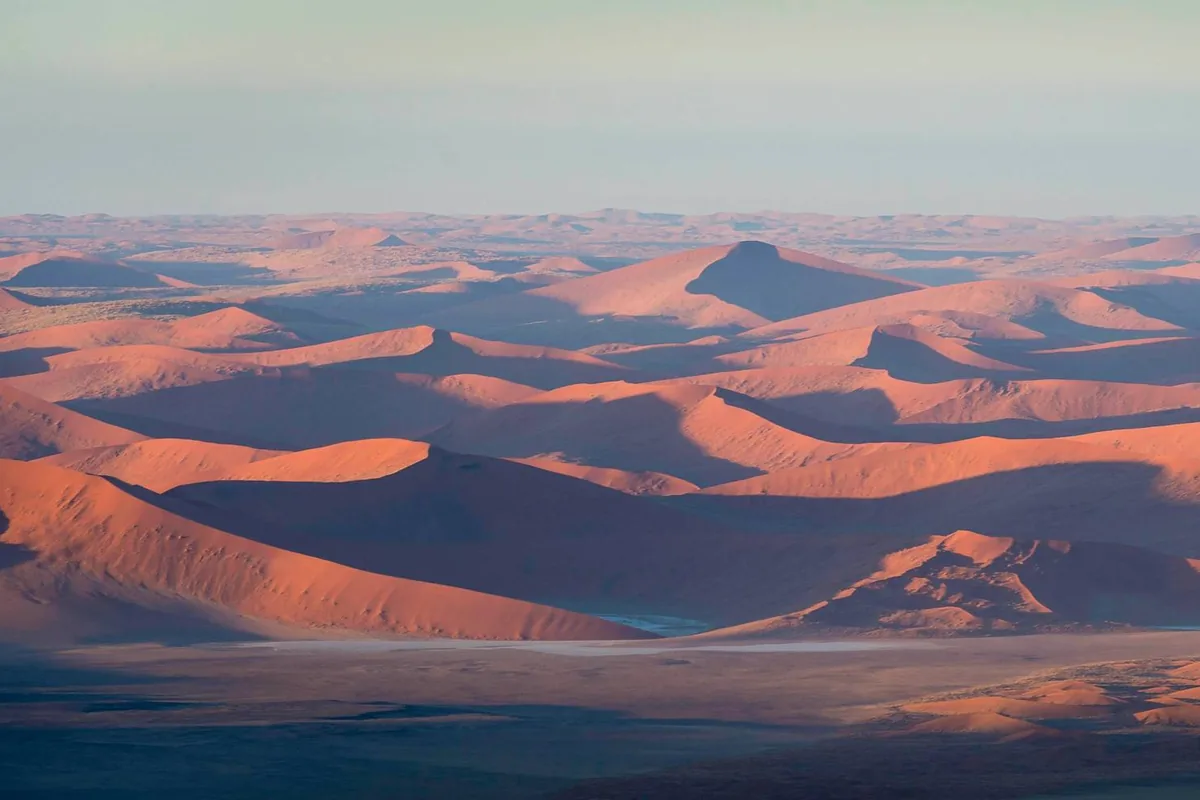
A red Sossusvlei dune above the dry desert floor, with a lone treeA dead camelthorn tree on the white clay pan of Dead VleiThe dune sea near Sossusvlei from the air at first light, from Little Kulala's gallery

The Namib · Second stop

Sossusvlei & the Namib

Red-and-orange dunes rising some 300 metres out of the desert floor, lit from a different angle every hour. A short walk away, Dead Vlei stands cracked white and studded with the long-dead trunks of camelthorn trees.

  • Dead Vlei
  • Dune 45 and Big Daddy
  • Sesriem Canyon
  • NamibRand dark sky

Best monthsMay to October; cold dune mornings in June and JulyFrom WindhoekAround 350 km, mostly gravel, or by light aircraft

Best time to visit Namibia, region by region
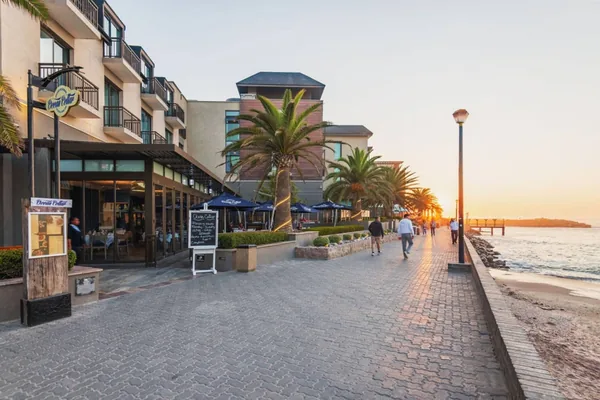
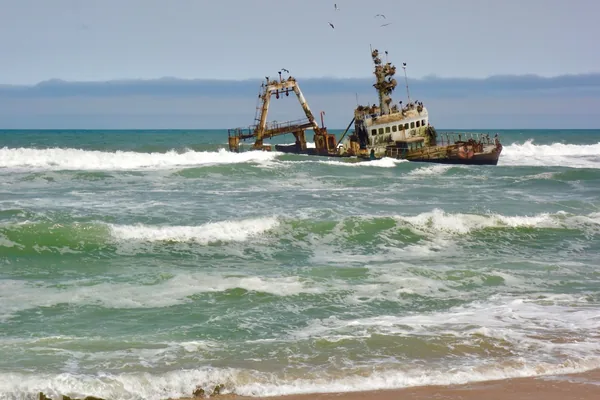
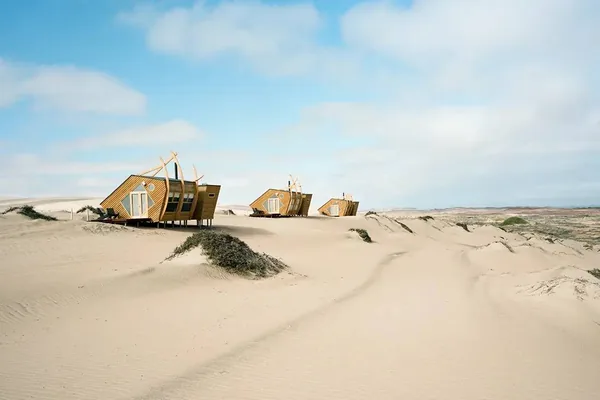
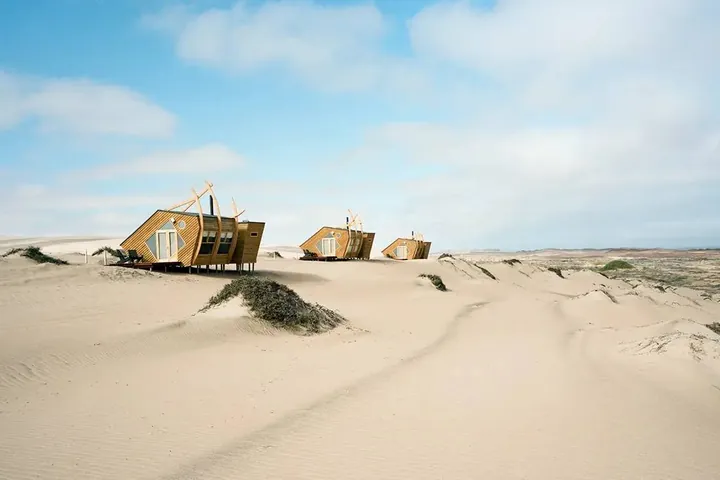
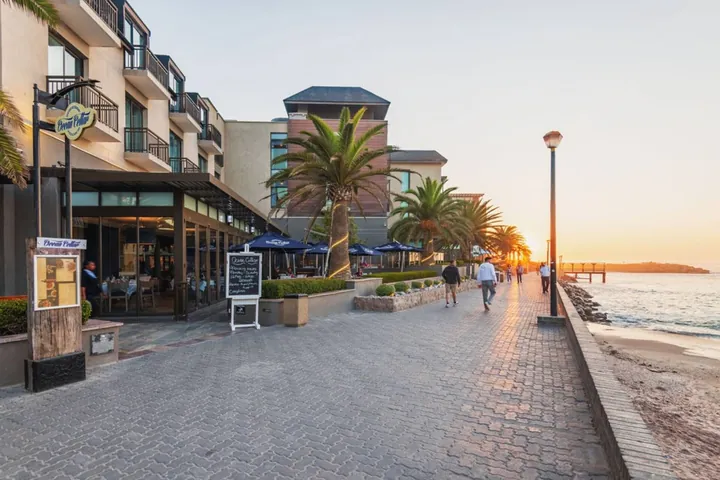
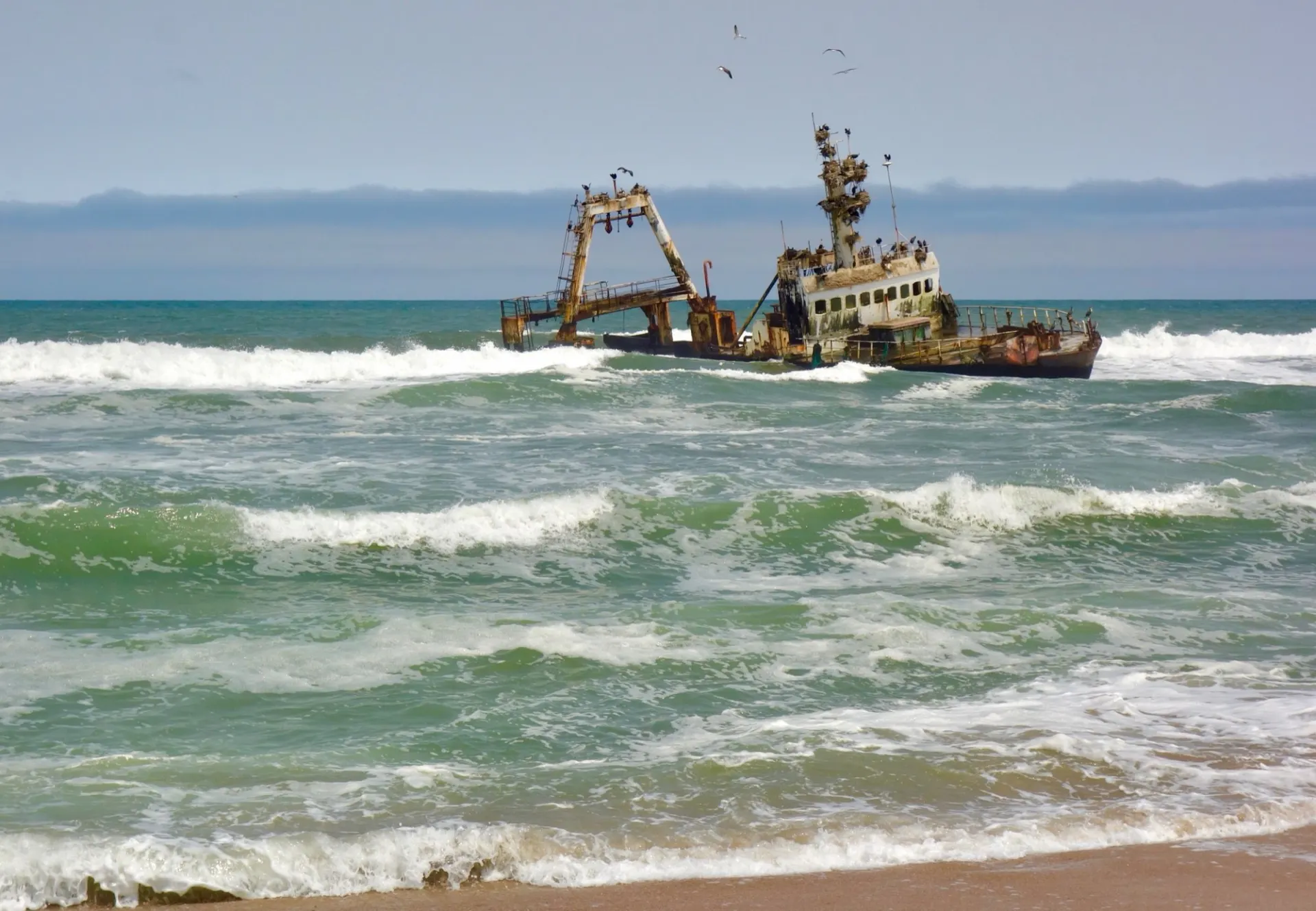
The seafront promenade at Swakopmund at sunset, beside the Strand HotelA rusting shipwreck in the surf on Namibia's Skeleton CoastThe shipwreck-shaped cabins of Shipwreck Lodge on the dunes of the Skeleton Coast

The coast · Third stop

Swakopmund & the Skeleton Coast

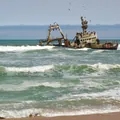
Swakopmund is the easier coastal stop, a small German-colonial town between the Atlantic and the dunes, and a natural break between Sossusvlei and Damaraland. North of it runs the Skeleton Coast, hundreds of kilometres of fog-shrouded shoreline where shipwrecks rust on the beaches and the wildest stretches are reached by light aircraft.

  • Living Desert tours
  • Pelican Point seals
  • Shipwrecks
  • Cool all year

Best monthsAny month; the coast stays cool and often foggyFrom SossusvleiAround 345 km of gravel via Solitaire and the Kuiseb Pass

Where to stay on the coast
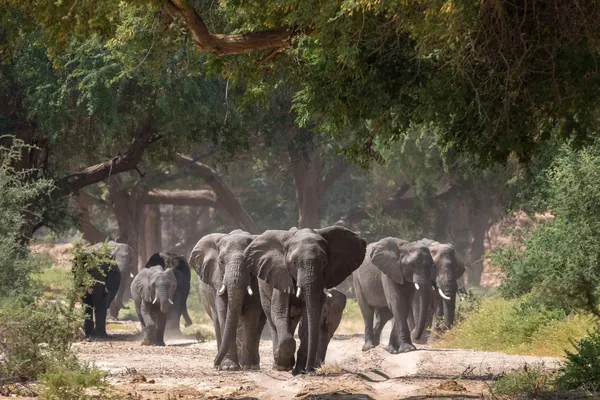
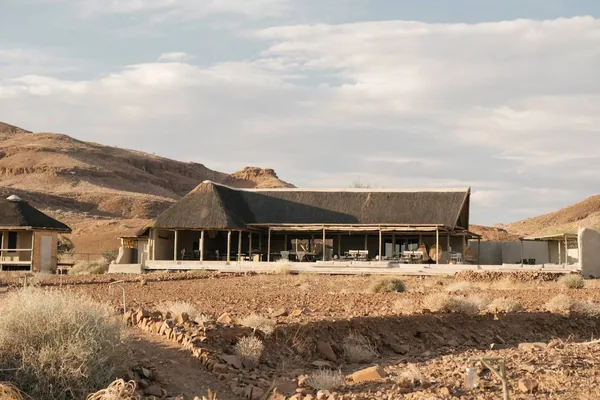
A herd of desert-adapted elephants walking through shade near Damaraland CampA desert elephant in a dry riverbed below the cliffs of DamaralandDamaraland Camp's main building against the hills of the Huab River valley

Desert elephants · Fourth stop

Damaraland

Granite mountains, dry riverbeds and desert-adapted elephants tracked along the Huab and Hoanib catchments with a local guide who reads the dung and the broken branches. Twyfelfontein anchors it culturally, a UNESCO site with more than 2,500 rock engravings.

  • Desert elephants
  • Twyfelfontein
  • Torra Conservancy
  • Black rhino country

Best monthsJune to October, when the elephants keep to the dry riverbedsFrom the coastAround 360 km, tar then rougher gravel

Where to stay in Damaraland
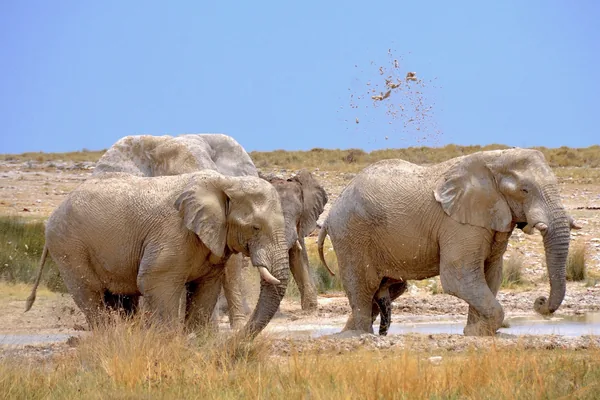
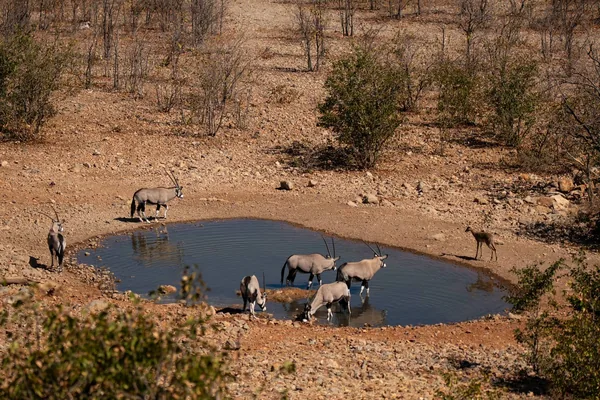
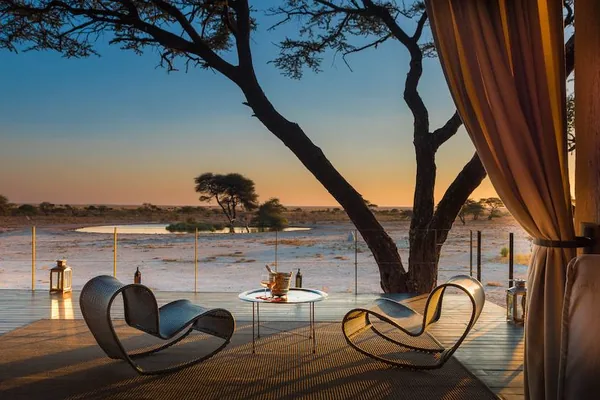
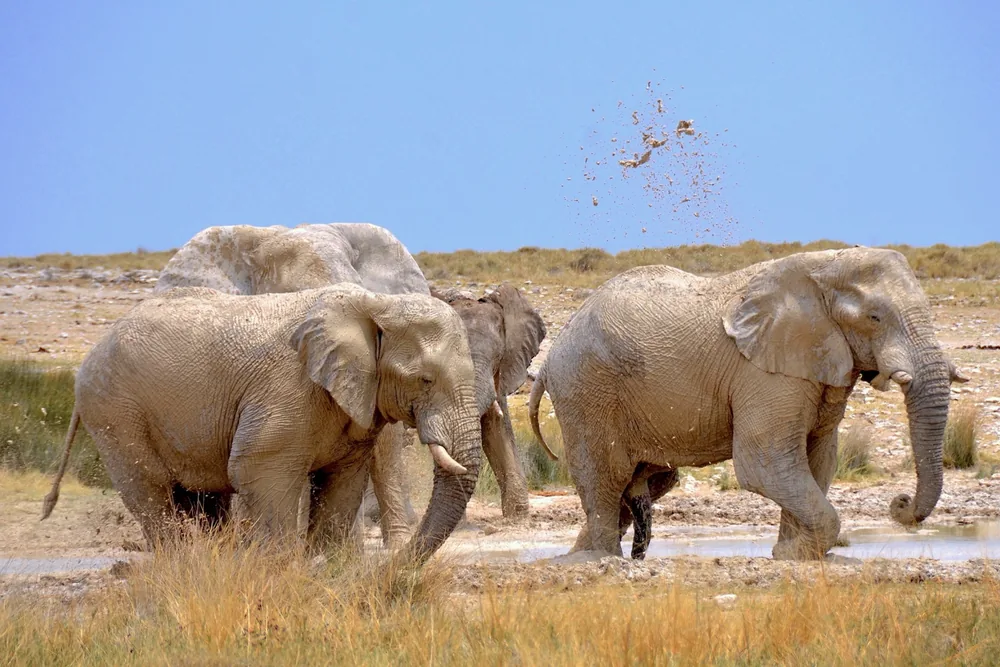
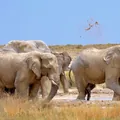
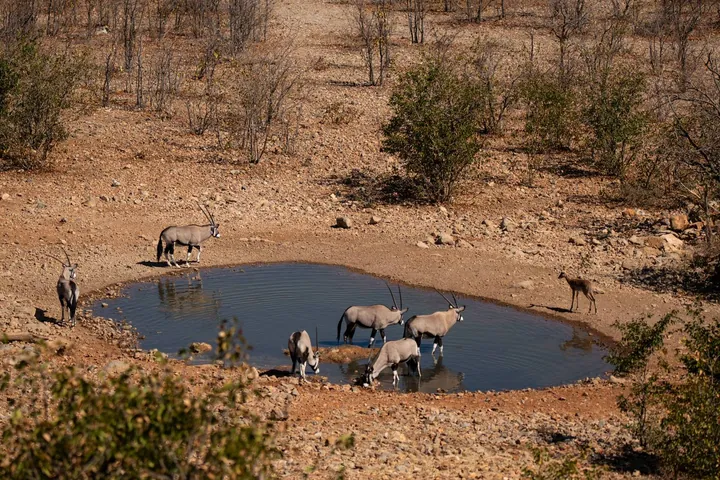
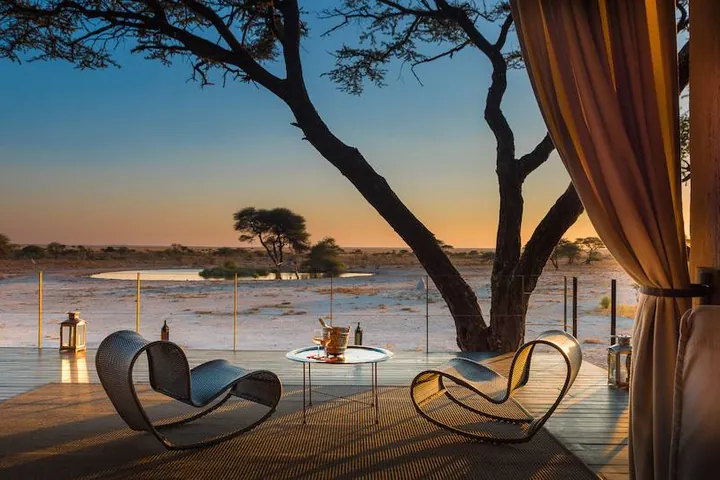
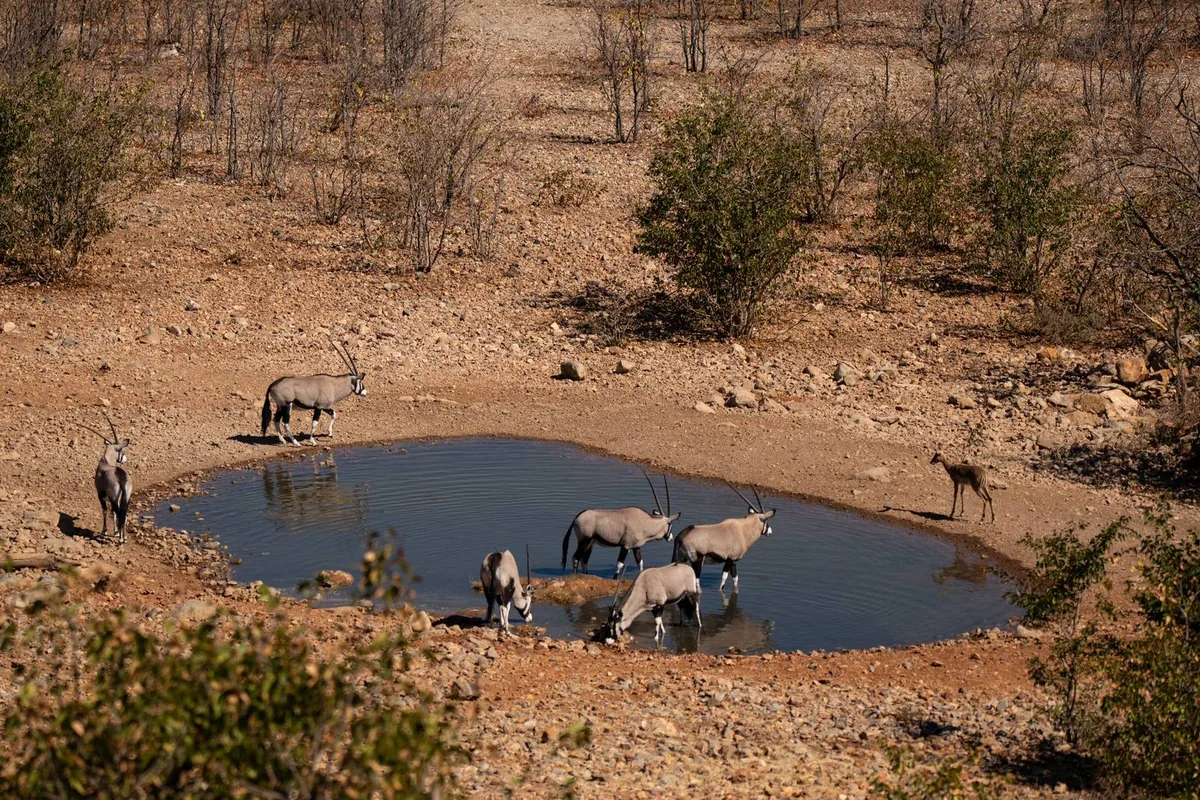
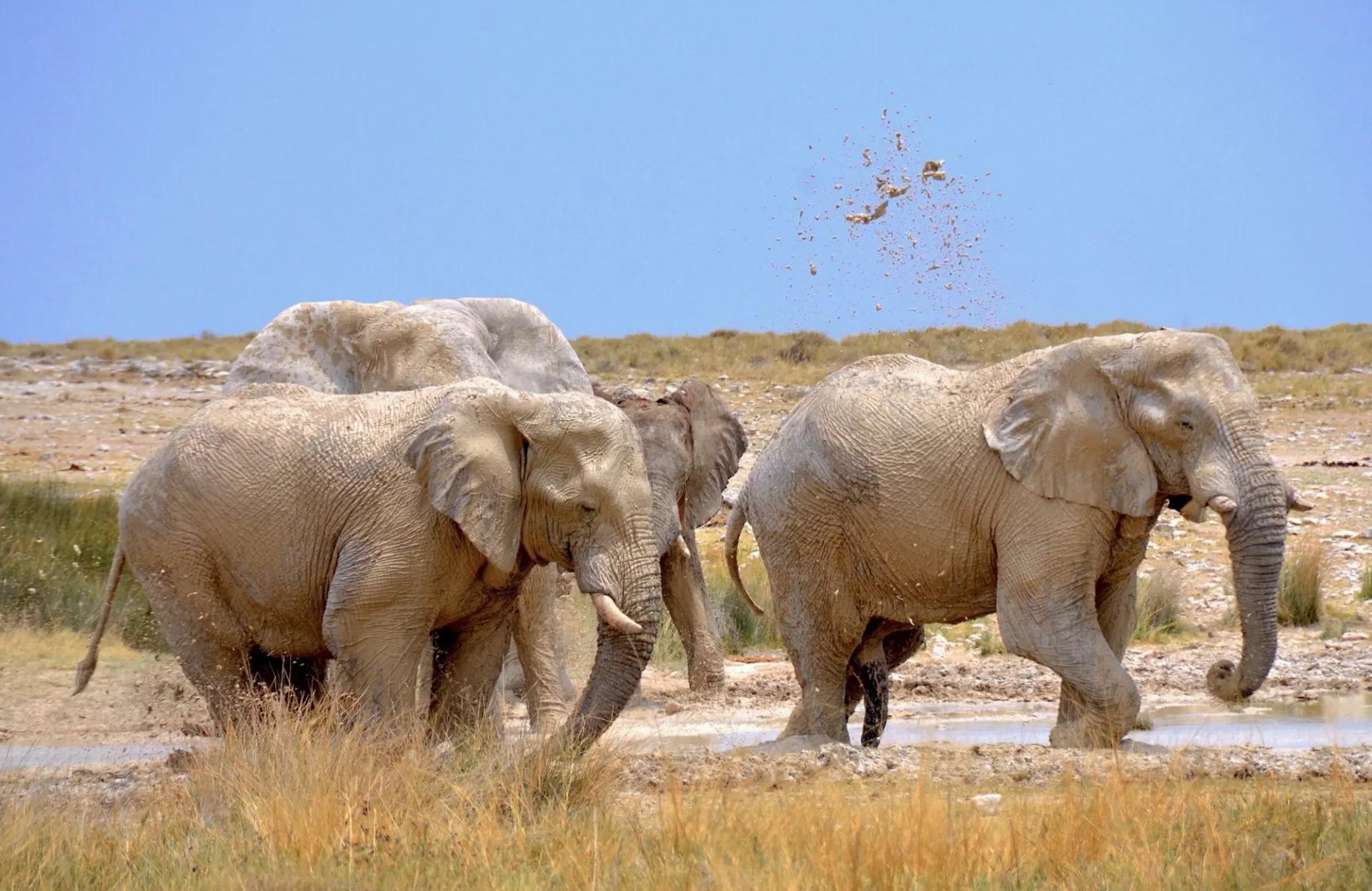
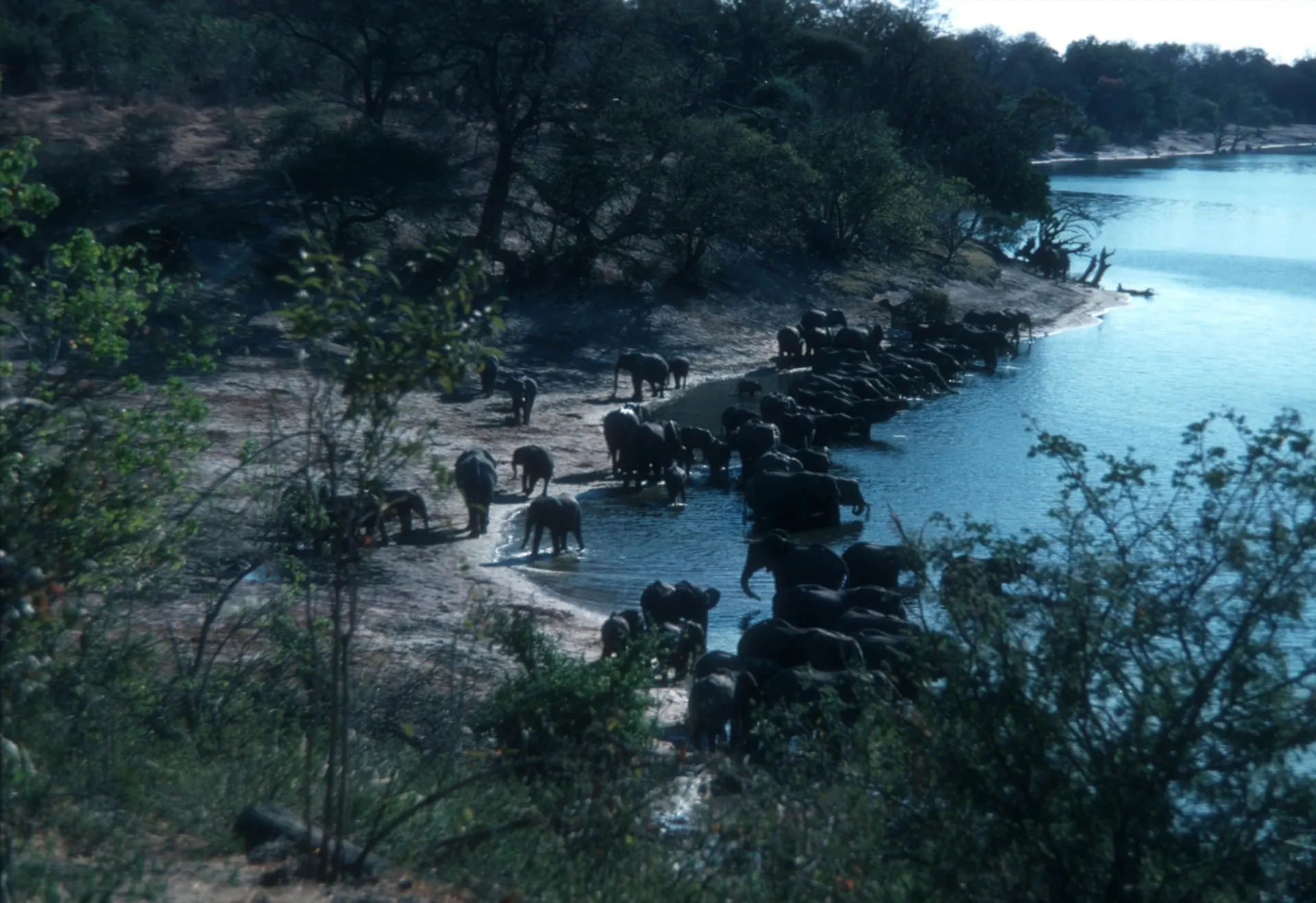
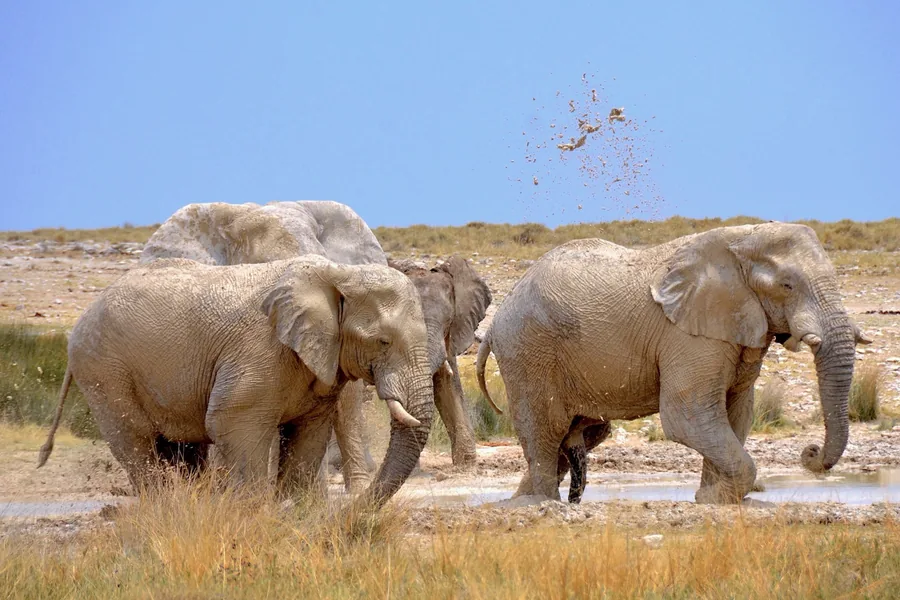
Elephants walking past a muddy waterhole in EtoshaOryx and zebra at the waterhole on the Ongava reserve, on Etosha's edgeThe deck at Onguma The Fort looking west over the plains at sunset

The waterholes · Fifth stop

Etosha National Park

One of Africa's great game parks, built around a salt pan so big it shows from space. In the dry season the permanent waterholes draw elephant, giraffe, zebra, oryx and springbok, with lion or black rhino possible on any given evening.

  • Floodlit waterholes
  • Black rhino
  • Salt pan
  • Private reserves

Best monthsJuly to October, as the seasonal pans dry upFrom DamaralandAround 439 km, gravel then tar, in through the Anderson Gate

Where to stay around Etosha

Map tiles: Esri, National Geographic. Locations are indicative.

What You Will Do

Dunes, Waterholes and Desert Elephants

Namibia is about moments of scale. These are the ones we build trips around.

A red Sossusvlei dune with a lone tree under a clear sky

Sunrise on the dunes

Be at Dune 45 or Big Daddy as the first light hits, then walk across to Dead Vlei before the heat builds. Dune climbs are steep and sandy, so they suit fit, early risers.

Elephants at a muddy waterhole in Etosha

Waterhole watching at Etosha

Sit at a permanent waterhole and let the park come to you. The floodlit waterhole at Okaukuejo is a good place for black rhino after dark.

A desert-adapted elephant in a dry riverbed below sandstone cliffs in Damaraland

Desert elephants in Damaraland

Track the desert-adapted elephants along the dry riverbeds with a local guide. June to October is the easiest time to find them.

The dune sea near Sossusvlei from the air at first light

Namibia from the air

Light-aircraft flights link the regions and show the dunes, the pans and the coast from above. Fly the long gaps and you gain lodge nights instead of gravel days.

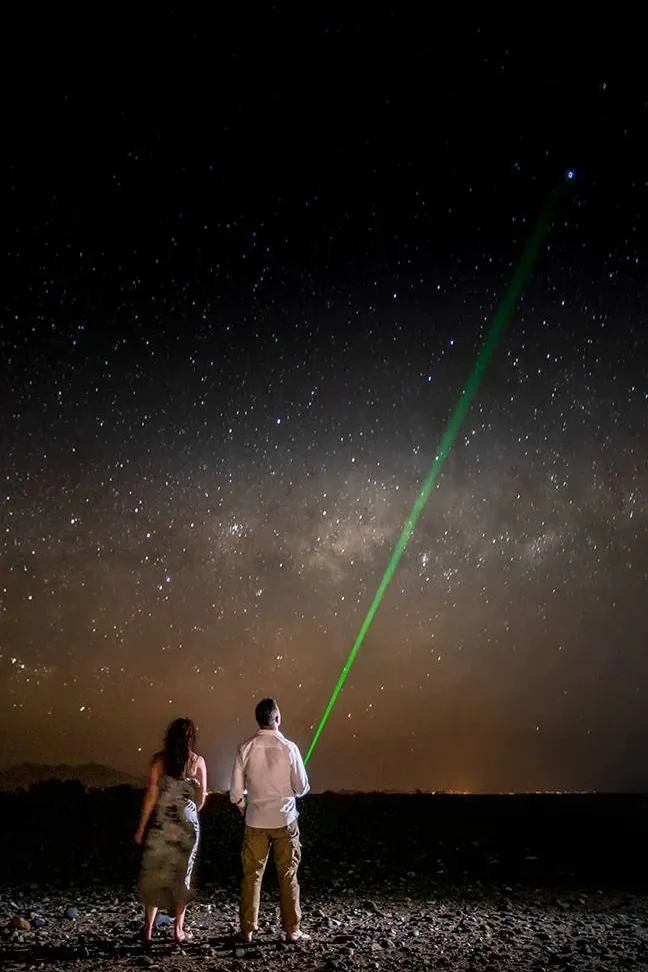
Two guests looking up at the Milky Way at Little Kulala, near Sossusvlei

Stargazing

Skies here are dark and clear. NamibRand is a Gold-tier International Dark Sky Reserve, and several lodges around Sossusvlei make a feature of the night sky.

How a Namibia Trip Comes Together

Trip Shapes

Ten to fourteen nights is the sweet spot, because the highlights are spread across a big country. Three shapes cover most travellers, and every quote is built from scratch around your dates, pace and preferences. Self-drive, guided 4WD or fly-in: our self-drive guide lays out the trade-offs.
7 nights

Namibia Starter

Sossusvlei · Swakopmund · Etosha

The compressed version: two nights at the dunes, two on the coast and two at the waterholes, plus a night around Windhoek on arrival. It covers the three signature landscapes but moves quickly, so we'd usually fly it rather than drive it.

PricingQuoted to your datesPriced to order in Australian dollars, with no list price

Day 1 · Land at WindhoekDay 8 · Fly home

  1. Windhoek1 nightArrival night
  2. By light aircraft or a scheduled flight.
  3. Sossusvlei2 nightsDunes and Dead Vlei
  4. By light aircraft or a scheduled flight.
  5. Swakopmund2 nightsThe cool coast
  6. By light aircraft or a scheduled flight.
  7. Etosha2 nightsThe waterholes
  8. By light aircraft or a scheduled flight.
  9. WindhoekFly home

10 nights · Sweet spot

Namibia Classic

+ Damaraland and a NamibRand night

Three nights around Sossusvlei buys a sunrise Dead Vlei start and a NamibRand dark-sky night, then two on the coast, two in Damaraland for desert elephants and Twyfelfontein, and two at Etosha. Room to breathe between the long drives.

PricingQuoted to your datesPriced to order in Australian dollars, with no list price

Day 1 · Land at WindhoekDay 11 · Fly home

  1. Windhoek1 nightArrival night
  2. By road, with a transfer we book.
  3. Sossusvlei3 nightsDunes, then a NamibRand night
  4. By road, with a transfer we book.
  5. Swakopmund2 nightsThe coast
  6. By road, with a transfer we book.
  7. Damaraland2 nightsDesert elephants
  8. By road, with a transfer we book.
  9. Etosha2 nightsThe waterholes
  10. By road, with a transfer we book.
  11. WindhoekFly home

14 nights

Namibia Comprehensive

+ the Skeleton Coast, the north-east or Victoria Falls

Add three or four nights at the end: a fly-in Skeleton Coast stay for raw wilderness, the Zambezi Region in the north-east (the old Caprivi Strip) for river wildlife, or a Victoria Falls finish through Johannesburg.

PricingQuoted to your datesPriced to order in Australian dollars, with no list price

Day 1 · Land at WindhoekDay 15 · Fly home

  1. Windhoek1 nightArrival night
  2. By road, with a transfer we book.
  3. Sossusvlei3 nightsDunes and dark skies
  4. By road, with a transfer we book.
  5. Swakopmund2 nightsThe coast
  6. By road, with a transfer we book.
  7. Damaraland2 nightsDesert elephants
  8. By road, with a transfer we book.
  9. Etosha3 nightsThe waterholes
  10. By light aircraft or a scheduled flight.
  11. Skeleton Coast3 nightsFly-in wilderness
  12. By light aircraft or a scheduled flight.
  13. WindhoekFly home
  • By road, with a transfer we book
  • Light aircraft or a scheduled flight

We price Namibia to order, in Australian dollars, because the month, the lodges and how you travel move the total so much that a single from-price would mislead you. Self-drive usually costs noticeably less than a guided trip of the same length, and a premium fly-in trip costs more again. See our Namibia cost guide, what an African safari costs and real trips with the real prices. Nights shift with the season and the lodges you choose, so treat these routes as typical shapes rather than fixed packages.

See Our Set Safaris by Budget

Where You Could Stay

Lodges We Work With, Region by Region

The seven lodges and camps we recommend across Namibia, grouped by area in the order you'd meet them on a trip. The final selection flexes around your dates, group size, the season and availability. More on our Stays page.

Sossusvlei and the Namib

Two nights is the least we'd give the dunes, and a lodge with its own gate gets you onto the sand before the day visitors arrive.

2 lodges and campsDunes and dark skies

Damaraland

Small, design-led camps in desert-elephant country. Two nights is a good length.

1 lodgeDesert elephants and rock art

Etosha

Lodges on private reserves along the park's edge give you a quieter base, and at Ongava a floodlit waterhole below the deck.

2 lodges and campsWaterholes and rhino

Skeleton Coast and Swakopmund

A fly-in camp out on the dunes for the wild end of the country, or a seafront hotel for the easy coastal break between desert legs.

2 lodges and campsThe wild coast and the town

  • Classic
  • Premium
  • Luxury
  • Ultra Luxury

7 lodges and camps across four areas, with the same comfort levels as our Stays page. Lodge names open each lodge's own website.

Plan Your Visit

When to Visit Namibia

Two clear seasons, dry and green, with a shoulder month at each end. The dry winter is the classic time for the long drives and for Etosha's waterholes, and August and September are the peak game months. Our best time to visit Namibia guide goes region by region.
What's happening

January

Green season

The hottest and lushest stretch, with the lowest prices of the year. Animals scatter across the landscape, so game is harder to find.

  • Afternoon thunderstorms, mostly in the north and east
  • A few lodges close for part of January and February

The coast around Swakopmund and the Skeleton Coast stays cool and often foggy all year, so it works in any month.

  • Dry season, May to October
  • Shoulder months, November and April
  • Green season, December to March
Elephants walking past a muddy waterhole in Etosha

Dry season

May to October

Clear skies · Cold mornings · Wildlife at the waterholes

Days are comfortable and nights are cold, with desert temperatures dropping close to freezing in June and July. It's the easiest weather for a trip with long distances, and the best for wildlife: as the dry season deepens Etosha's seasonal pans dry up and animals head for the permanent waterholes. Damaraland's desert elephants are easiest to find from June to October. The trade-off is cost and crowds: June to September is the busiest and dearest stretch, and the best lodges at Sossusvlei and in Etosha book out well ahead, sometimes nine to twelve months for July and September.

  • May to June: mild to cool, quieter, with prices below peak
  • July to August: cold nights, school-holiday demand and strong game viewing
  • September: often the sweet spot, and our pick for a first Namibia trip
  • October: the hottest, driest month before the rains, with serious midday heat

Best for a first trip, the long drives and Etosha's waterholes

A red Sossusvlei dune above the dry desert floor

Shoulder months

November and April

First rains or last rains · Lower rates · Good light

November brings the first storms, mostly in the north and east, and the start of lower rates. April is the other end of the same story: the rains tapering, a desert that can still be green after a good season, and good light before the dry-season crowds. The dunes and the coast work in either month.

  • November: first rains and the start of lower rates
  • April: rains tapering, green desert and good light
  • Roads: Smartraveller notes that flooding from November to April can close roads

Best for value with most of the dry-season comfort

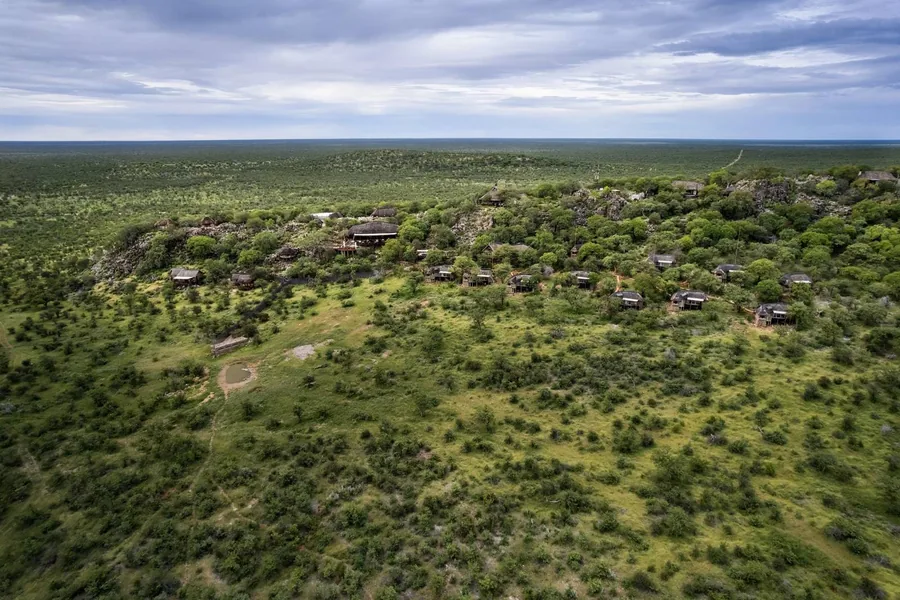
Green bush around Ongava Lodge after the rains, seen from the air

Green season

December to March

Rains · Dramatic skies · Lowest prices

Hot, sometimes very hot, with short afternoon thunderstorms. Storm clouds gather behind the dunes, migrant birds arrive and the desert can turn green after good rain, and prices are at their lowest. Animals scatter across the landscape, so game is harder to find, and a few lodges close for part of January and February.

  • December to February: the hottest and lushest months, with the lowest prices
  • March: rains tapering, green desert and good light
  • Who it suits: photographers, birders and return visitors more than a first-timer chasing easy wildlife

Best for photographers, birders and lower prices

From Australia

Getting to Namibia

From Australia the cleanest routing is through Johannesburg, then a short connection on to Windhoek. Our Namibia self-drive guide covers the route from the airport onwards.
  1. Step one

    Your Australian city

    There's no non-stop flight from Australia to Namibia, so every route connects through a hub. You fly out of your own city and we build the connections around it.

    • Sydney
    • Melbourne
    • Brisbane
    • Perth
    • Adelaide
  2. Step two

    Johannesburg

    Qantas flies non-stop from Sydney and Perth to Johannesburg, roughly 14 to 15 hours from Sydney and about 11 from Perth. From other cities you connect, including one-stop options through Singapore.

    • Johannesburg
    • Singapore
    • Addis Ababa
    14 to 15 hours, Sydney to Johannesburg
  3. Step three

    Windhoek (WDH)

    Scheduled flights run from Johannesburg to Hosea Kutako, Windhoek's airport, about 45 kilometres of easy tar from the capital. The transfer we've booked meets you at the door.

    About 45 kilometres to town
  4. First night

    Windhoek

    After a day of flying your first night is a rest night in town, with nothing planned beyond dinner. The desert starts the next morning, by road with your driver-guide, in your own vehicle or by light aircraft.

    UTC+2 all year · 8 hours behind Brisbane
The hubs we use
ViaAirlineNote
JohannesburgQantas, then a scheduled flight to WindhoekNon-stop from Sydney and Perth. The usual route.
SingaporeOne-stop optionsFrom other Australian cities, connecting onwards.
Addis AbabaEthiopian, connecting onwardsAnother routing we use.
Cape TownDirect flights between Cape Town and WindhoekA clean start or finish if you add South Africa.
  • Windhoek: your first night, about 45 kilometres from the airport
  • Sossusvlei, the coast, Damaraland, Etosha: by road with a driver-guide or in your own vehicle, around 350 to 440 km a leg
  • The long gaps: light aircraft where it saves a day on gravel
  • Victoria Falls or Cape Town: scheduled flights through Johannesburg, or direct between Cape Town and Windhoek
The Christuskirche and the Independence Memorial Museum in central Windhoek
Windhoek, where most Namibia trips start and finish.
14 to 15 hoursSydney to Johannesburg non-stop with Qantas; about 11 from Perth
45 kmFrom Hosea Kutako airport to Windhoek, on easy tar
UTC+2Namibia time all year, with no daylight saving

Tell us your dates first

We lock the lodges, then the flights. In the June to September high season the best lodges at Sossusvlei and in Etosha book out well ahead, sometimes nine to twelve months for July and September. Once your deposit is in, we place your lodges, vehicle or flights together, and that's the time to take out your travel insurance.

Flights

Qantas flies non-stop from Sydney and Perth to Johannesburg, and from there scheduled flights run to Windhoek. From other cities you connect, and we usually route via Singapore, Johannesburg or Addis Ababa. Schedules change, so we check them when we build your trip, and we price flights from Australia when you're ready to book because fares move.

The time difference

Namibia runs on UTC+2 all year, with no daylight saving. Perth is six hours ahead. Brisbane and the Gold Coast are eight hours ahead all year, and Sydney is eight hours ahead in winter and nine during daylight saving time.

The Practical Bits

Safety, Roads, Children and Packing

The short version of what to sort before you fly. For visas and anything medical we point you to the official sources, starting with Smartraveller.

Visas and entry

Entry rules change, and they're yours to confirm. Start with smartraveller.gov.au, which sets out the current visa and passport rules, including passport validity, blank pages and the extra documents for travelling with children, and allow time to apply if an online application is required.

Health and malaria

Vaccinations and malaria are medical questions for your doctor. Smartraveller says malaria is common in northern Namibia. On yellow fever, we generally tell people the vaccine is worth having, as one shot lasts a lifetime, but your doctor always has the last say. See a travel doctor before you book and take your full itinerary, and check the health section at smartraveller.gov.au.

Is it safe?

At our last check (17 October 2026), Smartraveller's level for Namibia was exercise normal safety precautions. Petty crime is common in towns, with Windhoek, Swakopmund and Walvis Bay named as hotspots for car break-ins and violent crime, so we arrange transfers and you leave nothing in a parked car. Read the latest at smartraveller.gov.au.

Roads and self-drive

Roads between main centres are good, but rural roads are mostly gravel or sand. Smartraveller lists animals on the road, poor lighting and fast driving on unfamiliar roads as the main hazards, and says to check your insurance covers unsealed roads and single-vehicle accidents. Plan to be at your lodge before dark, carry water and fuel in the desert, and bring your Australian licence and an International Driving Permit from home.

Children and age rules

Minimum ages are set lodge by lodge, and some higher-end properties set higher limits for children. Self-drive is a poor fit for small children, but a guided trip with a pool at most stops can work well. Tell us the ages in your group and we'll check each lodge's policy. Our family safari guide covers ages by activity.
Money and packing

The Namibian dollar is the currency and the South African rand is also accepted. Cards work in the main centres, but cash helps in remote areas. Pack layers, because dune mornings and winter nights are cold, plus a hat, sunscreen and a dust-proof camera bag. Our packing list has the rest.

Go Further

Add Cape Town, Botswana or Victoria Falls

Namibia works on its own, but most Australians get more from it as part of a longer loop. We plan the routing so you never backtrack.

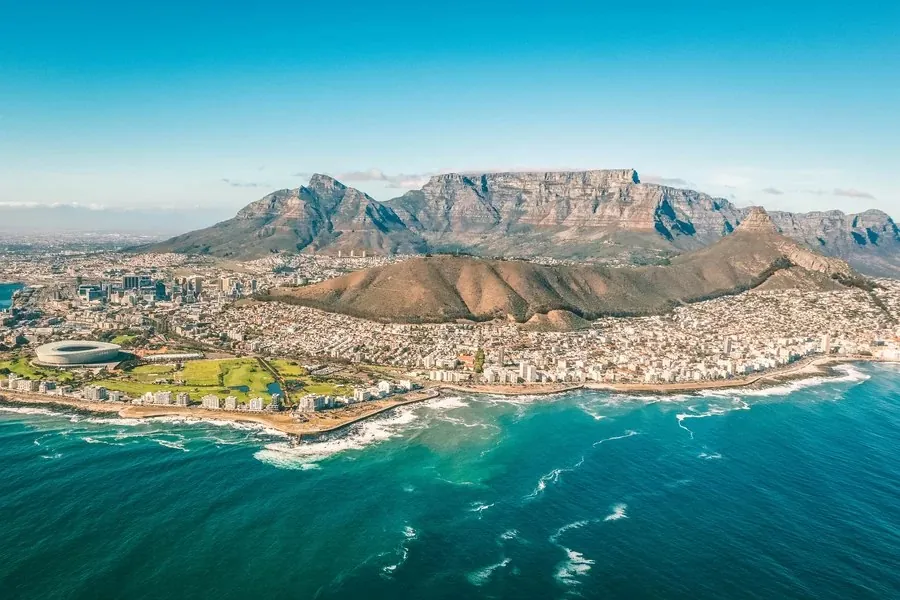
Cape Town and Table Mountain from the air

Direct flights to Windhoek

Cape Town

Cape Town and Windhoek are linked by direct flights, so Cape Town makes a clean start or finish for twelve to fourteen nights, with the Winelands and the malaria-free reserves within reach.

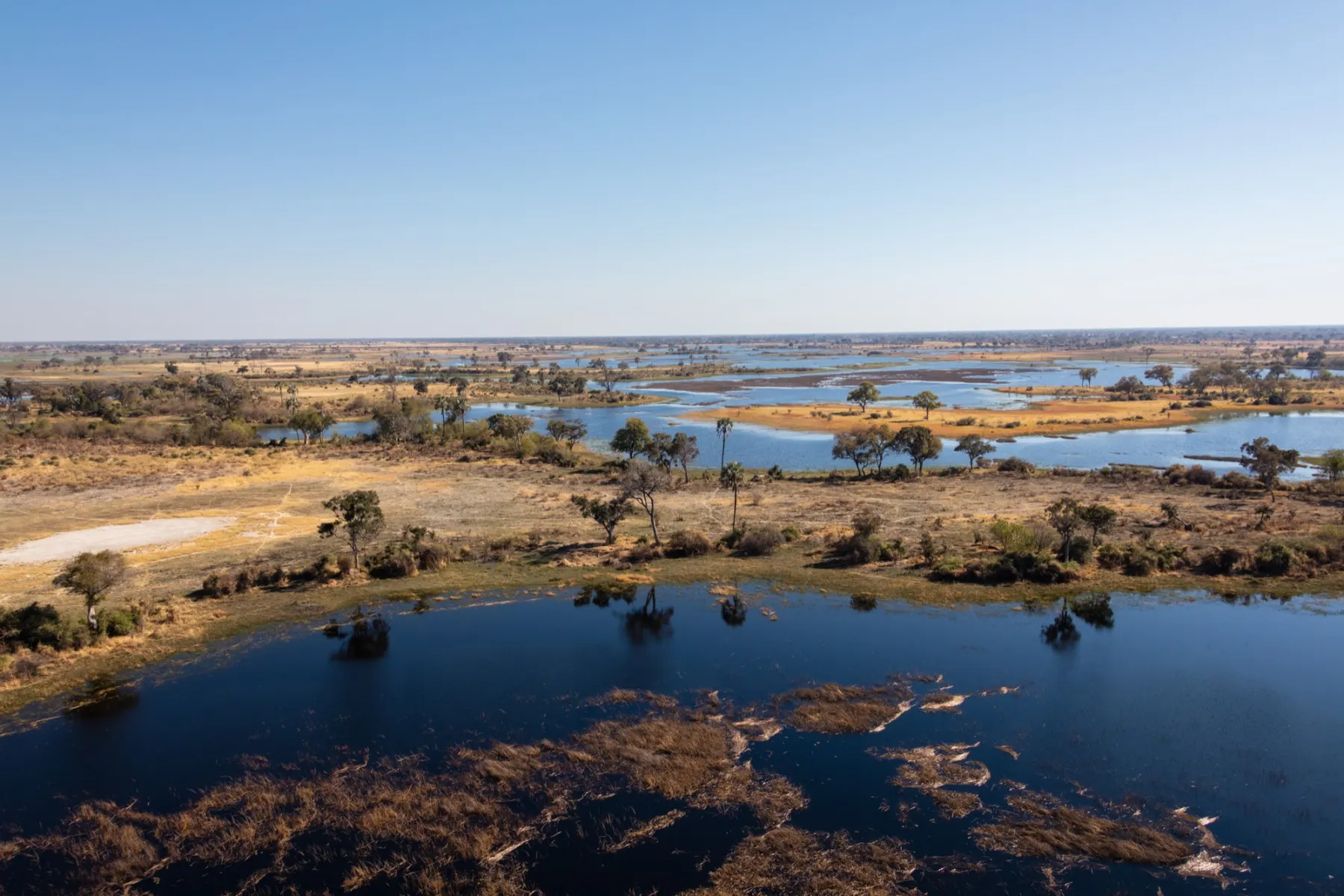
The channels and islands of the Okavango Delta from the air

Water after the desert

Botswana

The Okavango Delta and Chobe's elephants are the opposite of the Namib, and they connect through Johannesburg or, for Chobe, by road from Victoria Falls.

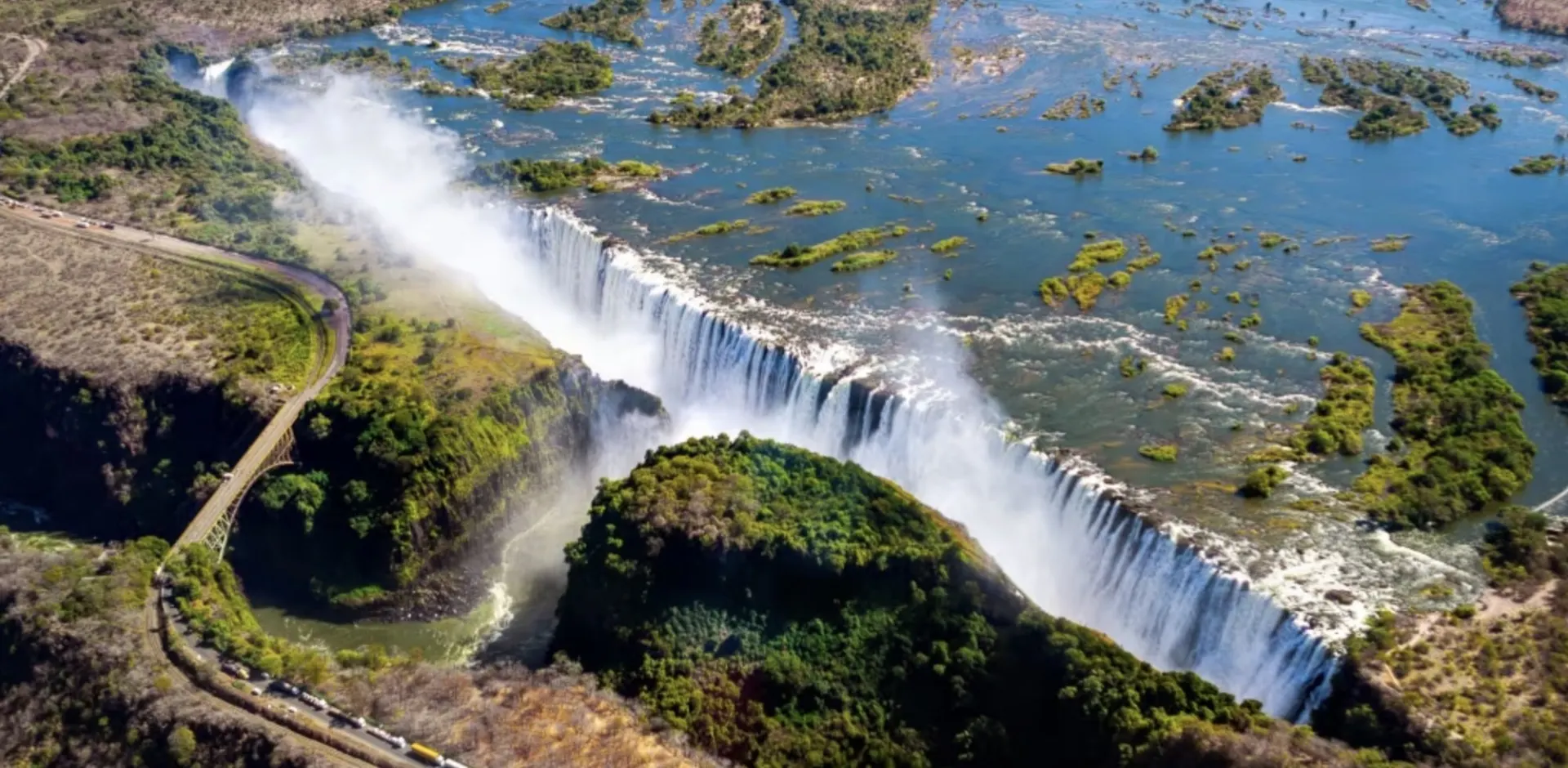
Victoria Falls from the air

A finish through Johannesburg

Victoria Falls

Add Victoria Falls and Botswana for fourteen to seventeen nights across Southern Africa's biggest contrasts. The falls are a natural finish to a Namibia trip.

The Practical Questions

FAQ

The questions Australians ask us most about a Namibia safari, grouped by topic.

Can't see your question? Ask us directly and a real person will answer.

Planning and cost

How much does a Namibia safari cost from Australia?
We price Namibia to order, in Australian dollars, because the month, the lodges and how you travel move the total so much that a single from-price would mislead you. Self-drive usually costs noticeably less than a guided trip of the same length, and a premium fly-in trip costs more again. Flights from Australia are extra. See our Namibia cost guide, what an African safari costs and real trips with the real prices.
How many days do we need in Namibia?
Ten to fourteen nights is the sweet spot, because the highlights are spread out and a rushed trip means too long in the vehicle. Seven nights covers the dunes, the coast and Etosha if you fly. Two nights is the least we'd give the dunes, and two or three suit Etosha. Add Victoria Falls or Cape Town and you're at two weeks or more.
Should we self-drive, take a guided 4WD or fly between lodges?
Self-drive suits couples who are comfortable on gravel roads and have ten nights or more. It isn't a good fit for small children, anyone over 70 or a first African trip. A private driver-guide is what most of our mid-range guests choose and what we'd suggest for a first visit, and flying between regions saves long road days. Smartraveller notes driving can be dangerous in Namibia, so read our self-drive guide before you decide.
Can we combine Namibia with Cape Town, Botswana or Victoria Falls?
Yes. Cape Town and Windhoek are linked by direct flights, so Cape Town makes a clean start or finish. Victoria Falls and Botswana add a different kind of safari at the end, and Johannesburg connects them by scheduled flights. See our South Africa, Botswana and Victoria Falls pages.

When to go

When is the best time to visit Namibia?
June to October, the dry winter, is the best window for most travellers. The days are clear and comfortable for long drives, and wildlife concentrates at Etosha's waterholes, with August and September the peak game months. September is often the sweet spot. November to April is hotter, with dramatic skies and lower prices, but game is harder to find. Our best time to visit Namibia guide goes region by region.
When is the best time to visit Damaraland?
June to October. The desert-adapted elephants and black rhino follow the dry riverbeds in the late dry season, which makes them easier to find, and the days are comfortable for tracking. The rock engravings at Twyfelfontein are worth the trip in any season. Mornings in June and July are cold, so pack layers.

Getting there

How do we get to Namibia from Australia?
Qantas flies non-stop from Sydney and Perth to Johannesburg, and from there scheduled flights run to Windhoek. From other cities you connect, including one-stop options through Singapore, and we usually route via Singapore, Johannesburg or Addis Ababa. Schedules change, so we check them when we build your trip, and we price flights from Australia when you're ready to book because fares move.

On safari

Can we visit the Skeleton Coast, and how do we get there?
Yes. The wildest northern stretches are usually reached by light aircraft, and a few camps, such as Shipwreck Lodge, sit out on the dunes. Swakopmund is the easier coastal stop for a night or two between the dunes and Damaraland. The coast stays cool and often foggy all year, so it suits any month, and we build the flights into your itinerary.
Is Etosha worth it, and how long do we need?
Yes, if you want waterhole wildlife on a big scale. Elephant, giraffe, zebra, oryx and springbok come to the permanent waterholes, and the floodlit waterhole at Okaukuejo is a good place for black rhino. There are no buffalo, so it isn't a Big Five park. Two or three nights suits most trips, ideally split between the park and a private lodge on its edge, and the best months are July to October.

Health, visas and safety

Is Namibia safe for tourists?
When we last checked, on 17 October 2026, Smartraveller's level for Namibia was exercise normal safety precautions. It notes that petty crime is common in towns, that Windhoek, Swakopmund and Walvis Bay are hotspots for car break-ins and violent crime, and that driving can be dangerous, so we arrange transfers and you plan to be at your lodge before dark. Read the latest at smartraveller.gov.au.
Do Australians need a visa for Namibia?
Visa and passport rules change, and checking them is your job. Start with smartraveller.gov.au and the Namibian High Commission, and allow time to apply if an online application is required. Smartraveller also lists passport validity and blank-page requirements, and extra documents for travelling with children.
Do we need vaccinations, and is malaria a risk in Namibia?
Both are medical questions for your doctor. Smartraveller says malaria is common in northern Namibia. On yellow fever, we generally tell people the vaccine is worth having, as one shot lasts a lifetime, but your doctor always has the last say. Raise your whole itinerary with a travel doctor before you book, and check smartraveller.gov.au for current entry rules.

Start Planning

Plan Your Namibia Safari

Tell us your dates and what you'd like to see: dunes and stars, big herds, fly-in luxury or self-drive freedom. We design the route, book the lodges and stay on the line for the whole trip, with real prices in Australian dollars.

Five stars. 5.0 on Google and Tripadvisor37 five-star reviews, every one of them

Get in Touch
“Could not have imagined how it could have been better planned and delivered.”
Five stars. Gryffable, first safari, 2026, on Tripadvisor
A red Sossusvlei dune above the desert floor, with a lone tree

Call us or message us

Talk to a real person

Pick up the phone if you'd rather talk it through. We spend a good part of the year moving between Australia and Africa, so if we miss you, WhatsApp Samara and we'll come back to you whatever the time zone.

Safaris · enquiries & bookings

Samara Imhoof

Bookings & Client Care

Whether you're just kicking around ideas or already booked. Dates, lodges, costs, changes, payments, flights.


Free call from Australia

1800 KINGSE(1800 546 473)

WhatsApp

+61 492 037 622 [email protected]
Business · partnerships & trade

Jackson Potter

Founder

Lodges, agents, media, or anything commercial. This one comes straight to me.


[email protected]
Contact us

Not sure who to ask? [email protected] reaches the whole team.