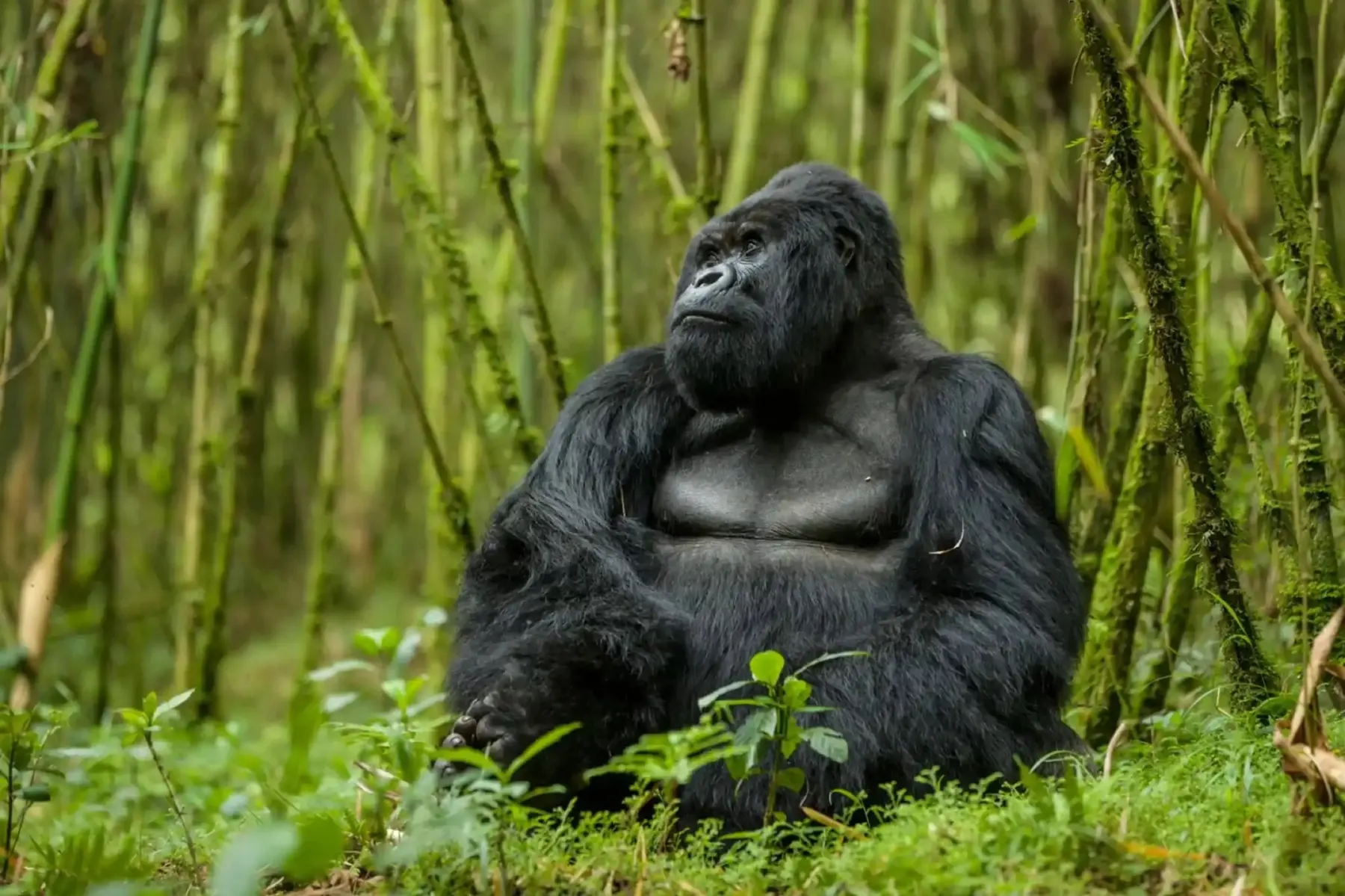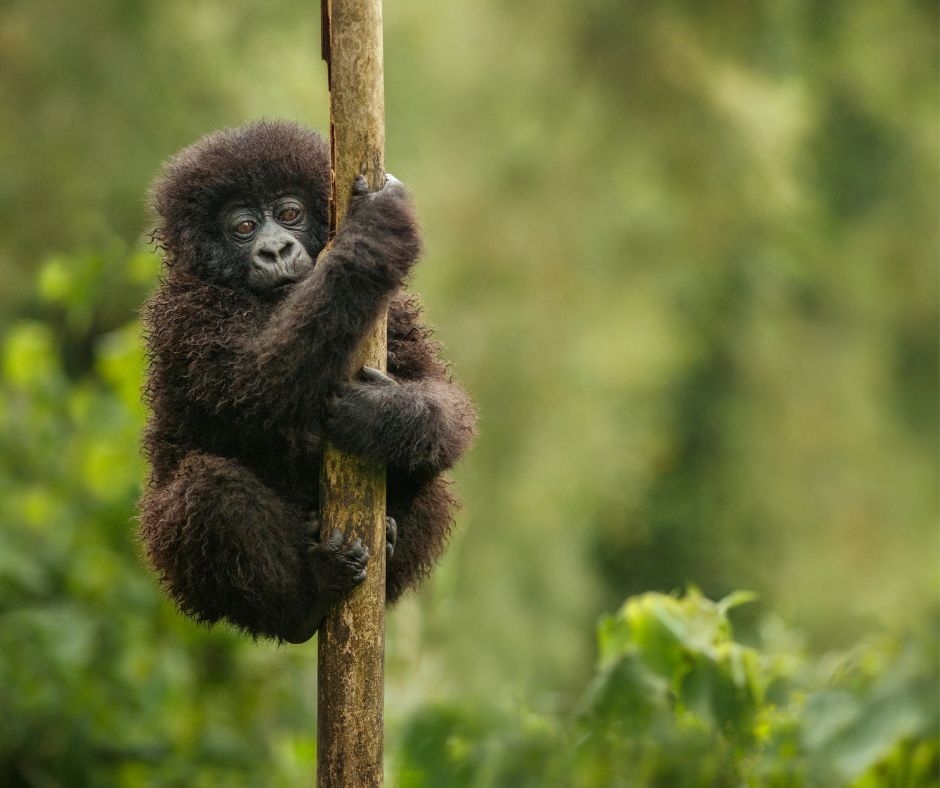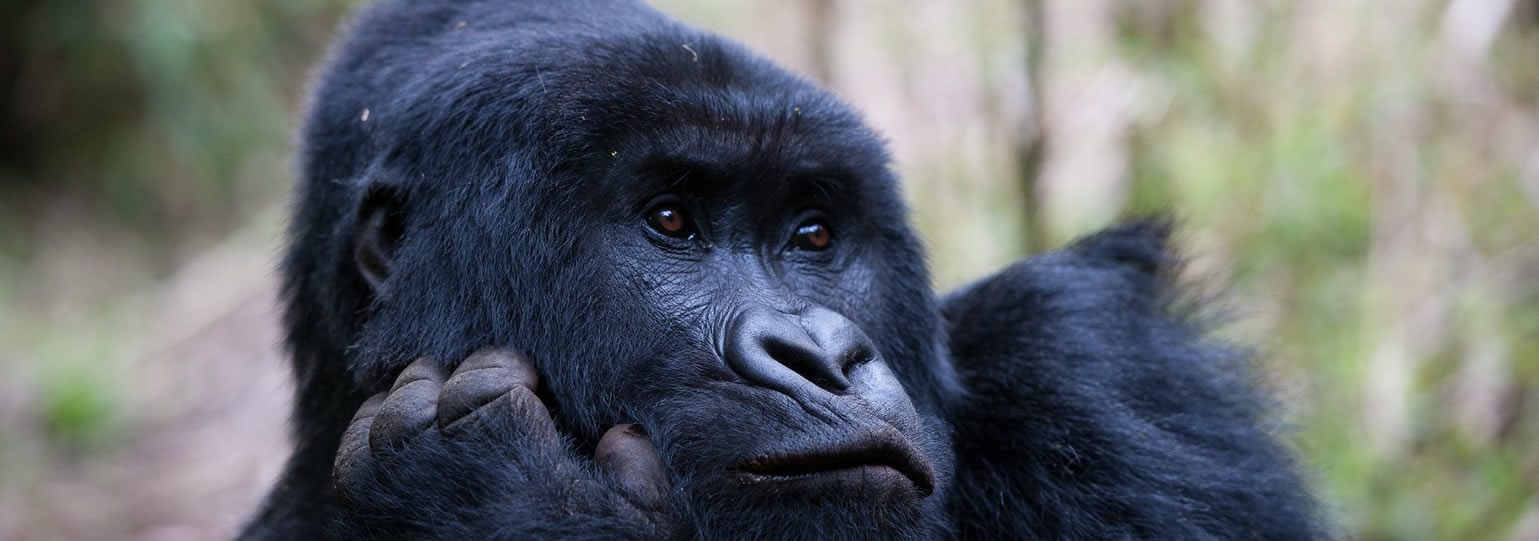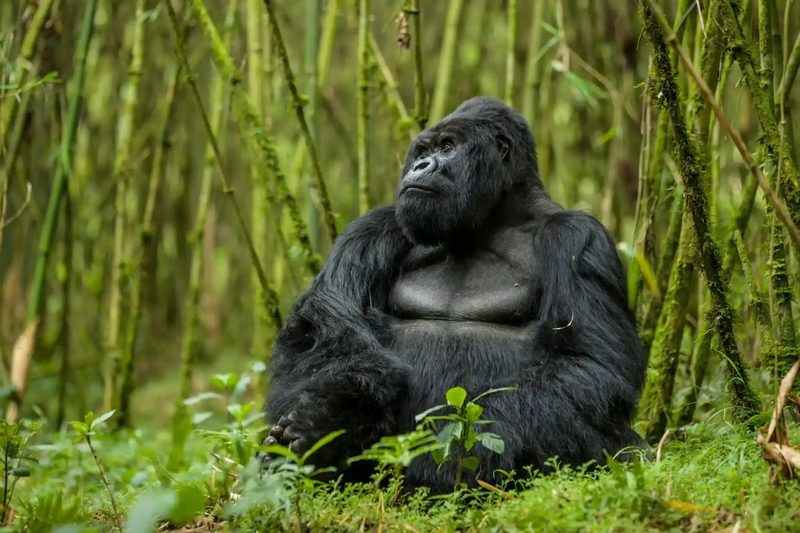
Most people who trek to see mountain gorillas get one hour. You climb into the forest, the trackers lead you to the family, and almost the moment you sit down a quiet stopwatch starts. Sixty minutes later it is over and you begin the walk back out. It is still one of the great hours in all of wildlife travel, and for most guests it is exactly the right amount of time. But there is a second version of the experience that almost nobody hears about, and it gives you up to four hours with a gorilla family instead of one.
It is called the Gorilla Habituation Experience. It exists in only one country, the permits are the scarcest of any gorilla product in East Africa, and it is honestly not for everyone. Here is how it actually works, and who we point towards it.
What the Habituation Experience Actually Is
Habituation is the slow process of getting a wild gorilla family used to people. It is not taming, and it is not feeding. A team of trackers and researchers visits the same family almost every day for two to three years, sitting a little closer each time, until the gorillas will tolerate a small group of humans nearby without changing how they behave. Only then does a family graduate to the standard one-hour tourist visit.
The Gorilla Habituation Experience lets you join that process while it is still happening. You walk in with the trackers and researchers to a family that is only semi-habituated, and you stay with them for up to four hours rather than one. You are there for the real work: the soft vocalisations the trackers use to reassure the silverback, the constant reading of mood and distance, the patience it takes to earn a wild animal's trust. It is the closest a traveller can get to seeing how gorilla tourism is built in the first place.
The short version: a standard trek is one hour with a fully habituated family. The habituation experience is up to four hours with a family that is still being habituated, walking in alongside the researchers doing the work.
One Hour Versus Four: Why the Extra Time Changes Everything
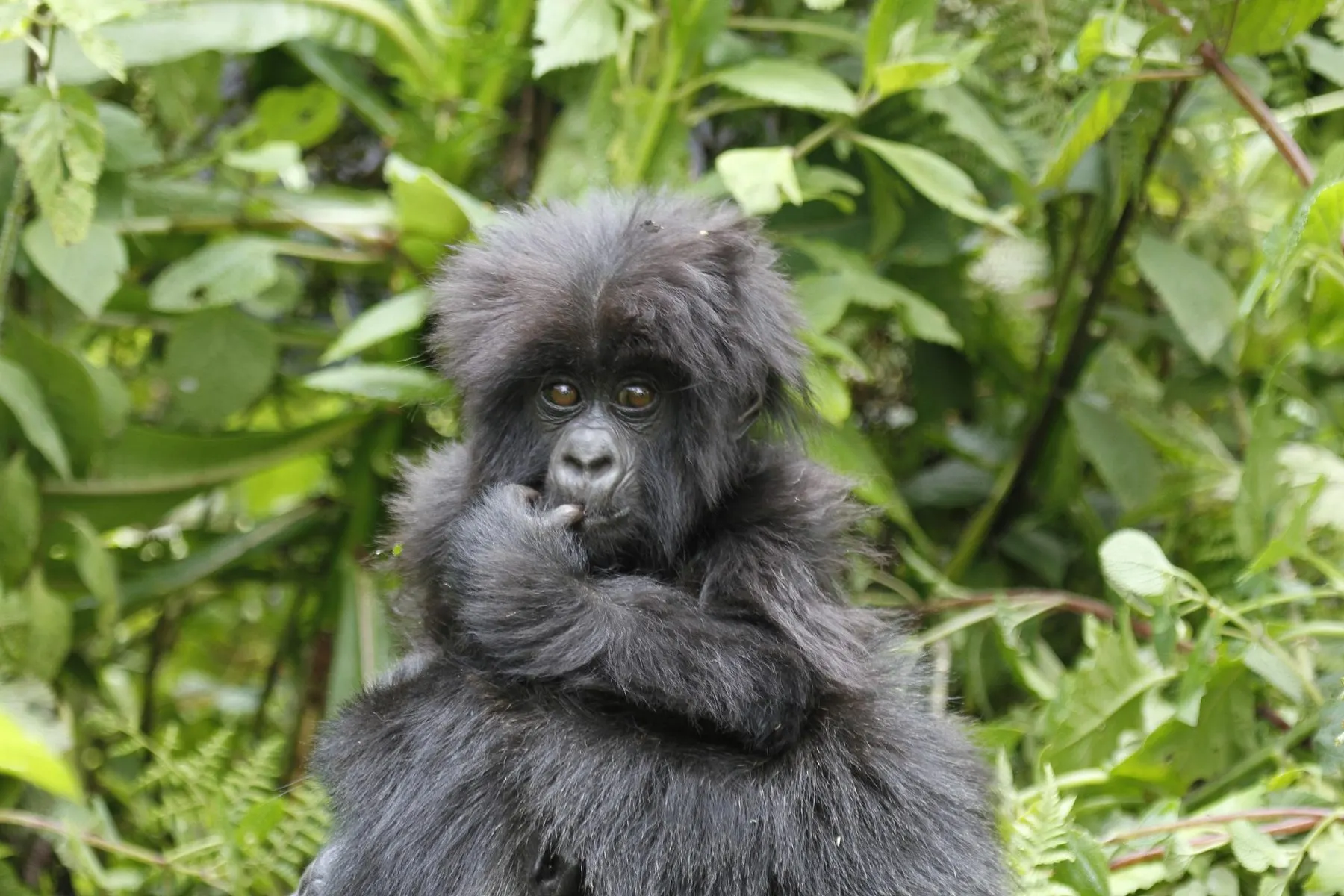
An hour with gorillas goes fast. You arrive, you take it in, you photograph what is in front of you, and almost as soon as you have steadied your nerves the guide is tapping his watch. Four hours is a different kind of encounter altogether. You are there long enough to watch a whole rhythm play out: the silverback dozing through the heat of the day, juveniles wrestling and tumbling out of the low branches, a mother grooming an infant, the family feeding its way slowly through a stand of vegetation while you move quietly along with them.
For anyone who cares about photography, the difference is enormous. The light shifts, the gorillas move through it, and you have time to wait for the frame instead of grabbing whatever you can in sixty minutes. More than that, you stop being a visitor on a clock and start to feel, for an afternoon, like part of the forest. That shift, from watching the gorillas to simply being among them, is the whole point.
Uganda Only, and Only in the South of Bwindi
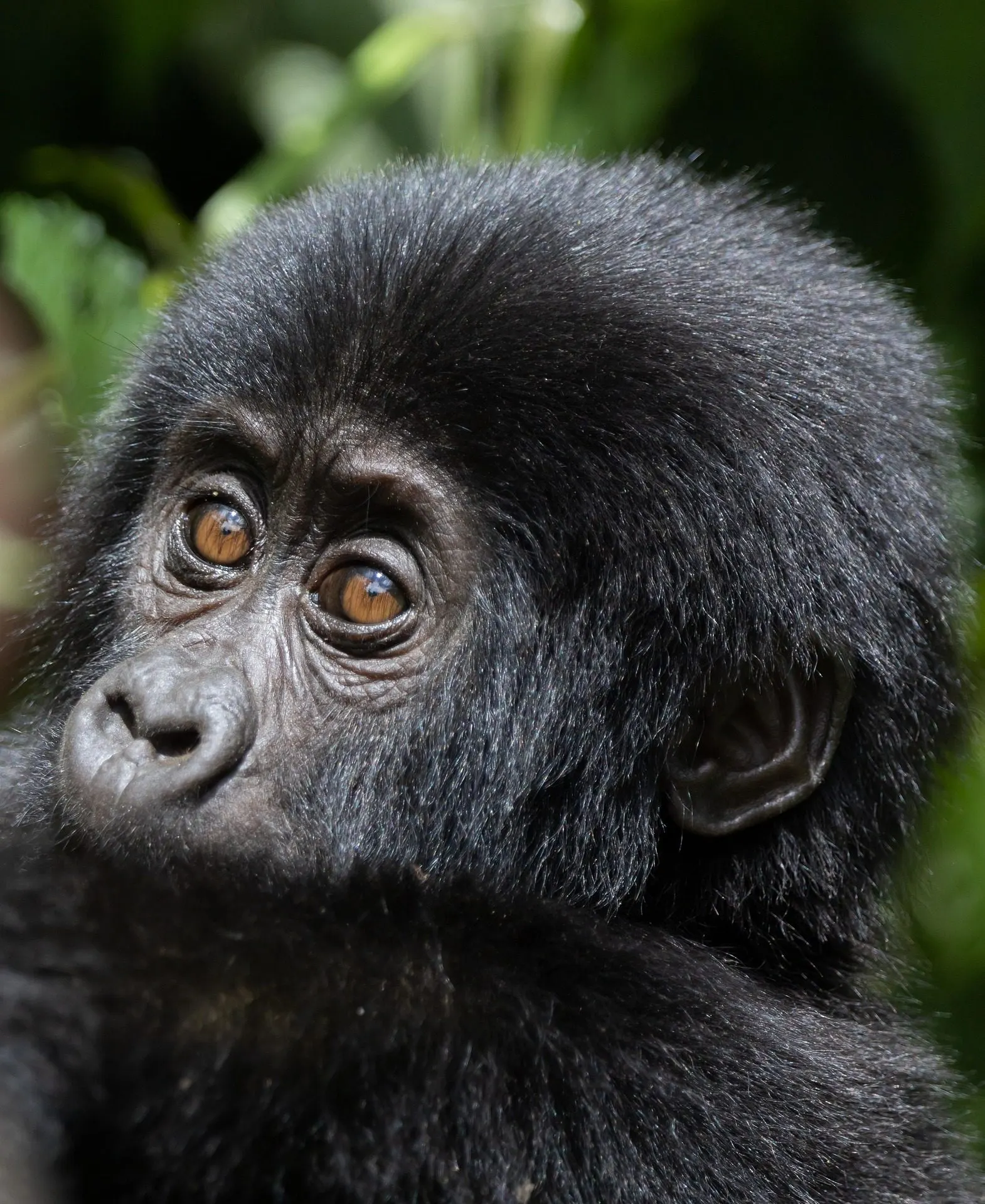
Here is the part most people do not realise. The Gorilla Habituation Experience is offered in only one country on earth: Uganda. And within Uganda, only in the southern sectors of Bwindi Impenetrable Forest, Rushaga as its home and neighbouring Nkuringo as a secondary option. Two semi-habituated families, Bikingi in Rushaga and Bushaho around Nkuringo, are the ones you visit.
Rwanda, for all that its Volcanoes National Park is superb, does not offer it at all. Neither does the gorilla country in the north of Bwindi. So if the long encounter is what you are after, it makes the decision for you. The trip stays in southern Uganda, and we base you at a lodge in the Rushaga or Nkuringo area, places like Gorilla Safari Lodge, Nkuringo Bwindi Gorilla Lodge or Clouds Mountain Gorilla Lodge, so you are at the right trailhead on the morning it counts.
Why this keeps you in Uganda: Rwanda cannot offer the habituation experience, so a guest set on four hours rather than one is a reason to stay in southern Uganda rather than cross to Volcanoes. We cover the wider trade-offs in Rwanda vs Uganda for gorilla trekking. It's one chapter of our complete Uganda safari guide.
Who It's Really For (and Who It Isn't)
We are straight with people about this one, because the habituation experience is not just a longer, better version of a normal trek for everybody. It is harder. A semi-habituated family is warier and ranges deeper into the forest than a fully habituated one, so the walk to reach them is usually longer, steeper and less predictable. You need to be genuinely fit and comfortable on rough ground for several hours.
It tends to suit three kinds of traveller especially well:
- Repeat visitors who have already done gorillas. If you have had your standard hour and loved it, this is the natural next step, deeper, longer, wilder.
- Keen photographers. Four hours in changing light is worth far more than one rushed hour.
- Fit, patient walkers who would rather earn a quiet afternoon with a wild family than tick a box and head back out.
It is not the right call for first-time gorilla trekkers, where the standard hour is the better introduction, nor for mixed-mobility groups, nor for families with younger children. The minimum age is strictly 15 and it is never waived. When a returning client tells us they want something more than the trek they did last time, this is almost always what we suggest.
The Scarcest Gorilla Permit in East Africa
Scarcity is the other thing that defines this experience. A standard gorilla family takes up to eight visitors a day. The habituation experience takes a maximum of four people per family, and only a handful of these permits, around eight a day, are released across the whole of Bwindi. That is the entire global supply. By some distance, it is the rarest gorilla permit there is.
The permit costs around USD 1,500 per person (Uganda Wildlife Authority price; we confirm the current price when we book). For comparison, a standard Uganda gorilla permit is USD 800. So you are paying roughly double for four times the time, and for a place in a group of four rather than eight.
Because supply is so thin, these permits go early. We ask for six to twelve months of lead time, and for the busier months of the year the longer end of that is realistic. We secure the permit and build the rest of the trip around it, so you never deal with the wildlife authority yourself, but the dates do have to be locked in well ahead.
Plan ahead: only about eight habituation permits exist per day, worldwide, with a maximum of four people per gorilla family. If specific dates matter, talk to us six to twelve months out.
How We Build It Into a Trip
A habituation morning is the centrepiece, not the whole journey. The way we usually frame it:
- Add a standard one-hour trek on a separate day. Plenty of guests do both. It is a second permit each, but it can run from the same southern sector, so there is no changing lodges in between.
- Pair it with the rest of Uganda. Queen Elizabeth National Park is a couple of hours away, with classic savannah game drives, the tree-climbing lions of the Ishasha sector, and the Kazinga Channel boat cruise that puts you among hippo, buffalo and elephant at close range. Kibale Forest, which holds the highest chimpanzee density in Africa, makes it a primate double-header.
- Run it on to Tanzania or Zanzibar. Plenty of our guests treat the gorillas as the opening act of a larger East African trip: a few days in the forest, then the Serengeti, then the beach.
However it is shaped, the principle is the one we apply to every trip. We design it around the single experience you most want, and a habituation morning is a very good thing to build around.
Before You Book
A few practical things worth knowing early:
- Fitness: assume a longer, harder walk than a standard trek. Porters are available and we always recommend taking one, both for the help and because it puts income straight into the local community.
- Minimum age 15, strictly enforced, no exceptions.
- Entry and vaccinations: check current entry and vaccination requirements on smartraveller.gov.au and with a travel doctor. We will walk you through the rest of the planning when we plan your dates.
- When to go: the gorillas are there year-round. June to September and December to February are the drier stretches and make for easier walking, though the forest is called Impenetrable for a reason and a little mud is part of the deal.
Frequently Asked Questions
How is the habituation experience different from normal gorilla trekking?
A standard trek gives you one hour with a fully habituated family. The habituation experience gives you up to four hours with a family that is still being habituated, and you walk in alongside the trackers and researchers doing that work. It is longer, wilder and more physically demanding.
Can I do the habituation experience in Rwanda?
No. It is offered only in Uganda, and only in the southern sectors of Bwindi, Rushaga and Nkuringo. Rwanda's Volcanoes National Park offers excellent standard trekking but not the four-hour habituation experience.
How much does the permit cost?
Around USD 1,500 per person (Uganda Wildlife Authority price; we confirm the current price when we book). A standard Uganda gorilla permit is USD 800 per person. We handle the permit procurement as part of building your trip.
How fit do I need to be?
Fitter than for a standard trek. Because the family is only semi-habituated, it ranges deeper into the forest, so the walk is usually longer and steeper, often several hours over uneven ground. We always recommend hiring a porter.
Is it worth it if I've never seen gorillas before?
For most first-timers we would steer you to a standard one-hour trek first. It is the better introduction, less demanding, and still extraordinary. The habituation experience really comes into its own for repeat visitors and keen photographers who want to go deeper than the hour.
Ready to Experience This?
Let us plan your trip
The habituation permits are few and they go early. Tell us roughly when you are thinking of travelling and we will check availability and build the trip around it.