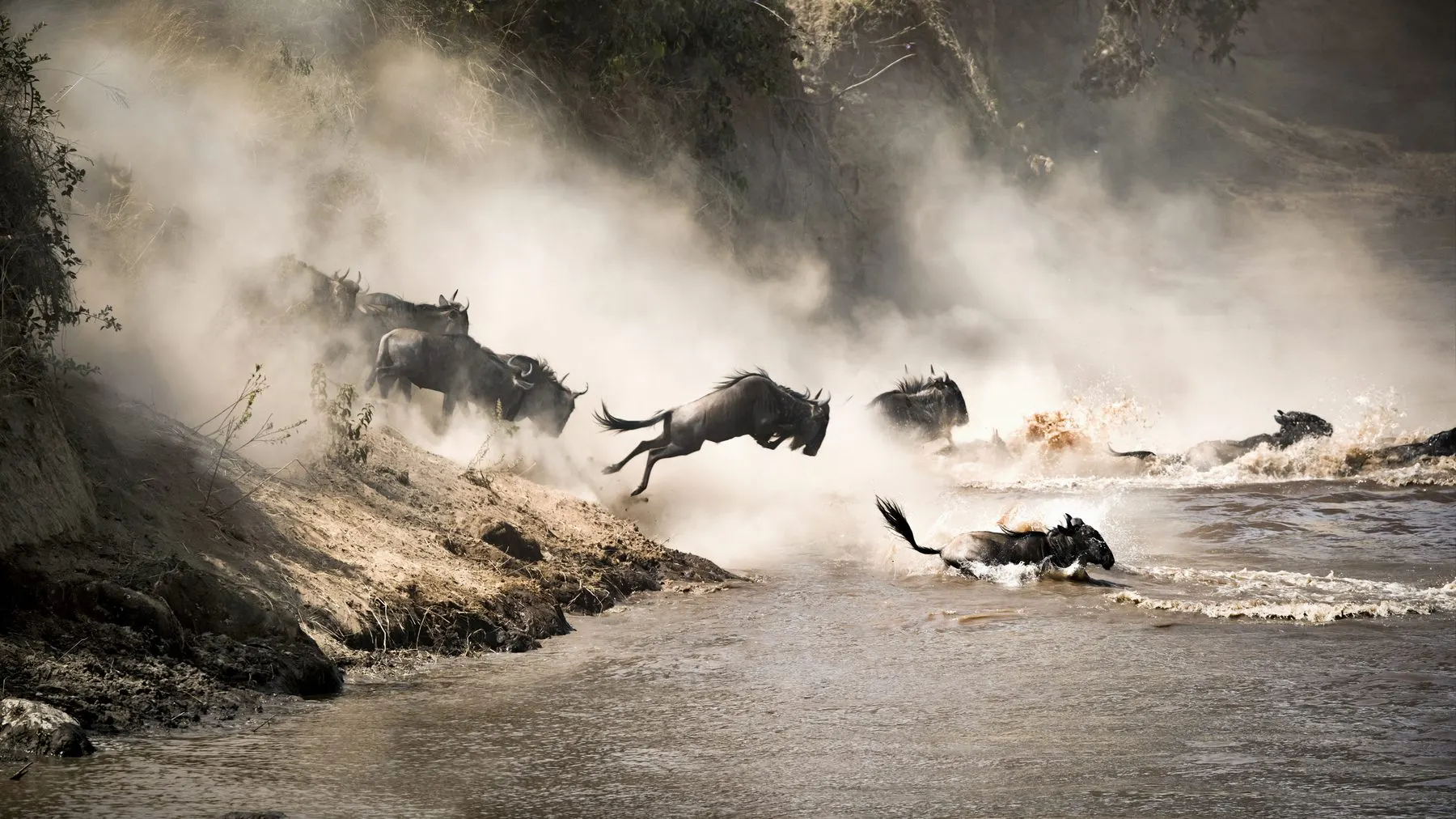
They share the same ecosystem. The same two million wildebeest make the same annual loop between them. And yet the Masai Mara and the Serengeti offer genuinely different safari experiences, different camps, different crowd levels, different landscapes, and different strengths depending on when you travel. This is the honest comparison.
The short answer: choose the Serengeti for scale, solitude and a longer, more varied safari; choose the Masai Mara for the most concentrated September crossing action in a compact, easy-to-reach park. The Mara River is one river on the border, so crossings are visible from both sides, and from the Tanzanian side you don't need a second country to see them.
The Same Migration, Two Very Different Countries
The Great Migration doesn't respect borders. Every year, roughly 1.5 million wildebeest, 400,000 zebra and 200,000 gazelle trace an enormous figure-eight between the Serengeti in Tanzania and the Masai Mara in Kenya, following the rain-driven flush of new grass. The Mara River crossing. That collision of animals, water and crocodiles, happens at the border between the two, with herds on both sides at once.
The question most travellers ask, which is better?, is the wrong one. The better question is: which is better for your specific trip? The answer depends on your dates, your priorities, and what you want the experience to feel like.
The Landscape: Vast Plains vs Intimate Bush
The Serengeti is enormous, 14,750 square kilometres of open plains, kopjes, acacia woodland and riverine forest. It's the kind of landscape that creates genuine solitude. Drive 40 minutes from camp and you may not see another vehicle. The light in the late afternoon, falling across the golden grass with nothing built anywhere on the horizon, is the image people carry home for the rest of their lives.
The Masai Mara is a fraction of the size, roughly 1,500 square kilometres, and is essentially the Serengeti's northern extension, separated only by a line on a map. The grass is greener, the vegetation slightly denser. There are fewer kopjes, more riverine corridors, and the wildlife is consistently concentrated in a smaller area. You'll find more game per kilometre in the Mara. You'll also find more vehicles.
The Serengeti is where you feel the scale of Africa. The Mara is where you feel the density of it.
Timing: When to Be Where
This is the most important variable, and it's where most travellers go wrong by assuming the Migration is simply "in Kenya in July." The reality is more fluid.
The herds are in continuous movement year-round. In the dry season (June to October), the northern Serengeti and Mara River crossings are the focal point. This is what most people picture. But the herds don't all arrive in Kenya on the same date, and they often spend more time in Tanzania than popular coverage suggests. In July and August, herds typically begin building in the northern Serengeti and making tentative crossings. By September, more are established in Kenya, though large numbers remain south of the Mara River. By October, they begin the return south.
The key insight: if you're travelling in July or early August, the northern Serengeti often gives you river crossings without the Mara's vehicle congestion. By late August and September, being in Kenya puts you closer to the core action. The best approach, if your schedule allows, is to position in the northern Serengeti in late July and the Mara in late August to September.
For the rest of the year, both destinations offer exceptional game viewing beyond the Migration entirely, but the Serengeti has a far larger year-round argument. Calving season (January to February) in the southern Serengeti is one of the most extraordinary wildlife events on the planet, with tens of thousands of calves born across the Ndutu plains in a six-week window. The Mara has no equivalent.
The Camps: Style and Density
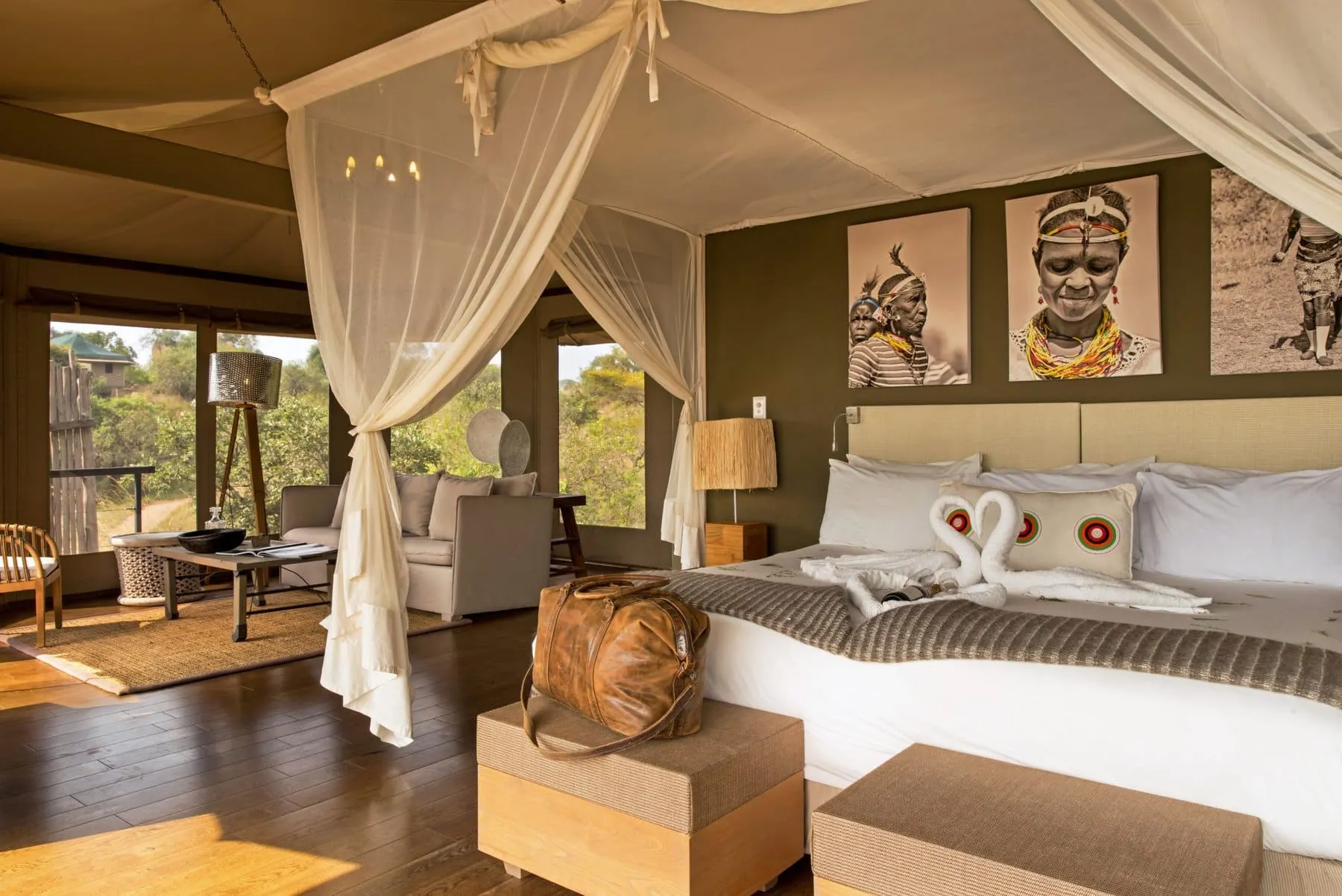
Kenya's Mara has hundreds of camps and lodges operating within and around the reserve. Exclusivity depends almost entirely on where you stay. The conservancies. Ol Kinyei, Mara North, Naboisho, Olare Motorogi, operate on private land adjacent to the main reserve, with strict limits on vehicle numbers and no access to non-resident guests. Camps like Sanctuary Olonana, Angama Mara, and the various Mara & Beyond properties in the conservancies offer a fundamentally different experience to the main reserve, where uncontrolled vehicle concentrations around big-cat sightings can be striking.
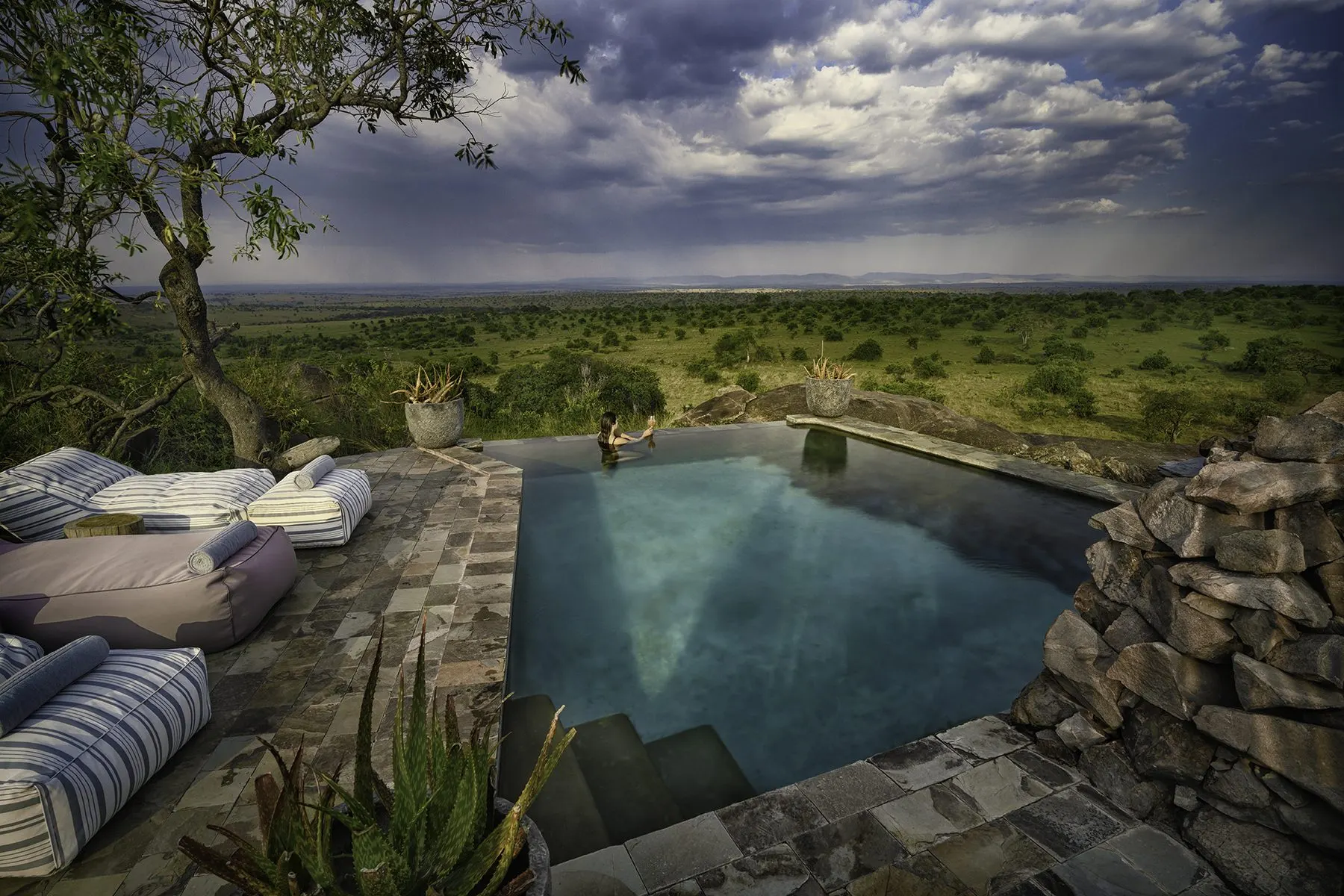
In the Serengeti, the landscape itself provides natural separation. The central and western corridors and the Mara North areas of the Serengeti have fewer camps per square kilometre. Camps like Singita Mara River Tented Camp, &Beyond Serengeti Under Canvas, and Sayari Camp operate mobile or semi-permanent sites that move with the herds. The scale of the park means that even during peak season, solitude is achievable in the right location.
Practical Comparison at a Glance
| Factor | Serengeti (Tanzania) | Masai Mara (Kenya) |
|---|---|---|
| Size | 14,750 km², vast open plains | ~1,500 km² plus private conservancies |
| Peak Migration | Northern corridor: July to Aug | Mara crossings: Aug to Sep |
| Year-round wildlife | Exceptional, calving in Jan to Feb | Strong big-cat density throughout |
| Vehicle density | Lower overall; avoidable in right camps | Higher in main reserve; conservancies are protected |
| Night drives | Permitted in private concessions | Permitted in conservancies only |
| Walking safaris | Available in select private areas | Available in conservancies |
| Fly-in access | Multiple airstrips; direct from Dar, Arusha | Direct from Nairobi (~45 min) |
| Combine with | Ngorongoro, Tarangire, Zanzibar | Amboseli, Samburu, Lamu |
What About Doing Both?
For the right itinerary, combining both sides is genuinely the most satisfying approach, and it's more achievable than most travellers expect. A typical structure would be four nights in the northern Serengeti (Sayari or similar) in late July, followed by a short flight to the Mara and three or four nights in a conservancy camp in August. You follow the herds, experience both landscapes and camp cultures, and cross the border by air.
The logistical note: you'll enter Kenya as well as Tanzania, so you'll arrange entry paperwork for both before you leave home, through each country's official site (visa.immigration.go.tz and etakenya.go.ke). We build the flights and the border crossing into the itinerary, and it adds no meaningful friction to the trip.
For the traveller who can only choose one: if you're travelling in June or early July, the Serengeti gives you calmer, more immersive game viewing with the early stages of the Migration. If you're locked into late August or September, the Mara delivers the concentrated crossing action. Outside Migration season entirely, we lean toward the Serengeti. The scale, the calving plains, and the absence of vehicles in the right areas make it the stronger year-round destination.
Big Cats: The Mara's Year-Round Argument
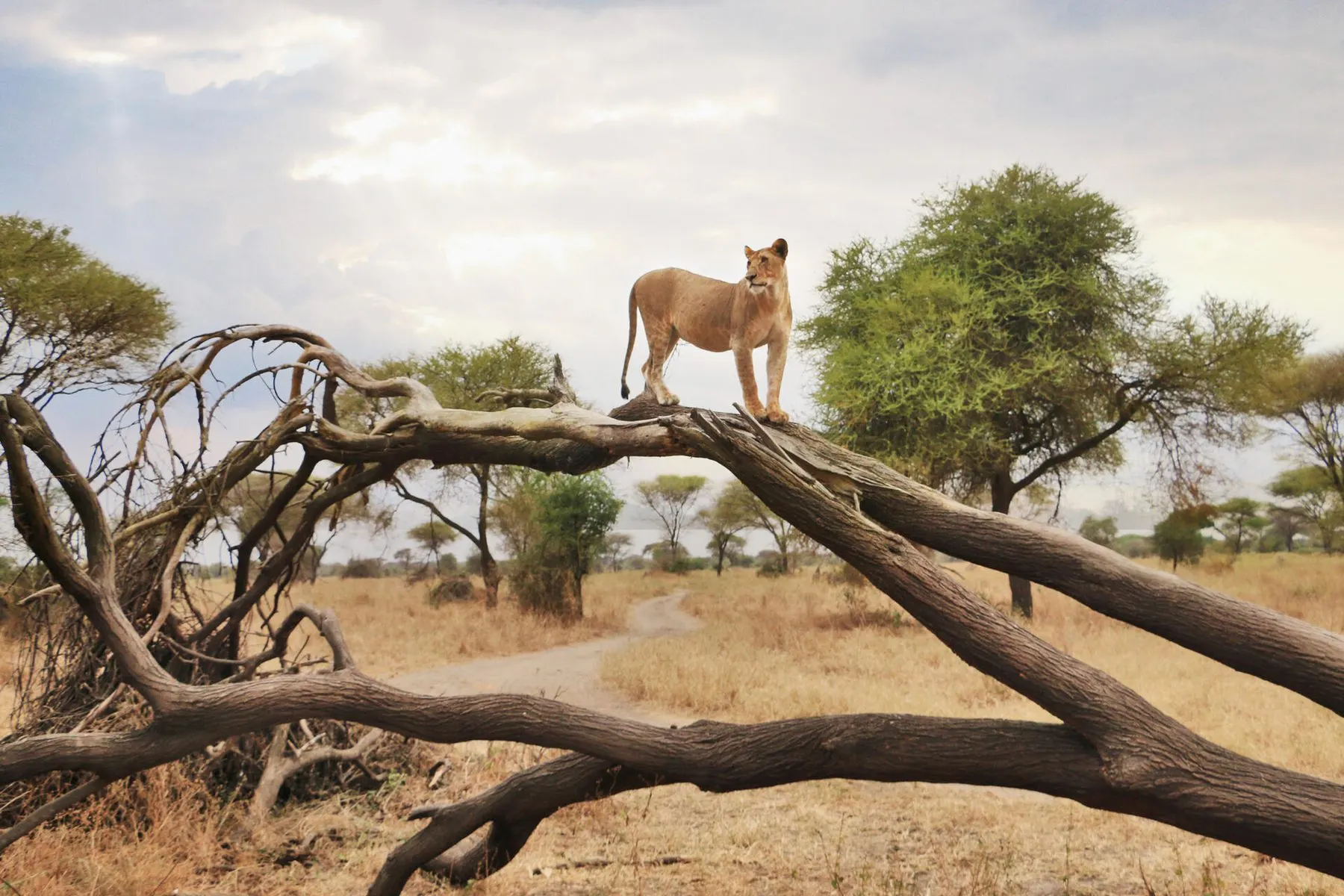
One thing the Mara does exceptionally well, at any time of year, is big cats. The Mara Triangle and the conservancies have some of the highest lion and cheetah densities in Africa. The famous Marsh Pride (and successor prides) have been documented continuously for decades. In a four-night stay in the right conservancy camp, multiple lion encounters per day is a realistic expectation, not a best-case scenario.
This matters most if you're travelling outside July to October. If the Migration isn't the driving reason and big-cat sightings are your priority, the Mara in March or May is a completely valid choice, and considerably less expensive than peak season rates.
For leopard, both destinations offer genuinely strong sightings. The Serengeti's western corridor and Seronera area have well-habituated leopards that have been tracked for years. The Mara's riverine forest along the Talek and Mara rivers produces reliable sightings too.
Cost: Is One Cheaper?
In general, comparable quality camps cost broadly similar rates across both countries. Top-end mobile camps in the Serengeti and luxury conservancy camps in the Mara both sit in the $800 to $1,500 per person per night range all-inclusive. Mid-range options are available in both, though quality varies more in Kenya's main reserve where budget operations have less regulatory oversight.
Tanzania has a higher park fee structure. The Serengeti charges $82 per person per day, but this is included in camp rates at the better properties. Kenya's conservation fees in the conservancies are included in rates as well. The net difference at equivalent quality levels is small enough not to be a deciding factor.
For a full guide to what a safari costs across both destinations, we've put together a practical planning guide covering budget expectations honestly.
Our Recommendation by Travel Window
January to March: Serengeti. Calving in the southern plains is extraordinary and largely uncrowded. The Mara is quiet during this period.
April to May: Mara conservancies for value and solitude; Serengeti enters the long rains and most camps close or go half-price. Good for the right traveller.
June to early July: Northern Serengeti. Herds are building in Tanzania, camps at 70 to 80% of peak rates, and you'll often have river crossing positions to yourself.
Late July to August: Both are strong. Northern Serengeti for quieter crossings; Mara conservancies for density of game and iconic experience.
September: Mara. This is its finest month. The herds are fully established, the grass is short, and the light is exceptional.
October to November: Herds return south into Tanzania. Northern Serengeti is excellent and rates begin dropping as operators prepare for short rains.
December: Southern Serengeti as early arrivals build on the calving plains. Mara is quieter but still rewarding for big cats.
Continue Reading
Frequently Asked Questions
Is the Masai Mara or Serengeti better for the Great Migration?
Both offer river crossing opportunities in the July to September window. The northern Serengeti gives you crossings with fewer vehicles and lower rates in July; the Mara in August to September has higher herd concentrations on the Kenyan side. For the full Migration experience, combining both in sequence is the best approach.
Can I visit both the Serengeti and the Masai Mara on one trip?
Yes. This is one of our most requested itinerary structures. The typical routing is fly into Kilimanjaro or Dar es Salaam, connect to a northern Serengeti airstrip, then fly cross-border to Wilson Airport in Nairobi and connect to the Mara. The whole journey takes a morning. Entry paperwork for both countries is yours to arrange before you leave home, through the official sites: visa.immigration.go.tz for Tanzania and etakenya.go.ke for Kenya.
Which is better for big cats. Serengeti or Mara?
The Mara has some of the highest lion and cheetah densities in Africa year-round. The Serengeti has extraordinary cat populations too, particularly in the Seronera and western corridor areas. If big cats are your single priority, the Mara conservancies have a slight edge in terms of regularity of encounters.
Is the Serengeti more expensive than the Masai Mara?
At equivalent quality levels, costs are broadly similar. Tanzania's park fees are slightly higher but are included in camp rates at quality properties. Both destinations have a wide range of price points; the key variable is whether you're staying in private conservancy/concession camps (which control vehicle access) or in the open reserve.
When are the Mara River crossings?
River crossings can happen from late June through October, but are most concentrated in August and September. The herds move unpredictably. There are no guaranteed crossing times. Positioning yourself at a Mara River camp for four or more nights significantly increases the probability of witnessing a major crossing event.