Most safaris in East Africa are about the animals. Murchison Falls is about the river. Here the Victoria Nile, the same river that drains Lake Victoria and runs all the way to the Mediterranean, is forced through a gap in the rock barely seven metres wide. The full weight of the world's longest river squeezed through a gap you could almost throw a stone across. The water doesn't so much fall as detonate, and you feel it in your chest before you properly see it.
That single piece of natural theatre is the heart of Uganda's largest national park, 3,800 square kilometres of savannah, borassus palm and riverbank straddling the Nile. But the falls are only the headline. Murchison is also one of the best places in the country for classic game viewing, and the drive in delivers a wildlife encounter you can't get anywhere else in Uganda. Here's how we think about it.
The falls themselves
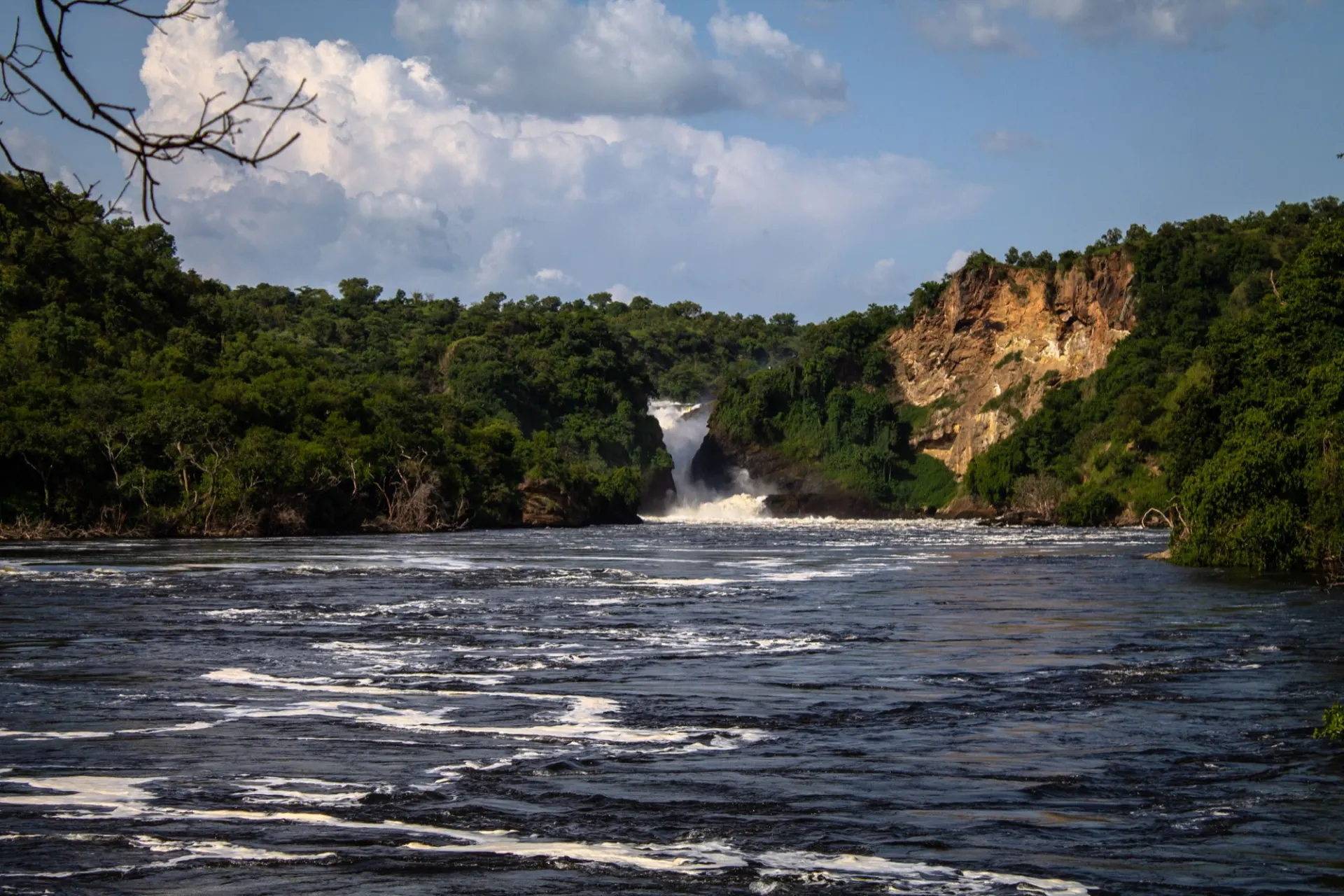
Upstream of the falls the Nile is wide, slow and almost lazy. Then the land narrows and the whole river is funnelled into that seven-metre cleft and dropped about 43 metres into the gorge below. The noise is enormous, the spray hangs in the air as a permanent mist, and on a sunny afternoon a rainbow sits in it. Explorers in the 1860s named it after a president of the Royal Geographical Society; everyone who stands at the top just calls it loud.
There are two ways to meet the falls, and the trip is far better if you do both. You can stand at the top, right at the lip where the river goes over, and you can come at it from below by boat. They are completely different experiences of the same few metres of water.
The boat cruise to the bottom
The afternoon boat cruise is the thing most people remember. You set off from Paraa, where the ferry crosses, and head upstream toward the falls for a couple of hours. The banks here hold some of the densest concentrations of hippo and Nile crocodile in Africa, and you idle past elephant coming down to drink, buffalo in the shallows, and a constant traffic of waterbirds: fish eagles, kingfishers, bee-eaters, and if the gods are kind, a shoebill standing motionless in the reeds.
Then you round a bend and there it is, the falls head-on, throwing water down the gorge straight at you. The boat holds its position in the current a respectful distance back, and you sit there in the spray and the noise and understand why the river earned its reputation. It's one of the genuinely great hours on any East African trip, and unlike a lot of safari highlights it doesn't depend on luck. The falls are always there.
The top of the falls
For a different angle, you can be driven, or walk the last stretch, to the very top, where a path brings you out right beside the point the Nile goes over. Standing there with the whole river accelerating past your feet into that gap is a more visceral thing than the boat. It's worth timing it for late afternoon when the light goes gold and the crowds thin out. Guests who do the boat one day and the top the next always say the two together are what made it.
Game drives north of the Nile
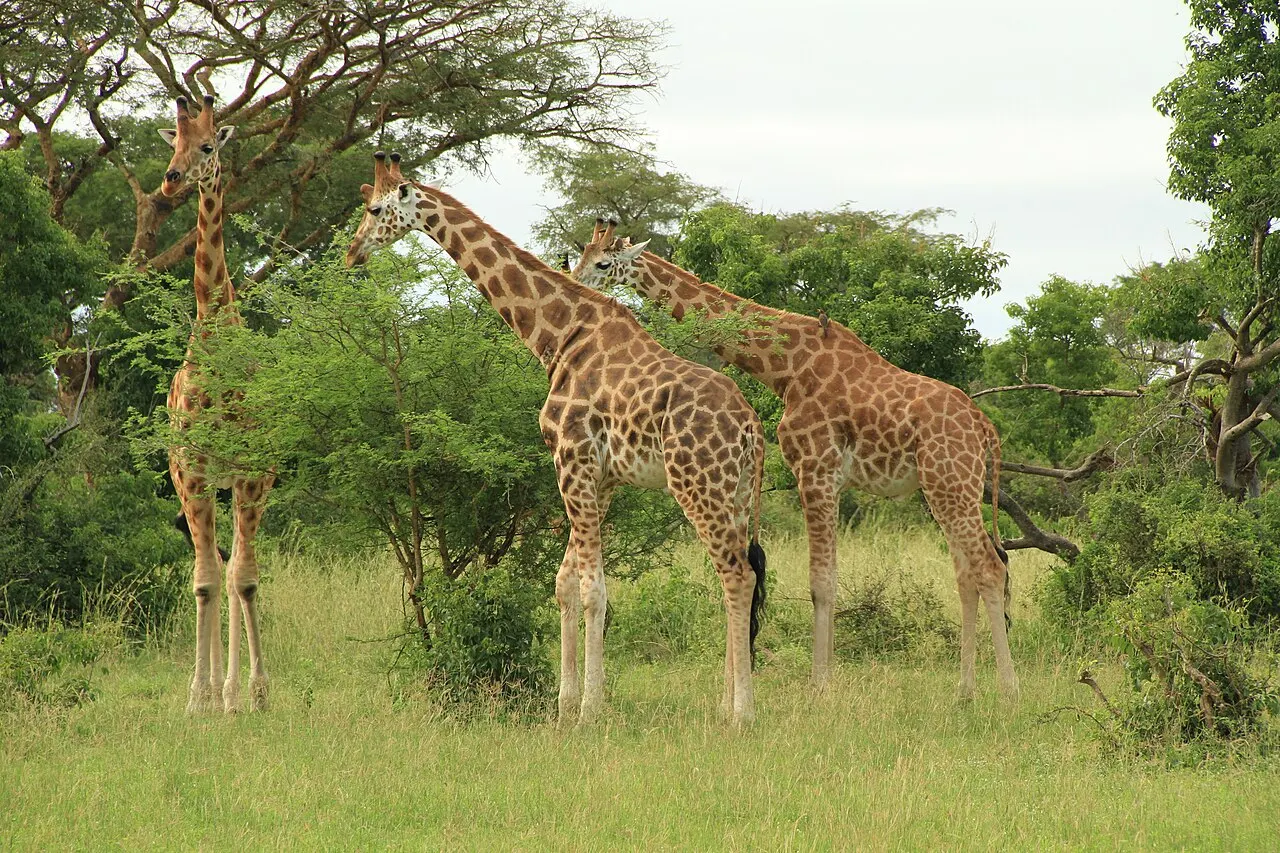
Cross to the north bank and the park opens into rolling savannah that is excellent for game. This is the heartland of the Rothschild's giraffe, one of the rarest giraffe subspecies in the world, and Murchison is one of the best places anywhere to see them. They move through the borassus palms in good numbers, and a tower of them backlit at dawn is one of those images Uganda quietly does better than its more famous neighbours.
The northern sector also holds elephant, large herds of buffalo and Uganda kob, the occasional leopard, and the lions that follow them. The Delta area, where the Nile spreads out before emptying into Lake Albert, is the prime lion ground and a beautiful drive in its own right. You won't get the sheer animal density of the Serengeti here, but you also won't get the vehicles. Murchison is uncrowded in a way the big-name parks no longer are.
Where it sits in Uganda: Murchison is in the north-west, a half-day drive or a short flight from Entebbe. It combines beautifully with the gorillas and chimps further south. For how the whole country fits together, see our guides to Uganda gorilla trekking and the four-hour habituation experience. It's all mapped out in our complete Uganda safari guide.
The rhinos of Ziwa, on the way in
Here's the part a lot of first-time visitors don't know about. Uganda lost all of its wild rhinos to poaching and war by the early 1980s. They are slowly coming back, and the place that is bringing them back sits right on the road to Murchison.
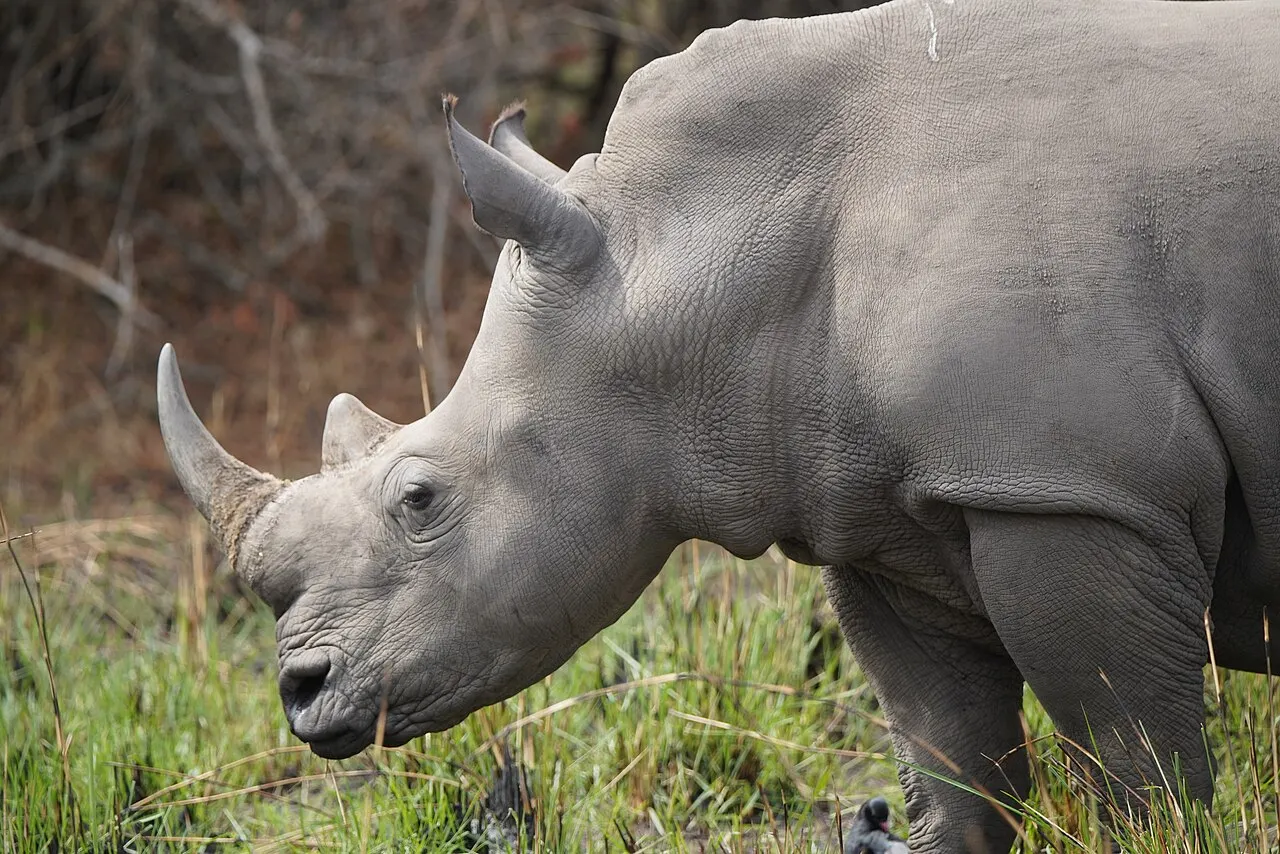
Ziwa Rhino Sanctuary, in Nakasongola about three hours north of Entebbe, is the only place in Uganda where you can see rhino in the wild. It started in 2005 with a handful of Southern white rhino, and as of early 2026 the population has grown to 59 animals, every one of them born or raised under armed protection. Because it falls almost exactly halfway, nearly every Murchison itinerary stops here to break the drive.
The experience is rhino tracking on foot. A ranger leads you out across the grassland to wherever the monitoring team has the rhinos that morning, and you approach quietly until you're standing maybe twenty or thirty metres from animals that weigh well over a tonne. There's no vehicle between you and them, just bush and a guide who knows their moods. It's calm, it's humbling, and it does something a game drive can't. It also completes the picture: Murchison gives you lion, elephant, buffalo and leopard, and Ziwa gives you the rhino, so between them you've seen Uganda's Big Five.
The shoebill, if you're lucky
One more thing worth chasing here. The shoebill, a prehistoric-looking grey stork with a bill like a wooden clog, is one of the most sought-after birds in Africa, and the Nile delta below the falls is among the most reliable places on earth to find one. You don't need to be a birder to be unsettled by a shoebill. They stand statue-still for minutes at a time and then turn their head to look at you, and it feels like being assessed by a dinosaur. If seeing one matters to you, tell us and we'll build in the time and the right boat.
When to go
Murchison is rewarding all year, but the drier stretches make game viewing easier. Roughly December to February and June to September the bush thins out, animals concentrate near the river, and the tracks stay firm. The green-season months are quieter and beautiful in their own way, with dramatic skies and lush palm savannah, though some tracks get sticky after heavy rain. The falls, of course, run hardest after the rains, so there's a trade-off: peak water versus peak game. We'll steer you based on what matters most to you.
How we build it into a trip
Murchison is rarely a trip on its own. The way it usually works:
- Two or three nights in the park to do the boat, the top of the falls, and a couple of game drives on the northern savannah without rushing.
- A Ziwa stop on the drive in, tracking rhino on foot to break the journey and tick off the Big Five.
- Pair it with the south. Most of our guests combine Murchison with gorilla trekking in Bwindi and often chimpanzees at Kibale, for a Uganda trip that runs the full gamut from the Nile to the rainforest.
- Or run it on to Tanzania. Uganda's primates and the Nile make a superb opening act before the Serengeti and Zanzibar.
However it's shaped, the principle is the one we apply to every trip: we build it around the few experiences you most want, and the falls are a very good thing to build around.
Frequently asked questions
Is Murchison Falls worth visiting?
Yes. It's Uganda's largest national park and pairs the most powerful waterfall on the Nile with classic savannah game viewing, a wildlife-packed river cruise, and four of the Big Five. It combines naturally with gorilla trekking further south for a complete Uganda safari.
How far is Murchison Falls from Entebbe or Kampala?
Roughly a 5 to 6 hour drive north, or a short scheduled flight to the park's airstrips. Most itineraries break the drive at Ziwa Rhino Sanctuary, about three hours in, to track white rhino on foot.
Can you see the Big Five at Murchison Falls?
You can see four of them inside the park: lion, elephant, buffalo and leopard. There are no wild rhino in the park itself, but you track them at Ziwa on the drive in, which completes the Big Five for the trip.
What is the boat cruise at Murchison Falls?
A two to three hour boat trip up the Victoria Nile from Paraa to the base of the falls, passing dense concentrations of hippo, crocodile and elephant, and ending with a head-on view of the falls thundering down the gorge.
When is the best time to visit Murchison Falls?
The drier months, roughly December to February and June to September, are best for game viewing. The park is open and rewarding year-round, and the falls run hardest after the rains.
Image credits: Rothschild's giraffe, public domain (DrexRockman); white rhino at Ziwa, CC BY-SA 4.0 (Yakov Fedorov), resized. Both via Wikimedia Commons.
Thinking About Uganda?
Let us plan your trip
Tell us roughly when you'd like to travel and what you most want to see, and we'll put together a Uganda trip that fits, the falls, the rhinos, the gorillas, the lot.