If Murchison is about the river and Bwindi is about the gorillas, Queen Elizabeth is about variety. In one park you move from open savannah to a wildlife-choked waterway to a tract of tropical forest where chimpanzees call from the canopy, all in the shadow of the Rwenzori Mountains. It's Uganda's most popular savannah park, and because it sits squarely on the road south to gorilla country, it's one of the easiest things in the whole country to fold into a bigger trip.
Most parks have one signature sight. Queen Elizabeth has three or four, and they're all different from one another. Here's how we think about the place.
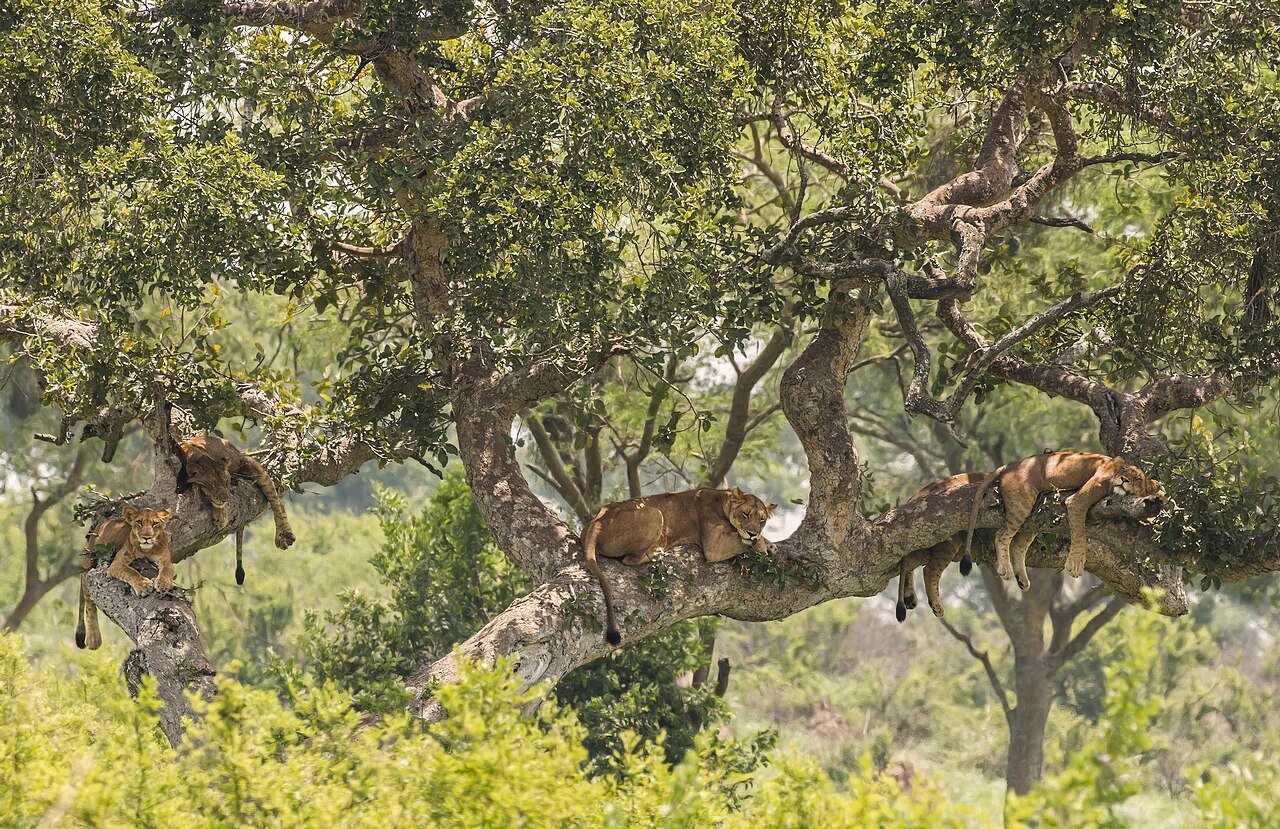
The tree-climbing lions of Ishasha
In the far south of the park, the Ishasha sector, the lions do something lions mostly don't. They climb. On a warm afternoon you'll find them draped along the branches of the big fig trees, legs and tails hanging down, fast asleep ten feet off the ground. It's one of only a couple of places in Africa where this happens with any regularity, the other being Lake Manyara in Tanzania, and nobody is entirely sure why they do it. The popular theories are escaping the biting flies down in the grass, catching a breeze, or simply getting a better view of the kob they hunt.
They're wild, so it's never a certainty, but Ishasha is about as reliable as this gets, and a guide who knows the favoured trees stacks the odds in your favour. The bonus is geography: Ishasha sits on the southern route out of the park toward Bwindi, so you can spend a morning looking for lions in trees and still be at your gorilla lodge by evening.
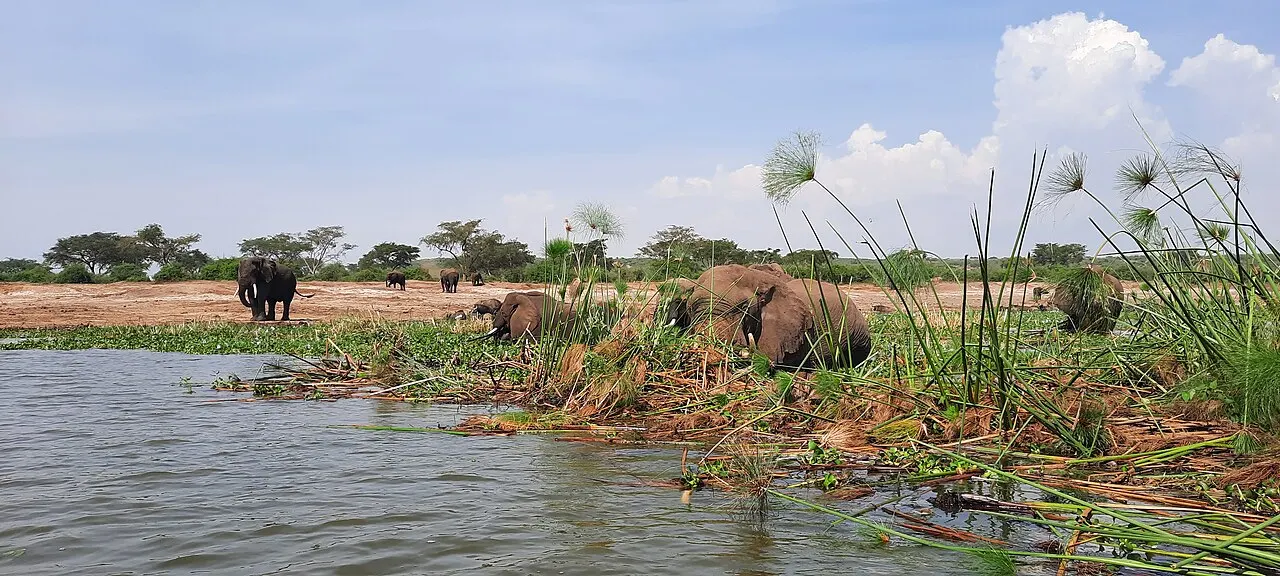
A boat cruise down the Kazinga Channel
The Kazinga Channel is a natural waterway, about 32 kilometres long, that links Lake George to Lake Edward straight through the middle of the park. The afternoon boat cruise along it is, for a lot of guests, the highlight of Queen Elizabeth. The channel holds one of the densest concentrations of hippo anywhere on earth, and the banks are a permanent gathering: elephant down to drink and feed in the shallows, buffalo wallowing, crocodiles basking, and a wall of birds, from pelicans and pied kingfishers to fish eagles and the occasional shoebill.
It's an easy, unhurried couple of hours on the water, and it gets you close to animals in a way a vehicle can't. After a few days of dusty game drives, drifting along the channel with a herd of elephant twenty metres off the bow is exactly the change of pace a trip wants.
Game drives on the Kasenyi plains
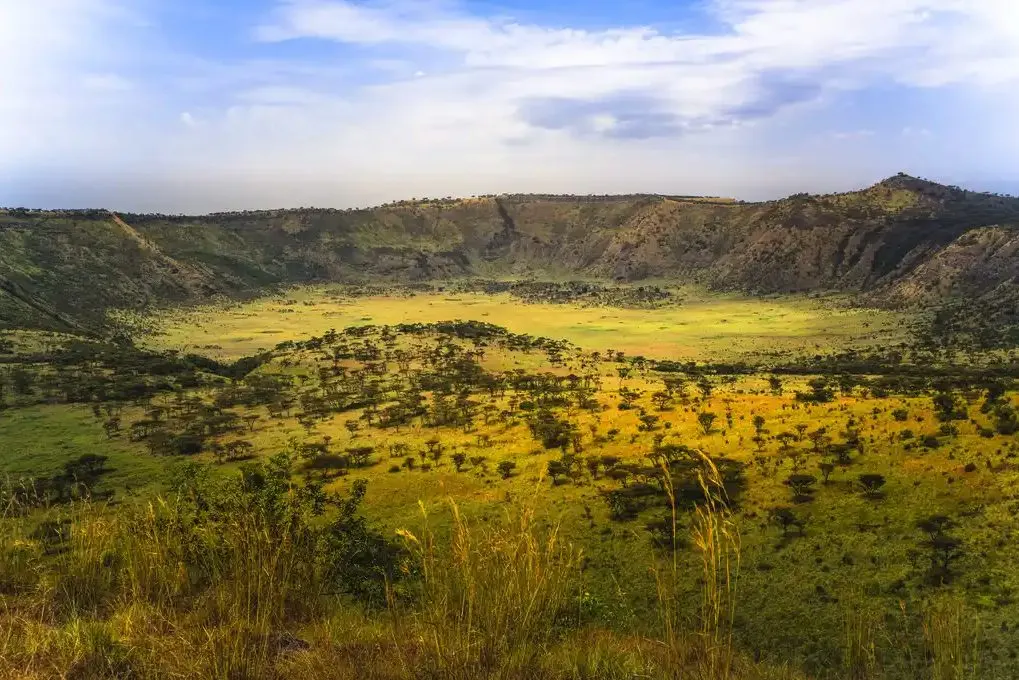
The classic savannah game viewing happens up north on the Kasenyi plains, the open grassland east of Lake George. This is Uganda kob country, thousands of them, and where the kob are, the lions follow. Early mornings here are the best chance at a hunt, and the plains also hold elephant, buffalo, warthog, hyena and, if you're lucky and patient, leopard. It doesn't have the wall-to-wall density of the Serengeti, but it's genuinely good game viewing, and you'll often have a sighting more or less to yourself.
Chimpanzees in the Kyambura Gorge
Cutting through the savannah in the east of the park is the Kyambura Gorge, a deep, green slash of rainforest the locals call the valley of apes. A community of habituated chimpanzees lives down in it, and you can trek in to look for them. It's a beautiful, atmospheric few hours, dropping out of the grassland into thick forest with the river running below.
One honest caveat. The Kyambura group is small and the gorge is dense, so chimp sightings here are less reliable than in the dedicated forests. If seeing chimpanzees is high on your list, we'd point you to Kibale further north, where success rates are close to certain. Kyambura is a lovely add-on if you're already in the park, not the place to bank your chimp encounter on.
A birder's park
One number worth knowing: Queen Elizabeth has recorded more than 600 species of bird, one of the highest counts of any single protected area on the continent. You don't have to be a birder to enjoy it, but if you are, this is one of the richest few days you'll have anywhere, from the waterbirds of the channel to forest species in Kyambura and Maramagambo.
Where it fits in a trip: Queen Elizabeth sits on the road between the chimps of Kibale to the north and the gorillas of Bwindi to the south, which makes it the natural middle of a Uganda safari. See our guides to the gorilla habituation experience and Murchison Falls for the rest of the country, or our complete Uganda safari guide for the whole loop.
When to go
Queen Elizabeth is a year-round park, but the drier months, roughly December to February and June to September, make game viewing easier as animals concentrate near water and the tracks stay firm. The tree-climbing lions tend to be easier to spot in the dry season too, when they're up out of the long grass. The green-season months are quieter, the landscape is lush, and the birding is at its best as migrants arrive.
How we build it into a trip
- Two or three nights to do a Kazinga cruise, a couple of Kasenyi game drives, and the Ishasha lions without rushing.
- Position it between the gorillas and the chimps. The classic Uganda loop runs Kibale for chimps, down through Queen Elizabeth, on to Bwindi for gorillas, with Ishasha game-driven on the way south.
- Add the gorilla habituation experience at the Bwindi end if you want to go deeper than a standard trek.
- Or pair Uganda with Tanzania for a trip that runs from chimps and lions in trees to the Serengeti and the coast.
Frequently asked questions
What is Queen Elizabeth National Park known for?
Variety. It combines the tree-climbing lions of Ishasha, the wildlife-packed Kazinga Channel cruise, savannah game drives on the Kasenyi plains, chimps in the Kyambura Gorge, and more than 600 bird species, which makes it Uganda's most diverse savannah park.
Are the tree-climbing lions guaranteed?
No, they're wild, so sightings are never guaranteed. But the Ishasha sector is one of only a couple of reliable places in Africa to see lions in trees, and the dry season plus a good guide improve your odds considerably.
What is the Kazinga Channel cruise?
A boat trip along the natural channel between Lake George and Lake Edward. It holds one of the highest concentrations of hippo in the world, and the banks draw elephant, buffalo, crocodile and huge numbers of waterbirds.
Can you see chimpanzees in Queen Elizabeth?
Yes, in the Kyambura Gorge, though sighting success is lower than at Kibale Forest. For a near-certain chimp encounter we recommend Kibale; treat Kyambura as a scenic add-on.
How does it combine with gorilla trekking?
It sits on the road north of Bwindi, so Queen Elizabeth and the gorillas are the classic Uganda pairing, with the Ishasha lion sector on the route between the two.
Image credits: tree-climbing lions, Charles J. Sharp; Kazinga Channel elephants, Jchambacha. Both CC BY-SA 4.0, resized, via Wikimedia Commons.
Thinking About Uganda?
Let us plan your trip
Tell us roughly when you'd like to travel and what you most want to see, and we'll build a Uganda trip that fits, the lions, the channel, the chimps and the gorillas.