The red dunes
Sossusvlei & the Namib
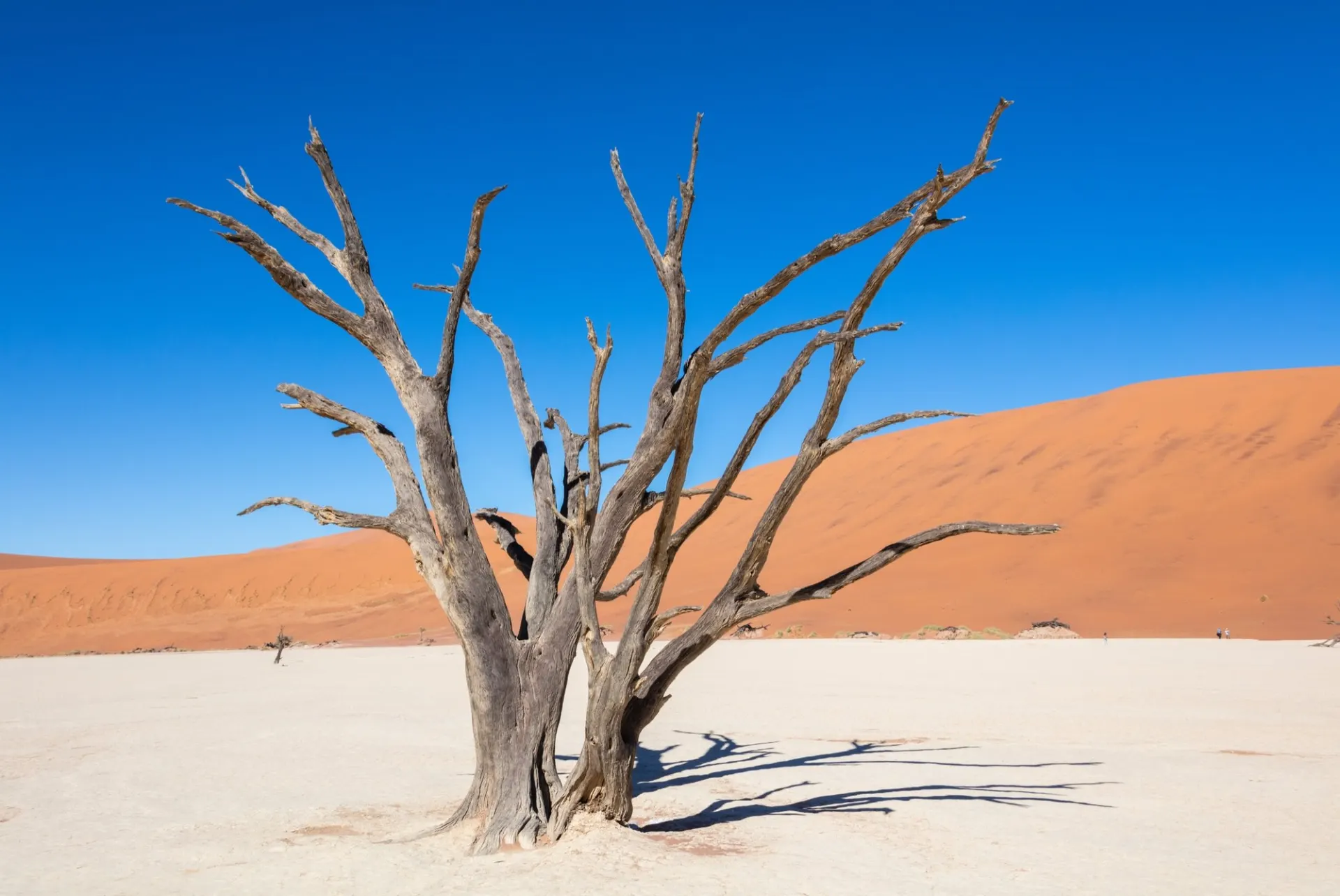
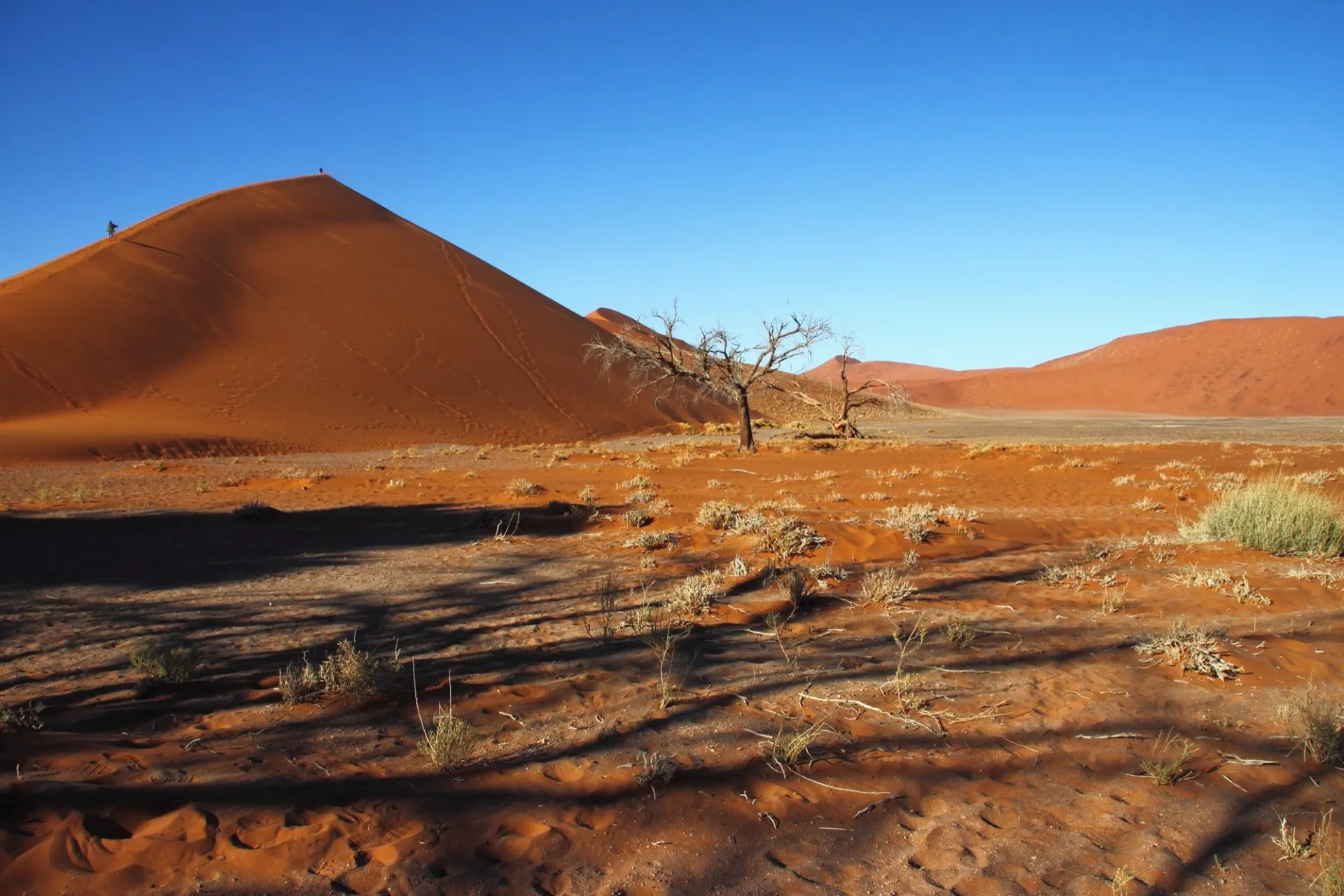
Red-and-orange dunes rising 300 metres out of the desert floor, lit from a different angle every hour. A short walk away, Dead Vlei stands cracked white and studded with 900-year-old camelthorn trees.
Sossusvlei · Etosha · Damaraland · Skeleton Coast
Endless dunes · Big herds · Roads with no traffic
Namibia is the safari for travellers who want the wilderness without the crowd. The country has one of the lowest population densities on earth, which means you can drive 200 kilometres on a graded gravel road without passing another vehicle. The landscapes shift hour by hour, rust-red dunes at Sossusvlei, salt pans the size of small countries at Etosha, granite mountains and desert-adapted elephants in Damaraland, and the Atlantic's strangest coastline at Skeleton Coast.
On the ground we work with Katja and Oliver Ahrens at African Elegance in Windhoek, a family-run team who've spent more than twenty years showing people this part of Africa. They run their own fleet of safari-prepared 4x4s and specialise in self-drive, so you get the freedom of the open road with a fully equipped vehicle, clear route notes, and a 24-hour support line behind you the whole way. They also run privately guided and fly-in trips when a journey calls for it, and their reach extends across Namibia, Botswana, South Africa and Zimbabwe. Every guest is met on arrival and sent off with a proper briefing and a welcome pack, and the team put real weight behind local conservation and community work, from rhino protection to an early-intervention centre for children in Windhoek.
Namibia is also the one destination where self-drive is genuinely better than guided for the right traveller. Good roads, English signage, drives on the left (the same side as Australia), and a lodge network that's been designed around independent travellers for thirty years. We design the route, book every lodge, prep the satellite communicator and the daily check-in cadence, and stay on the phone if anything moves sideways. You get the wilderness without the white-knuckle.
If you want quiet, big landscapes, and a country that's been working at sustainable tourism since before it was fashionable, this is the trip.
Namibia, Park by Park
Scroll through Namibia and watch the map move from the red dunes of Sossusvlei up through Damaraland and Etosha to the wild Skeleton Coast.
Map tiles: Esri, National Geographic. Locations are indicative.
Red-and-orange dunes rising 300 metres out of the desert floor, lit from a different angle every hour. A short walk away, Dead Vlei stands cracked white and studded with 900-year-old camelthorn trees.
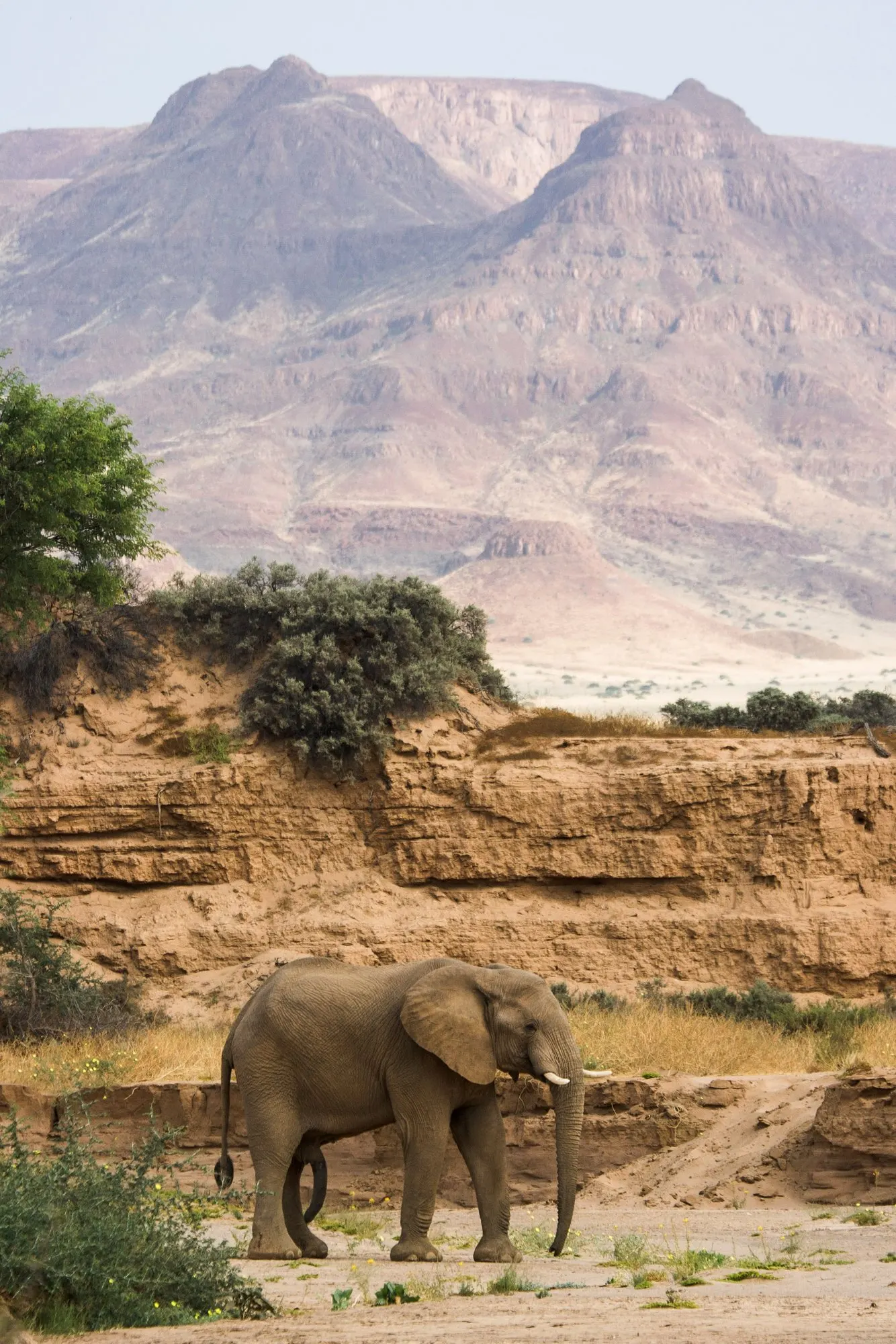
Granite mountains, dry riverbeds and desert-adapted elephants tracked on foot through the Huab and Hoanib catchments. Twyfelfontein anchors it culturally, a UNESCO site holding over 2,500 prehistoric rock engravings.
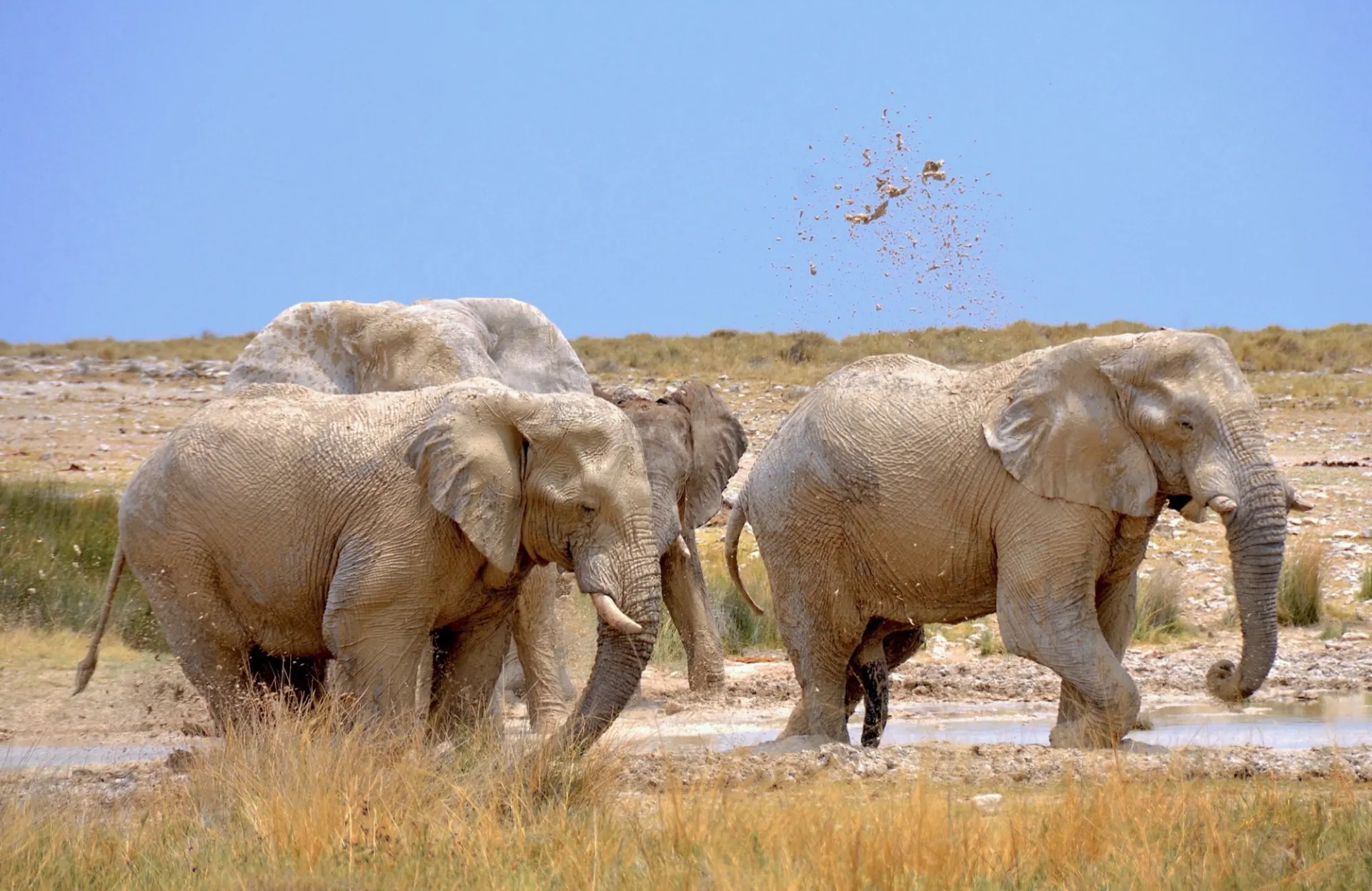
One of Africa's great game parks, built on a salt pan visible from space. In the dry season the few permanent waterholes draw elephant, rhino, giraffe, oryx, zebra and lion through in a single hour.
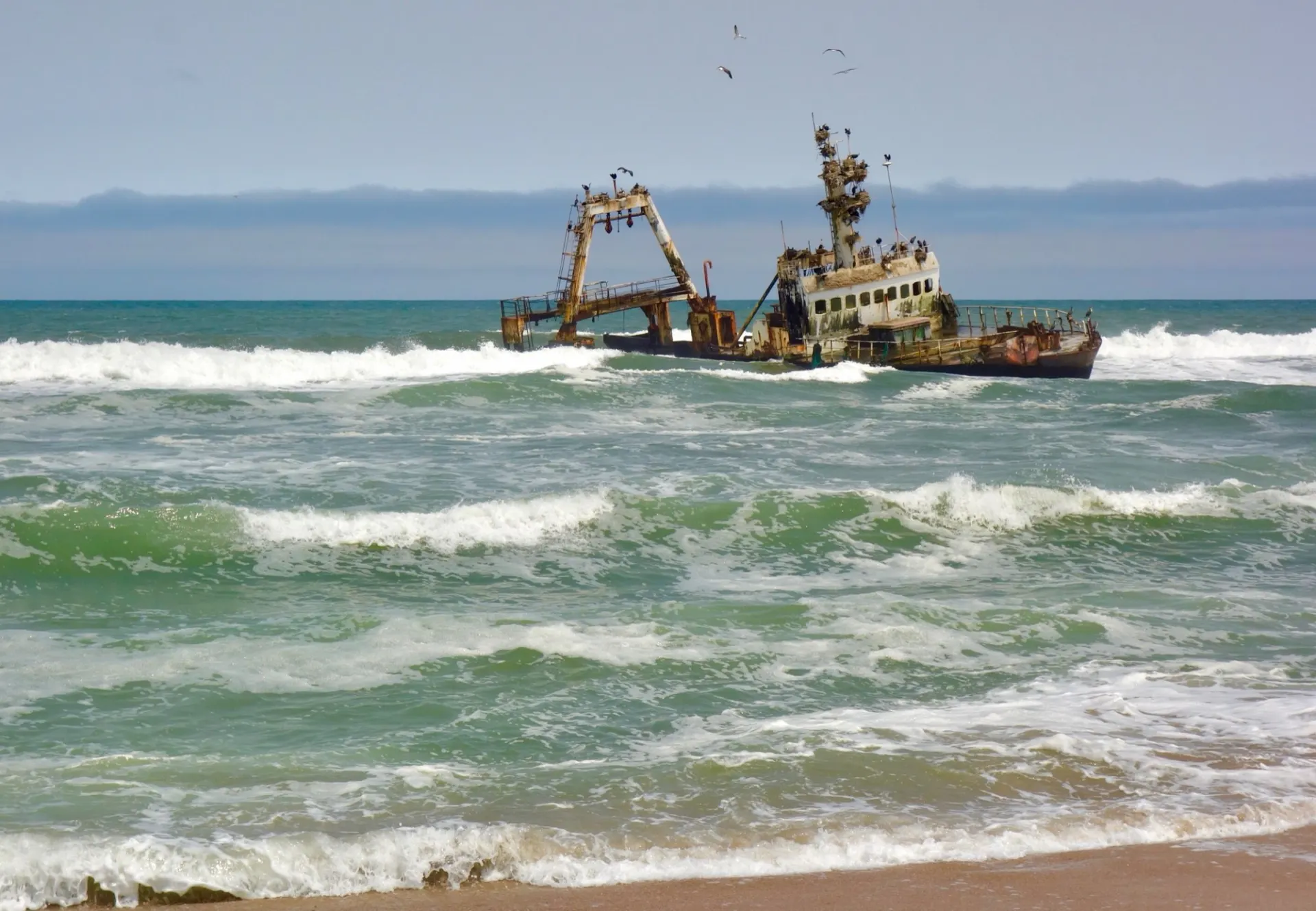
Hundreds of kilometres of fog-shrouded Atlantic shoreline where shipwrecks rust on the beaches and the only way in is by light aircraft. Swakopmund is the easier coastal break between the dunes and Damaraland.
Featured Region
Sossusvlei is the Namibia postcard. The dunes rise 300 metres out of the desert floor in long red-and-orange ridges, lit from a different angle every hour of the day. The trick is to be inside the park gate before sunrise, when the eastern face of Big Daddy glows orange and the western side is still in deep shadow. Sleep at a lodge inside the Namib-Naukluft boundary, and you can be at Dune 45 in time for the first light.
A short walk from the dunes is Dead Vlei, a white clay pan studded with the blackened trunks of 900-year-old camelthorn trees. It is the most photographed landscape in Africa for a reason. The contrast between the cracked white floor, the dead-black trees, and the burnt-orange dunes behind is something a camera cannot quite capture in person.
Beyond the dunes, the wider Namib stretches in every direction. NamibRand Nature Reserve sits south of the dune fields, all rolling grasslands and granite kopjes, and is a Gold-Tier International Dark Sky Reserve, the highest grade the designation awards and the first in Africa. The night sky here is among the darkest measured anywhere on earth.
Featured Park
Etosha is one of Africa's great game parks, anchored on a salt pan so large it is visible from space. In the dry season the pan turns into a shimmering, almost lunar plain, and the few permanent waterholes around its edges become magnets for the entire park's wildlife. You can sit at one waterhole for three hours and watch elephant, rhino, giraffe, oryx, zebra, springbok, and lion rotate through, often in the same hour.
The Okaukuejo waterhole is famous for floodlit night viewing, especially for black rhino. Halali and Namutoni each have their own waterhole rhythms, and the private reserves bordering the park (Ongava, Onguma, Mushara, Etosha Heights) add walking safaris, night drives, and full-day off-road tracking that the main park can't offer. A two- or three-night stay split between the main park and a private boundary lodge gives you both the iconic Etosha experience and the deeper bush of the conservancies.
Park fees stepped up at all of Namibia's Category 1 parks on 1 April 2026 (Etosha, Sossusvlei, Skeleton Coast, Waterberg, Fish River Canyon), so any new quote reflects the new rates. We absorb supplier movement after quoting, never the other way round.
Featured Region
Damaraland is the part of Namibia that does not look like anywhere else on earth. Granite mountains, dry riverbeds, ochre plains, and a population of desert-adapted elephants and black rhinos that have learned to survive on whatever the ephemeral rivers and ana trees deliver. Tracking the elephants on foot through the Huab and Hoanib catchments, with a local Damara guide reading the dung and broken branches, is one of the most rewarding wildlife days on the continent.
Twyfelfontein is the cultural anchor. A UNESCO World Heritage site, the rock-engraving gallery here holds over 2,500 prehistoric petroglyphs left by San hunter-gatherers two to six thousand years ago. The lodge cluster around the site, Mowani, Twyfelfontein Country Lodge, and the Wilderness camps further north, makes Damaraland a 2-night anchor that combines wildlife with deeper time.
The properties here lean smaller and more design-led than Etosha. Camp Kipwe is built into the granite boulders, Mowani Mountain Camp opens onto a 360-degree view of red plains, and Hoanib Valley Camp (a Natural Selection joint venture with the Giraffe Conservation Foundation) sits in genuine wilderness.
Premium Add-On
The Skeleton Coast is one of Africa's last true wildernesses. Hundreds of kilometres of fog-shrouded Atlantic coastline where the cold Benguela current meets the world's oldest desert. Shipwrecks rust on the beaches, brown hyena patrol the dunes, and the only way in is by light aircraft. Wilderness Hoanib Skeleton Coast Camp and Shipwreck Lodge are the two anchors, both fly-in, both unforgettable, both worth the premium for the right traveller.
Swakopmund is the easier coastal stop. A small German-colonial town wedged between the Atlantic and the dunes, it is the natural break between Sossusvlei and Damaraland. Living Desert tours through the dune fields reveal the small creatures, sidewinder snakes, palmato geckos, fog-drinking beetles, that have evolved for this environment. Kayaking with Cape fur seals at Pelican Point and quad-biking the Walvis Bay dune fields fill out an easy two-night break before heading back inland.
The hybrid model is the Kingse sweet spot. Drive the southern loop (Windhoek, Sossusvlei, Swakopmund, Damaraland) at your own pace, then fly out of Damaraland's Doro Nawas airstrip up to Hoanib and onward to a premium Etosha private reserve before charter back to Windhoek. Road romance plus the wild north.
How a Namibia Trip Comes Together
Three shapes that cover most travellers. Every quote is built from scratch around your dates, pace and preferences, these are starting points.
Sossusvlei · Swakopmund · Etosha
The compressed version, two nights in the dunes, two on the coast, two at the waterholes, and one Windhoek arrival buffer. Tight, but covers the country's three signature landscapes. Better sold as a fly-in for couples short on time.
From
AUD 8,500 pp
Self-drive mid-range, 2-pax basis
+ Damaraland + NamibRand night
The Kingse default. Three nights at Sossusvlei buys you a sunrise Dead Vlei start and a NamibRand dark-sky night. Two coast nights, two in Damaraland for desert elephants and Twyfelfontein, two at Etosha. Room to breathe between the long drives.
From
AUD 11,500 pp
Self-drive mid-range, 2-pax basis
+ Skeleton Coast OR Caprivi OR Vic Falls
The full Namibia. Add three or four nights at the end, fly-in Skeleton Coast for raw wilderness, Caprivi for riverine wildlife and cross-border Chobe, or a Vic Falls finish absorbed into the international ticket via Johannesburg.
From
AUD 16,000 pp
Hybrid mid-range, 2-pax basis
From-pricing is an anchor for self-drive mid-range trips on a two-person sharing basis, excluding international flights. Premium fly-in trips with Wilderness, &Beyond or Wolwedans run roughly 2-2.5x. Every Kingse quote is built live against the day's lodge, park and flight rates, never from a brochure.
Where You Sleep
A small sample of the properties Kingse books in Namibia. Final lodge selection always flexes around your dates, group size and pace.
Plan Your Visit
Two clear seasons, dry and green. Game viewing is at its peak May to October, with September the single best month if crowds and pricing aren't a concern.
Dry · Cool mornings · Wildlife concentrated at waterholes
Dry, cool, blue-sky season. Vegetation thins out and animals concentrate at the few permanent waterholes, the best time for Etosha and the most consistent for Damaraland's desert elephants. Pre-dawn dune climbs at Sossusvlei are crisp, no rain, perfect light. Cold mornings (4-8°C in June and July at altitude), warm days.
Rains build · Lush bush · Lower rates · Birding peak
Hot, increasingly humid, with afternoon thunderstorms. The landscape transforms, the Namib goes briefly green, Etosha calving begins in January, and the photographic light during clearing storms is exceptional. Game viewing is harder because animals disperse, but birding and landscape photography are at their best. Avoid the Caprivi Strip in peak rains (malaria spike, road wash-outs).
The Practical Questions
Go Deeper
Long-form guides that help you decide before you commit. Real numbers, real photos, no fluff.
Trip Planning Guide
Dry season, green season, and what each month delivers in the desert.
Read the guide →Trip Planning Guide
An Australian's guide to self-drive vs fly-in budgets and value.
Read the guide →Trip Planning Guide
What to actually bring (and what to leave at home).
Read the guide →Tell us your dates and what you'd like to see, dunes and stars, big herds, fly-in luxury or self-drive freedom. We design the route, book the lodges, and stay on the line for the whole trip.
Get in Touch