Everyone comes to Uganda for the gorillas. The travellers who've done their homework also come for the chimpanzees, and the place they come to is Kibale. This tract of tall, tangled rainforest in the west of the country holds the highest density and diversity of primates anywhere in East Africa, and it offers something close to a guarantee that you'll stand beneath a tree full of wild chimps, listening to them scream and hoot and crash through the canopy overhead. It's noisy, it's chaotic, and it's completely different from the quiet of a gorilla trek.
Kibale is roughly 795 square kilometres of forest near Fort Portal, and it works beautifully alongside the gorillas and the savannah parks. Here's what it offers.
The best chimp trekking in East Africa
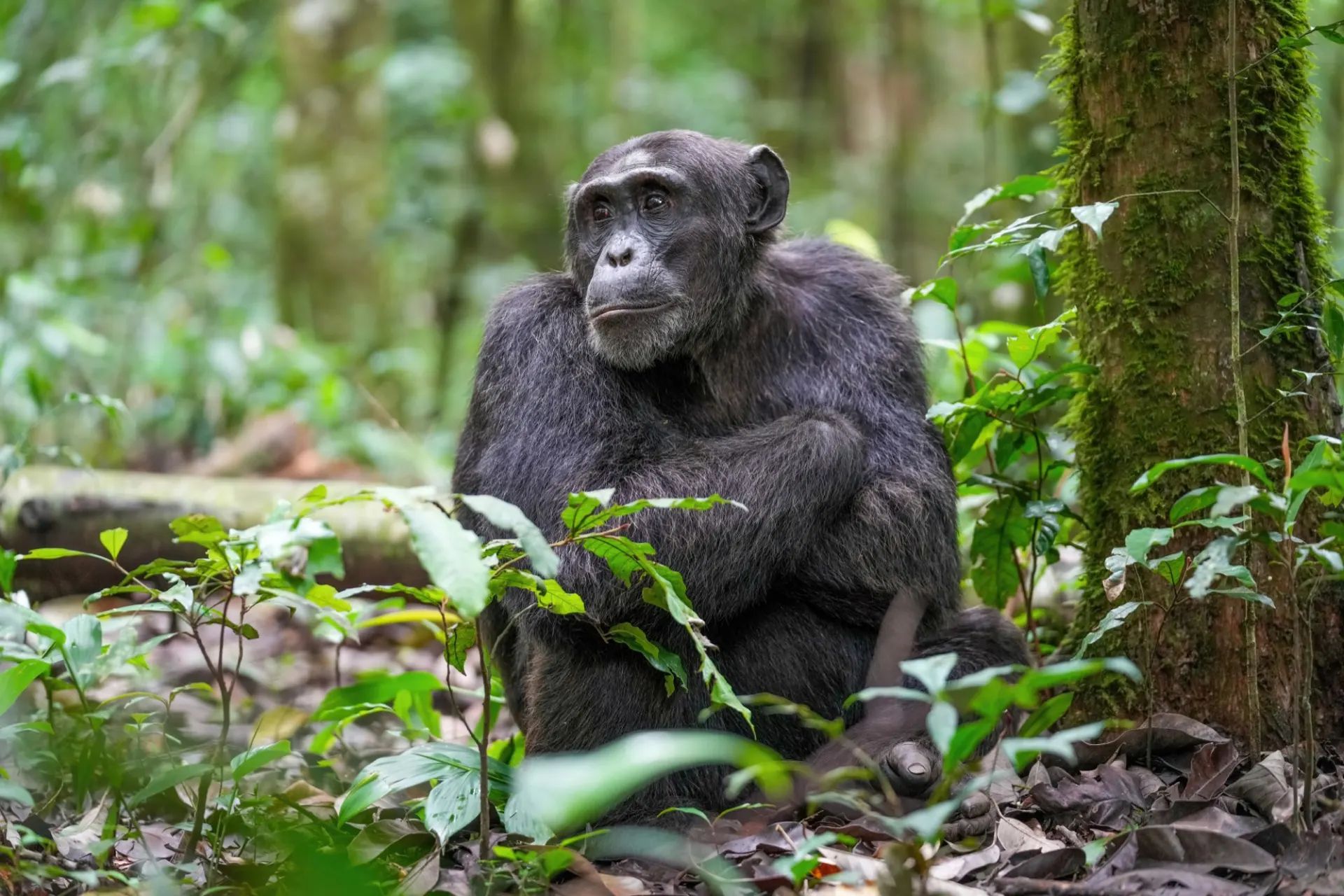
There are around 1,500 chimpanzees in Kibale, and several communities are fully habituated to people. The standard trek starts from Kanyanchu, where a ranger leads you into the forest to wherever the trackers have located the group that morning. Once you reach them you get an hour in their company, and Kibale's sighting success is among the highest anywhere for chimps, around 90 percent or better. That's a meaningful number when you're spending money to see a wild animal: it's about as close to reliable as primate trekking gets.
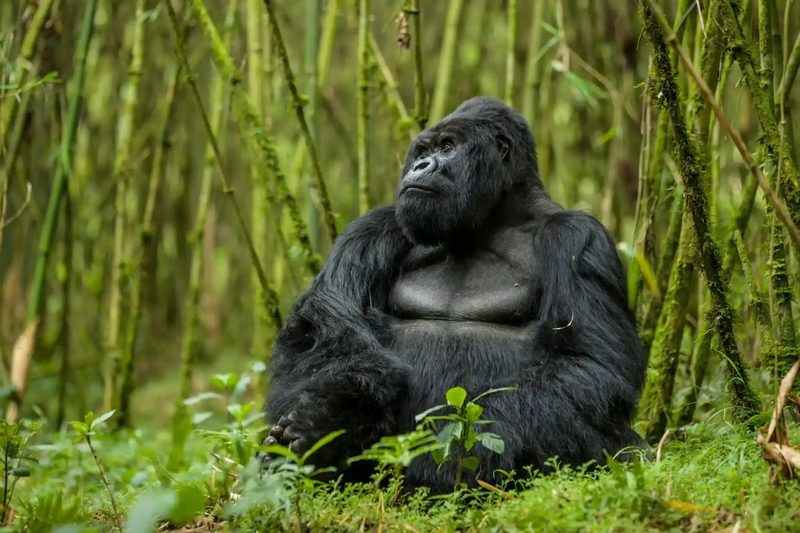
An hour with chimps is a different animal, literally, to an hour with gorillas. Gorillas are calm and deliberate. Chimps are loud and fast and constantly in motion, swinging through the branches, grooming, squabbling, charging off after fruit. You spend the hour with your neck craned and your camera struggling to keep up, and it's enormous fun.
Trek or habituation: two ways to meet them
As with the gorillas, there are two versions of the experience.
- The standard chimpanzee trek gives you one hour with a habituated community. It runs morning and afternoon, it's the option most people choose, and it's the right one for most trips.
- The Chimpanzee Habituation Experience is a full day in the forest, dawn to dusk, with the researchers who are still habituating a community. You meet the chimps as they leave their night nests at first light and stay with them through the day until they build new nests at dusk. It's demanding and it's for the keen, but if chimps are the thing you've come for, nothing else compares.
If that full-day idea sounds familiar, it's the chimp cousin of the gorilla habituation experience down in Bwindi. Plenty of our more serious primate travellers do both.
Thirteen primates in one forest
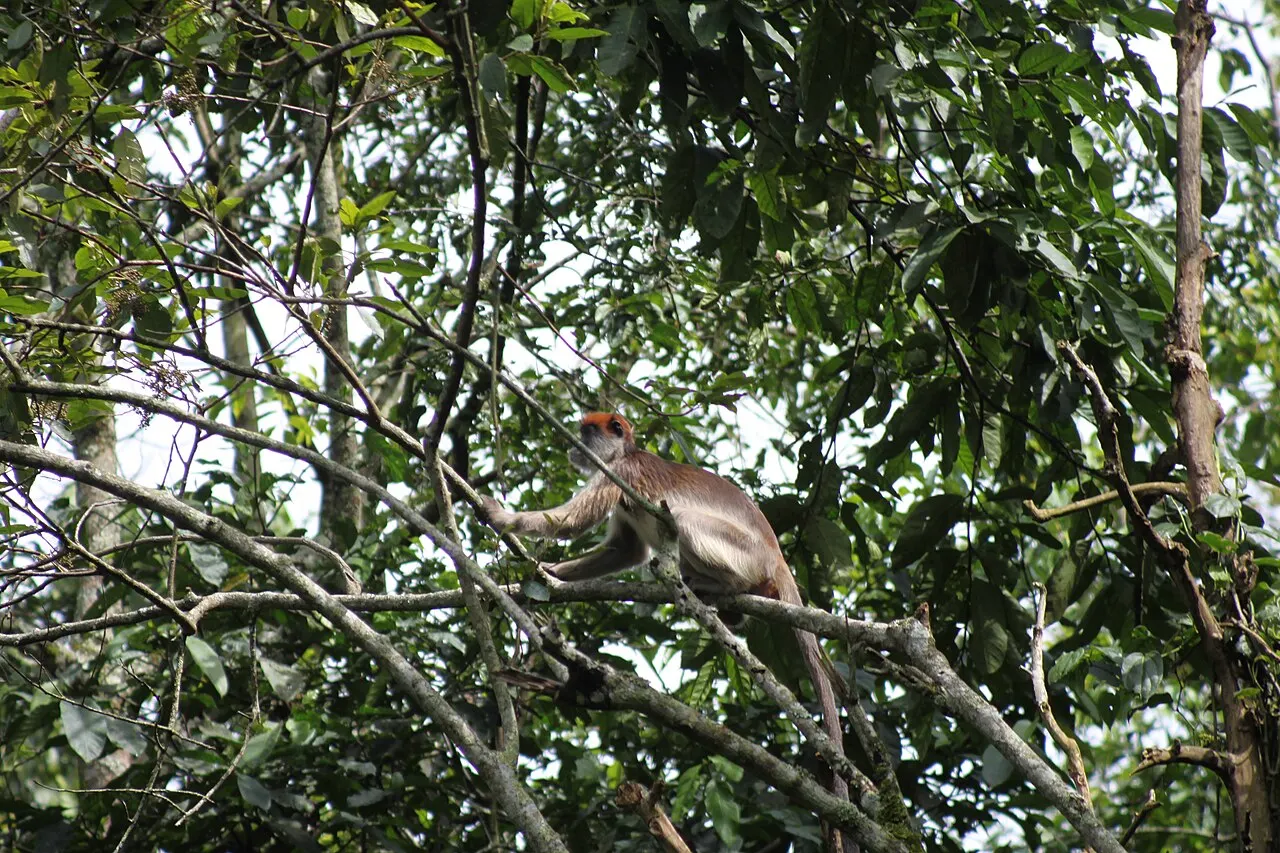
Kibale isn't only chimps. The forest is home to thirteen primate species, the richest line-up in East Africa, and a good guide will turn up several of them on a single walk. The star supporting act is the Ugandan red colobus: Kibale holds the largest remaining population on earth, somewhere around 17,000 of them, a flash of rust-red fur high in the canopy. You'll also have a fair chance at the handsome black-faced L'Hoest's monkey, the grey-cheeked mangabey, red-tailed monkey, black-and-white colobus and olive baboon. For anyone who finds primates fascinating, Kibale is the single richest few hours in the region.
The Bigodi wetland walk
Just outside the park, the Bigodi Wetland Sanctuary is a community-run swamp walk that's well worth a half-day. It's a gentle boardwalk-and-trail loop through a papyrus wetland that's good for several more primate species and superb for birds, with the added value that the fees go directly back into the local village. It's the kind of low-key, genuinely beneficial community tourism we like to build into a trip, and it makes a relaxed counterpoint to the effort of a chimp trek.
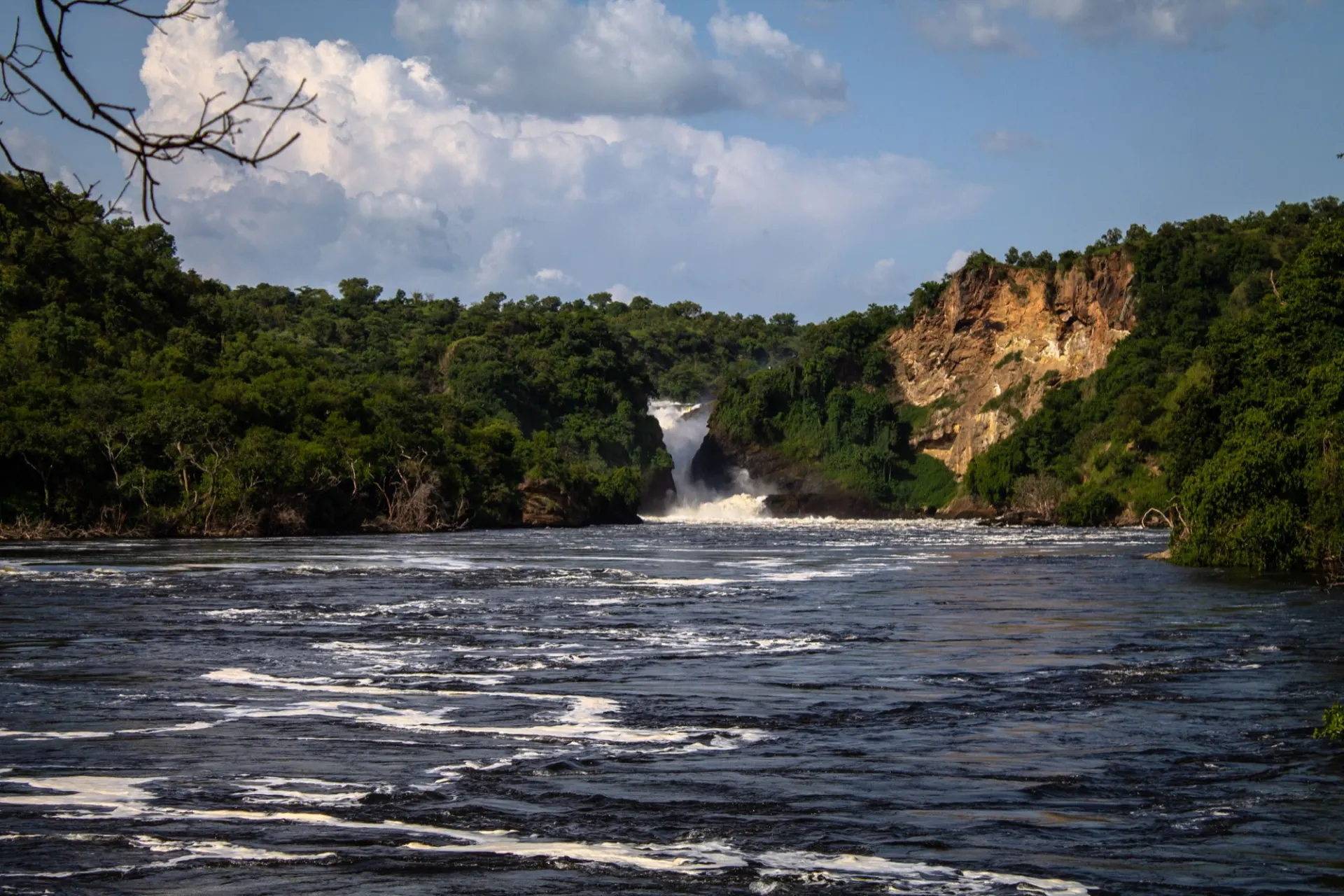
Where it fits in a trip: Kibale sits just north of Queen Elizabeth National Park, so the classic loop runs chimps at Kibale, then savannah and the Kazinga cruise, then gorillas at Bwindi. Add Murchison Falls to the north and you've seen the best of Uganda. See our complete Uganda safari guide for how it all fits together.
When to go
Kibale's chimps are trekkable all year, but the drier months, roughly December to February and June to September, make for easier walking on the forest trails. The chimps are there in every season, so timing here is more about comfort underfoot than sightings. It rains in the forest whatever the month, which is rather the point of a rainforest, so a light waterproof and decent boots are always worth packing.
How we build it into a trip
- One or two nights near Kibale, long enough for a chimp trek and the Bigodi walk, or a habituation day if you want the full experience.
- Run it into Queen Elizabeth just to the south, then on to Bwindi for gorillas. That Kibale to Queen Elizabeth to Bwindi line is the classic Uganda primate-and-savannah loop.
- Add the Fort Portal crater lakes, a pretty, low-key region of volcanic lakes near the forest, for a night of doing very little.
- Or combine Uganda with Tanzania for a trip that runs from chimps and gorillas to the Serengeti and the coast.
Frequently asked questions
Where is the best place to see chimpanzees in Uganda?
Kibale Forest National Park. It has the highest density and diversity of primates in East Africa, around 1,500 chimpanzees in habituated communities, and very high sighting success, around 90 percent or better on the standard trek.
What is the difference between chimp trekking and the habituation experience?
A standard trek gives you one hour with a habituated community. The Chimpanzee Habituation Experience is a full day, dawn to dusk, with researchers and a community still being habituated, so you follow the chimps from their morning nests through the day. It's the chimp version of the gorilla habituation experience.
How likely are you to see chimps in Kibale?
Very likely. Kibale's communities are well habituated and sighting success on the standard trek is around 90 percent or higher, one of the best rates for chimpanzees anywhere in Africa.
What is the minimum age for chimpanzee trekking?
The minimum age in Uganda is 12, lower than the 15-year minimum for gorillas, which makes Kibale a good option for families with older children.
How does Kibale combine with the rest of Uganda?
It sits just north of Queen Elizabeth National Park, so the classic loop runs Kibale for chimps, down through Queen Elizabeth, on to Bwindi for gorillas, often with Murchison Falls added to the north.
Image credits: Ugandan red colobus, Perspectionhickmott, CC BY 3.0, resized, via Wikimedia Commons.
Thinking About Uganda?
Let us plan your trip
Tell us roughly when you'd like to travel and what you most want to see, and we'll build a Uganda trip that fits, the chimps, the gorillas and everything in between.