Tarangire is the park people skip, and the park people who know better never do. It sits a couple of hours south-west of Arusha, the first proper wilderness on the road into Tanzania's Northern Circuit, and a lot of itineraries treat it as a quick stop on the way to the headliners. That's a mistake. In the right season, Tarangire offers the best elephant viewing in the whole of northern Tanzania, set in a landscape of giant baobabs you won't see anywhere else on the circuit. It's quieter than the Serengeti, cheaper to reach, and on its day every bit as memorable.
It's named for the Tarangire River, which threads through the park and, in the dry months, becomes the single most important thing for miles. Understand the river, and you understand Tarangire.
The land of giants
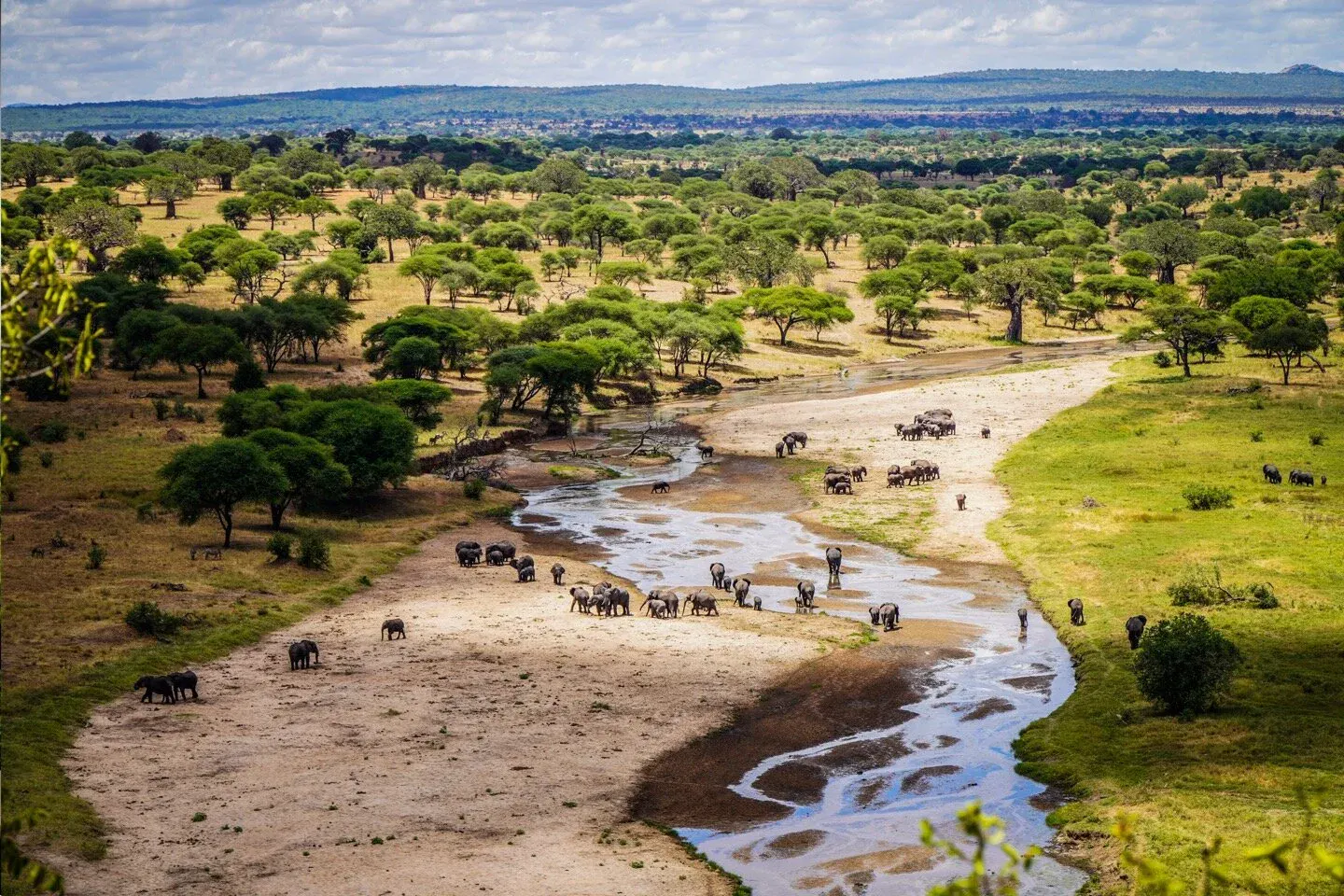
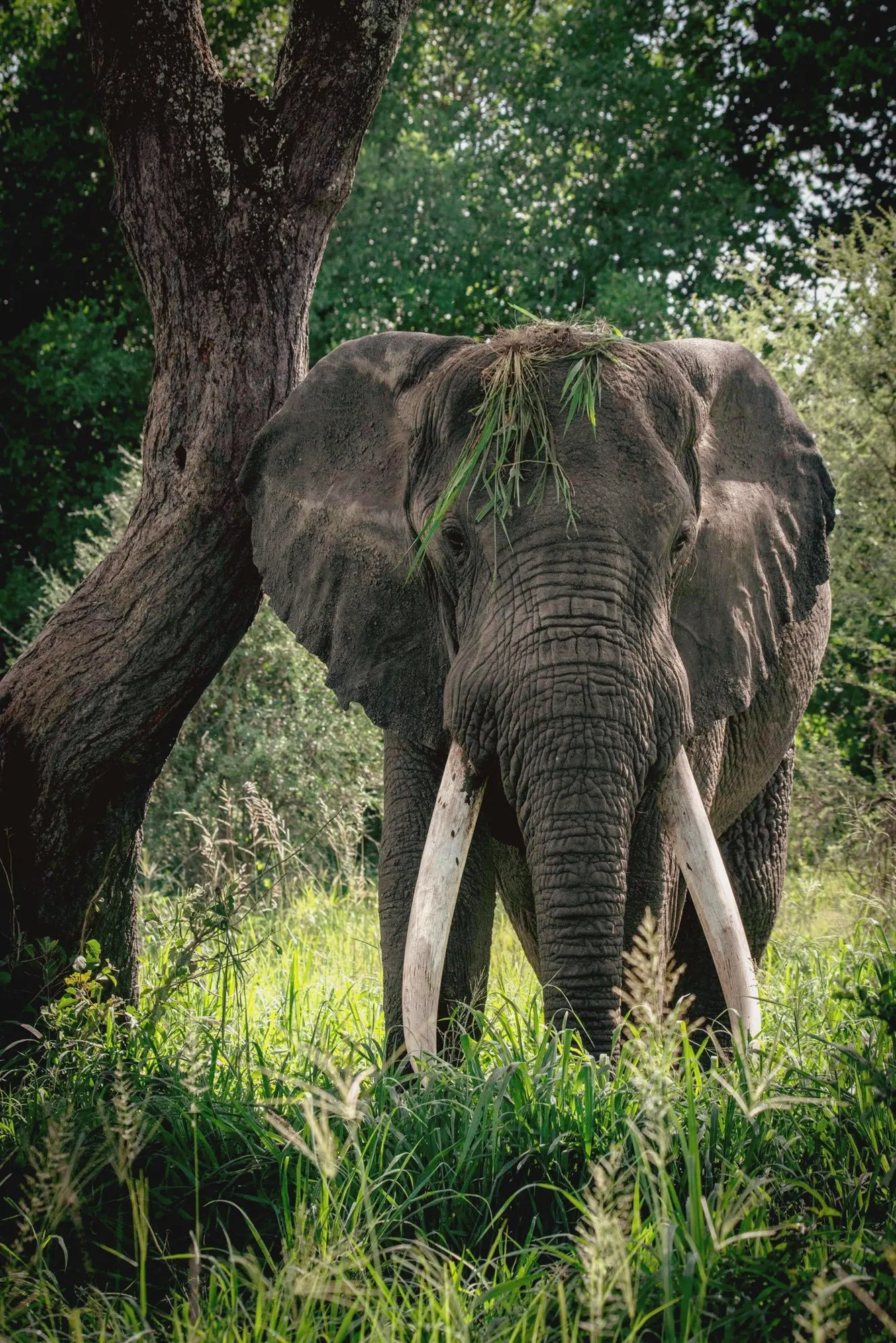
Tarangire is elephant country, plainly and simply. It holds one of the densest elephant populations in Tanzania, and in the dry season the herds gather along the river in numbers that genuinely stop you, family groups merging into super-herds of a hundred or more, babies tucked under their mothers, big bulls with heavy tusks moving through the long grass. There are few places in East Africa where you can sit with this many elephants this close, for this long.
The other giants are the baobabs. These ancient, swollen-trunked trees, some of them well over a thousand years old, stand across the park like something out of a storybook, and the sight of an elephant herd moving between them is the image that defines Tarangire. Elephants and baobabs, the living giants and the standing ones. It earns the nickname.
It's all about the river
Tarangire's wildlife runs on a simple rhythm, and it's worth understanding because it shapes everything about when to visit. For much of the year the surrounding Maasai Steppe holds water and the animals spread out across a huge area. Then the dry season arrives, the land bakes, the seasonal pans empty, and the Tarangire River becomes the only permanent water for a long way in every direction. Everything comes to it. Elephant, wildebeest, zebra, buffalo, eland and their predators all funnel down to the riverbed, and a park that can feel empty in the green months becomes one of the most concentrated wildlife spectacles in the country.
This is why the dry season, roughly June to October, is the time to come. Time it right and Tarangire rivals anywhere on the circuit. Time it wrong and you may wonder what the fuss is about.
The key to Tarangire: it's a dry-season park. From June to October the river concentrates the wildlife and the game viewing is superb. In the green season the animals disperse, so we'd usually weight a green-season trip toward the Serengeti and Ngorongoro instead.
Beyond the elephants
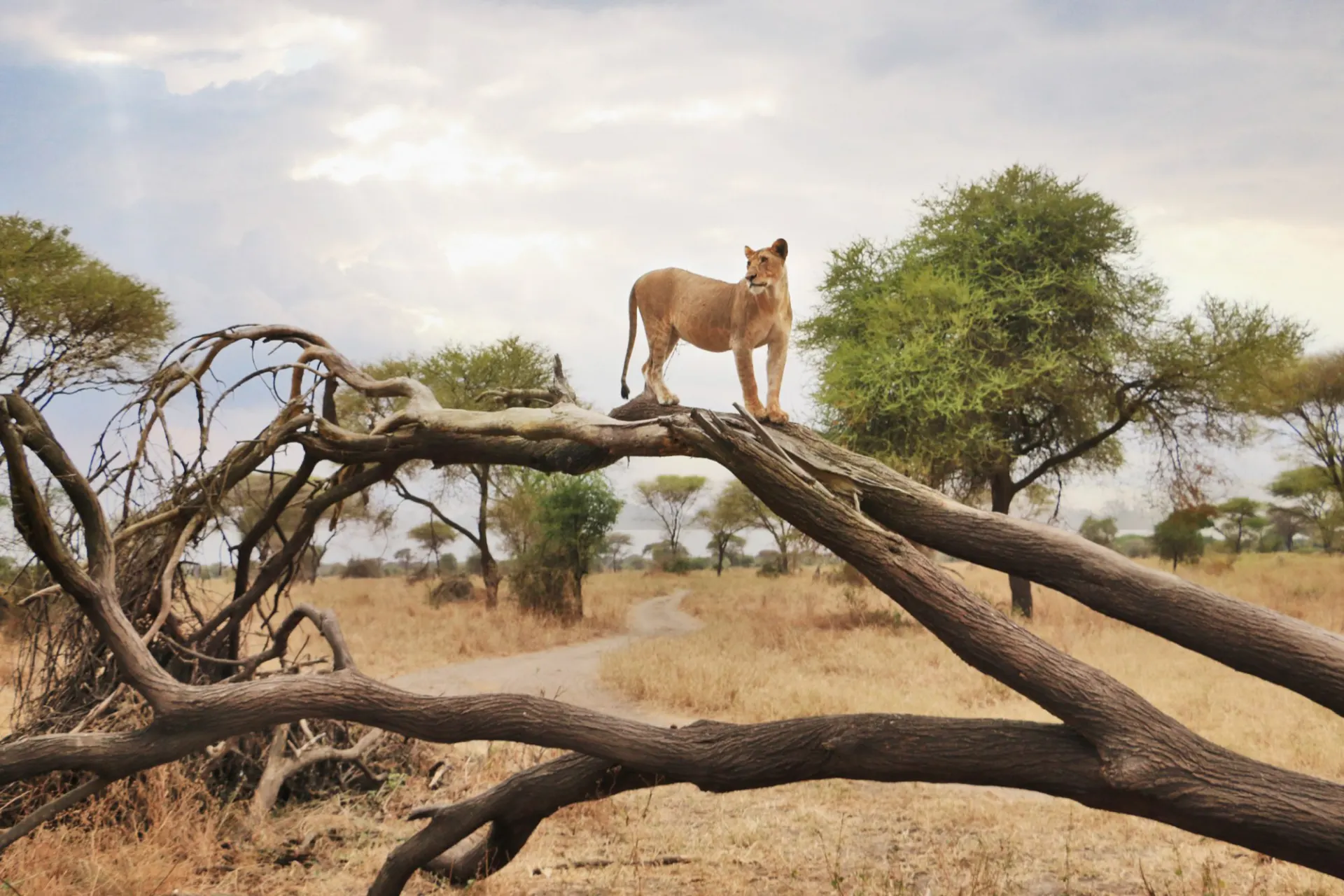
Elephants are the headline, but they're not the whole story. Tarangire holds lion, leopard and cheetah, and its lions are occasionally seen up in the trees, draped over the lower branches in the heat of the day in the same curious habit you find at Lake Manyara next door. The park is also one of the great birding destinations in Tanzania, with well over five hundred species recorded, from huge flocks of seed-eaters in the dry season to hornbills, bee-eaters, and the enormous kori bustard striding through the grass. Even if you're not a birder, the sheer abundance is hard to ignore.
When to go
- June to October (dry season): the time to come. The river concentrates the wildlife and elephant viewing is at its peak. This is also peak season across the wider circuit.
- November to May (green season): lush, dramatic skies and superb birding as migrants arrive, but the wildlife disperses and big concentrations break up. Lovely scenery, less reliable game viewing.
Because Tarangire's seasonality is more pronounced than the Serengeti's, it's the park where timing matters most, and the one we plan around most carefully when we're shaping the route around your dates.
Where Tarangire fits
Tarangire is almost always the first stop on a Northern Circuit safari. It's the closest of the major parks to Arusha, so guests typically drive in on day one or two, spend a night or two, then continue toward Lake Manyara, the Ngorongoro Crater and the Serengeti. Starting here eases you into the safari rhythm with a gentle, elephant-rich couple of days before the bigger parks. For how the costs and timing of the whole circuit work, see our guides to Tanzania safari costs and the best time to visit Tanzania.
One or two nights is the right length for most trips. Tarangire is the opening act, not the finale, and it plays that part beautifully.
Frequently asked questions
What is Tarangire National Park famous for?
Elephants and baobabs. Tarangire holds one of the highest concentrations of elephant in Tanzania, with dry-season herds that can number in the hundreds, set among ancient baobab trees. It's often called the land of giants, and it's one of the most underrated parks on the Northern Circuit.
When is the best time to visit Tarangire?
The dry season, roughly June to October, is by far the best. As the land dries out, the Tarangire River becomes the only reliable water for miles and the wildlife concentrates around it. The green season from November to May is quieter and lush, great for birds, but the animals disperse.
Is Tarangire worth visiting?
Yes, especially in the dry season. It has the best elephant viewing on the Northern Circuit, a distinctive baobab landscape, strong birding and fewer vehicles than the headline parks. Sitting close to Arusha, it makes an easy and rewarding first stop.
How long do you need in Tarangire?
One to two nights is plenty for most trips. It's usually the opening act of a Northern Circuit safari, so a night or two on the way through, before the Ngorongoro Crater and the Serengeti, works well.
Where is Tarangire and how do you get there?
It's in northern Tanzania, around a two-hour drive south-west of Arusha, which makes it the natural first stop on a Northern Circuit road trip toward Lake Manyara, the Ngorongoro Crater and the Serengeti.
Thinking About Tanzania?
Let us plan your trip
Tell us roughly when you'd like to travel and what you most want to see, and we'll build a Northern Circuit trip that puts you in Tarangire at the right time of year, with the Serengeti and Ngorongoro to follow.