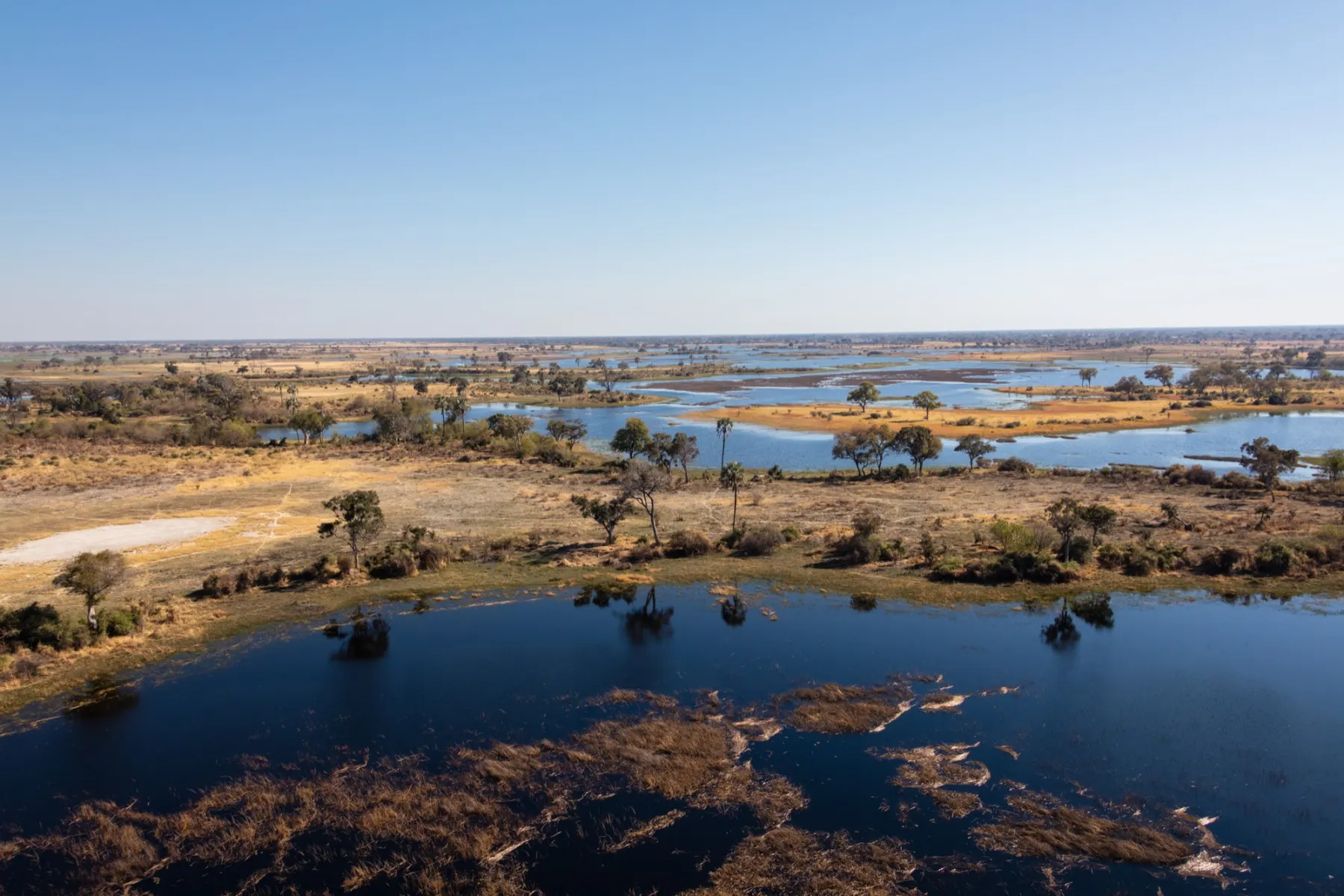
The Okavango is the one safari destination where the calendar runs backwards. The water you've come to drift across in a mokoro fell as rain in Angola, a thousand kilometres away, and takes about four months to arrive. So the Delta is at its fullest in the middle of Botswana's bone-dry winter, and shrinking by the time the local rains start. Most of the confusion about when to visit comes from not knowing that. Here it is, month by month, from the people who book the camps and check the water levels before we do.
The Short Answer
Best overall: June to September. The flood is in, so you can do mokoro and boat safaris and game drives in one stay, the dry country pushes wildlife onto the water, and the days are clear and cool. Peak water: July and August. Best value with the water still in: May and June before the peak rates, October after them. Green season: December to March, newborns, birds and big savings, but mostly land-based.
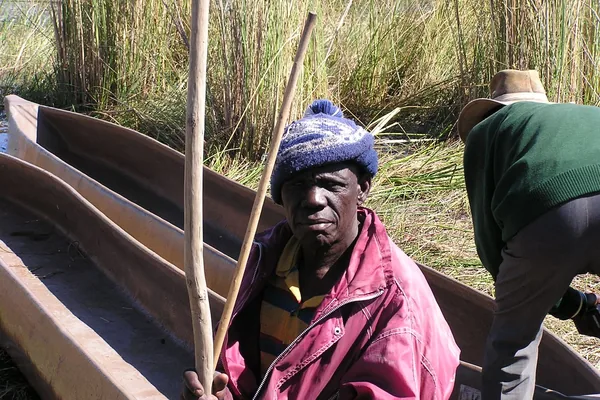
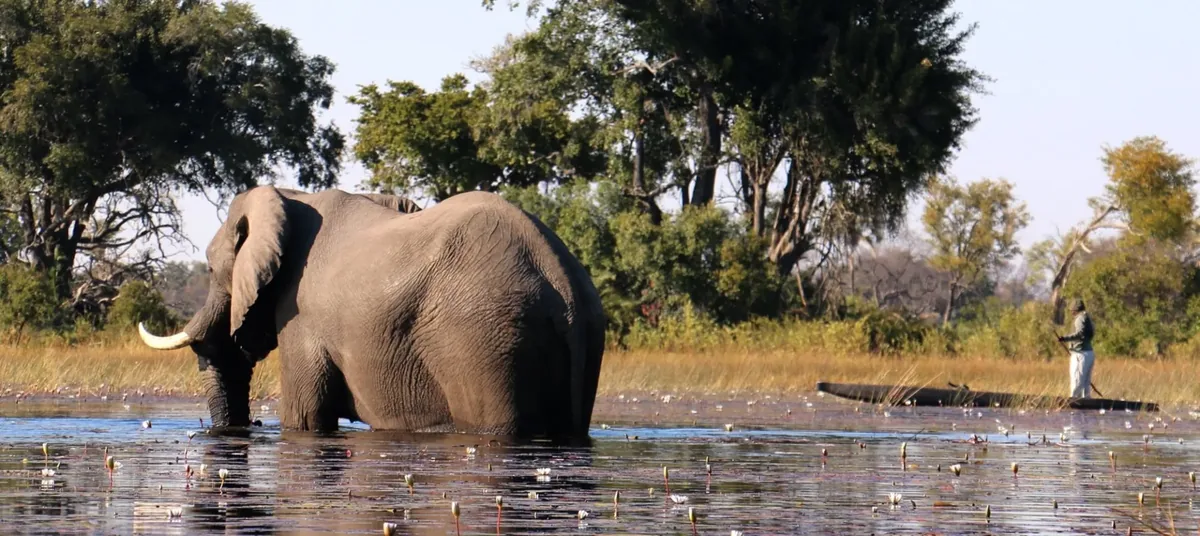
- Mokoro and boatsDeep waterJuly to AugustA water camp in the central Delta, poled through the channels at dawn.
- Predators and wild dogsThe land sideJune to OctoberDogs den June to August; pups run with the pack from September.
- Birds and newbornsGreen seasonNovember to MarchMigrants in breeding plumage, impala lambs, big skies, half the people.
- Value with waterThe shouldersMay and OctoberThe flood arriving or receding, the game concentrating, pre-peak rates.
- First safari, want everything: June to September, a mixed camp or one water camp and one land camp.
- Photography: green season skies in January and February, or the dust and gold light of September and October.
- Australian school holidays: the June–July and September breaks both land in prime season. Easter is an honest shoulder: water arriving, rates down, some storms.
How the Flood Works
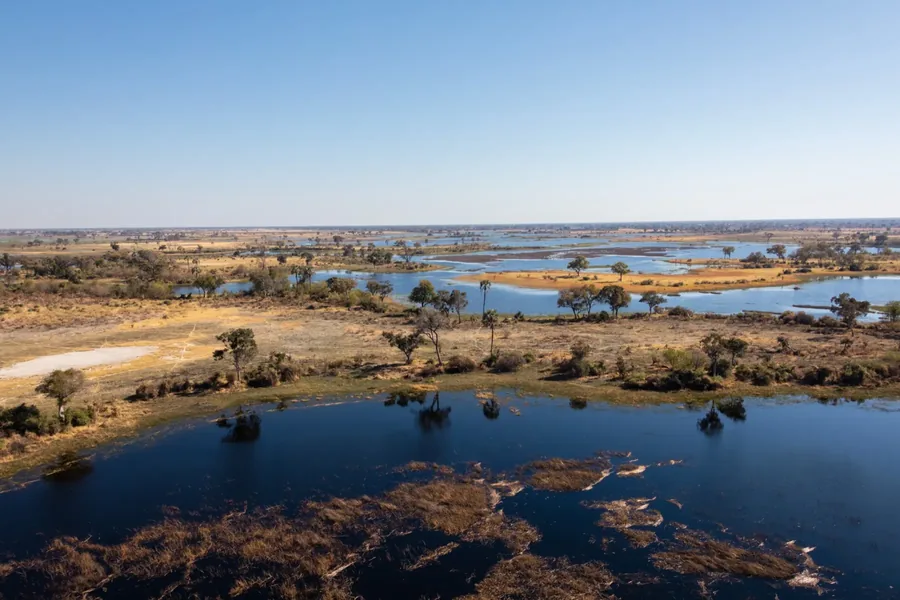
Rain falls on the highlands of central Angola between December and March. It gathers into the Okavango River, crosses the Namibian Caprivi Strip, and enters Botswana at the top of the Delta, the Panhandle, around April. From there it has nowhere to go. The land is so flat that the water fans out across the Kalahari sand at walking pace, reaching the central Delta in June and the lower channels around Maun in July and August. The Delta roughly triples in size, then the water evaporates and sinks into the sand. It never reaches the sea.
Meanwhile Botswana's own rain falls from November to March, when the Delta is at its lowest. So the two clocks are out of phase by about half a year, and that's the whole trick to planning it: the dry season is the wet season on the water.
The dry season is the wet season on the water.The one fact that makes the Okavango calendar make sense
The Okavango Month by Month
Long-term averages for Maun, the Delta's gateway town, rounded. Camps deeper in the Delta run a degree or two milder. Water level is the lower and central Delta, where most camps are; the Panhandle in the north runs a month or two ahead.
- Jan
- Feb
- Mar
- Apr
- May
- Jun
- Jul
- Aug
- Sep
- Oct
- Nov
- Dec
- Dry season, flood in
- Late dry, hot
- Shoulder
- Green season
| Month | High / low | Rain | Sun | Water | What it's like |
|---|---|---|---|---|---|
| Jan | 33 / 21C | 105mm, 13 days | 8h | Low | Green season. Afternoon storms, newborns, migrant birds. Land-based at most camps. Big savings. |
| Feb | 33 / 21C | 95mm, 12 days | 7h | Low | Wettest month. Dramatic skies, thick bush, best birding. Photographers' pick. |
| Mar | 32 / 20C | 80mm, 8 days | 8h | Low, rising in the north | Rains easing. Flood reaches the Panhandle late in the month. Malaria risk at its highest. |
| Apr | 31 / 16C | 25mm, 5 days | 9h | Rising | Shoulder. Rain stops, air clears, water spreading south. Rates still low. Kalahari zebra on the move. |
| May | 29 / 12C | 5mm, 1 day | 10h | Filling | The sweet spot for value. Flood arriving at most camps, game concentrating, pre-peak rates. Cool nights begin. |
| Jun | 27 / 9C | 0mm | 10h | High | Water in across the Delta. Cold dawns, clear days. Wild dogs denning. Excellent. |
| Jul | 26 / 9C | 0mm | 10h | Peak | Peak flood and peak season. Mokoro everywhere. Coldest month: pack for near zero at dawn. |
| Aug | 30 / 12C | 0mm | 11h | Peak | Peak water, peak game, busiest and dearest month. Sunniest month of the year. |
| Sep | 34 / 16C | 0mm | 10h | High, starting to drop | Our pick. Water still up, game crowded onto it, warm days, dog pups out. Demand eases off August. |
| Oct | 36 / 20C | 15mm, 3 days | 10h | Receding | Hottest month. Outstanding predator viewing at the last water, mokoro patchy. Rates ease late month. |
| Nov | 35 / 21C | 45mm, 9 days | 9h | Low | First storms break the heat. Impala lambing starts. Water activities mostly done until May. |
| Dec | 34 / 21C | 80mm, 10 days | 8h | Low | Green season proper. Christmas busy at the big camps, quiet elsewhere. Birds and babies. |
Shaded rows are the prime season. Rain is the monthly total and days with rain. Sun is average hours of sunshine a day. Water is the typical level in the central and lower Delta; it varies year to year with the Angolan rains.
Water Camps, Land Camps and Mixed Camps
This is the part nobody explains, and it matters more than the month. Okavango camps come in three kinds, and the wrong one for your dates gives you a beautiful week doing half of what you came for.
- Water camps sit on islands deep in the permanent swamp. Mokoro, motorboat, fishing, walking on the islands. Few or no game drives, and the big cats are thin on the ground. Best July to September. Glorious if you know that's what you've chosen.
- Land camps sit on the Delta's drier edges or the big islands: Moremi, Khwai, the Linyanti. Game drives all year, the strongest lion, leopard and wild dog viewing in the country, and water activities only when the flood reaches them.
- Mixed camps sit on the seam between the two and do both when the water is in, roughly June to October. In the green season they become land camps.
For a first Okavango trip we almost always pair a land camp with a mixed or water camp, three nights each, so you get the predators and the mokoro. For a green-season trip we weight the nights to land camps and tell you plainly that the boats may not run. And every year we check the flood forecast against the camps before we confirm, because a low-flood year can leave an edge camp dry in June.
Moremi or a Private Concession?
Moremi Game Reserve is the public heart of the eastern Delta and some of the best game country in Africa. The camps around it, though, sit in private concessions, and that changes what you can do. In Moremi you stay on the tracks, you're back in camp by dark and you share the sightings. In a private concession your guide can drive off-road to a leopard, run night drives for the nocturnal animals, walk with you, and you'll rarely see another vehicle. Botswana limits the number of beds in each concession, which is why the camps are small and the prices are what they are. For most of our guests the concession is worth it; for a tighter budget a Khwai community-area camp on Moremi's boundary gets you close.
Wild Dogs, Birds and the Wildlife Calendar
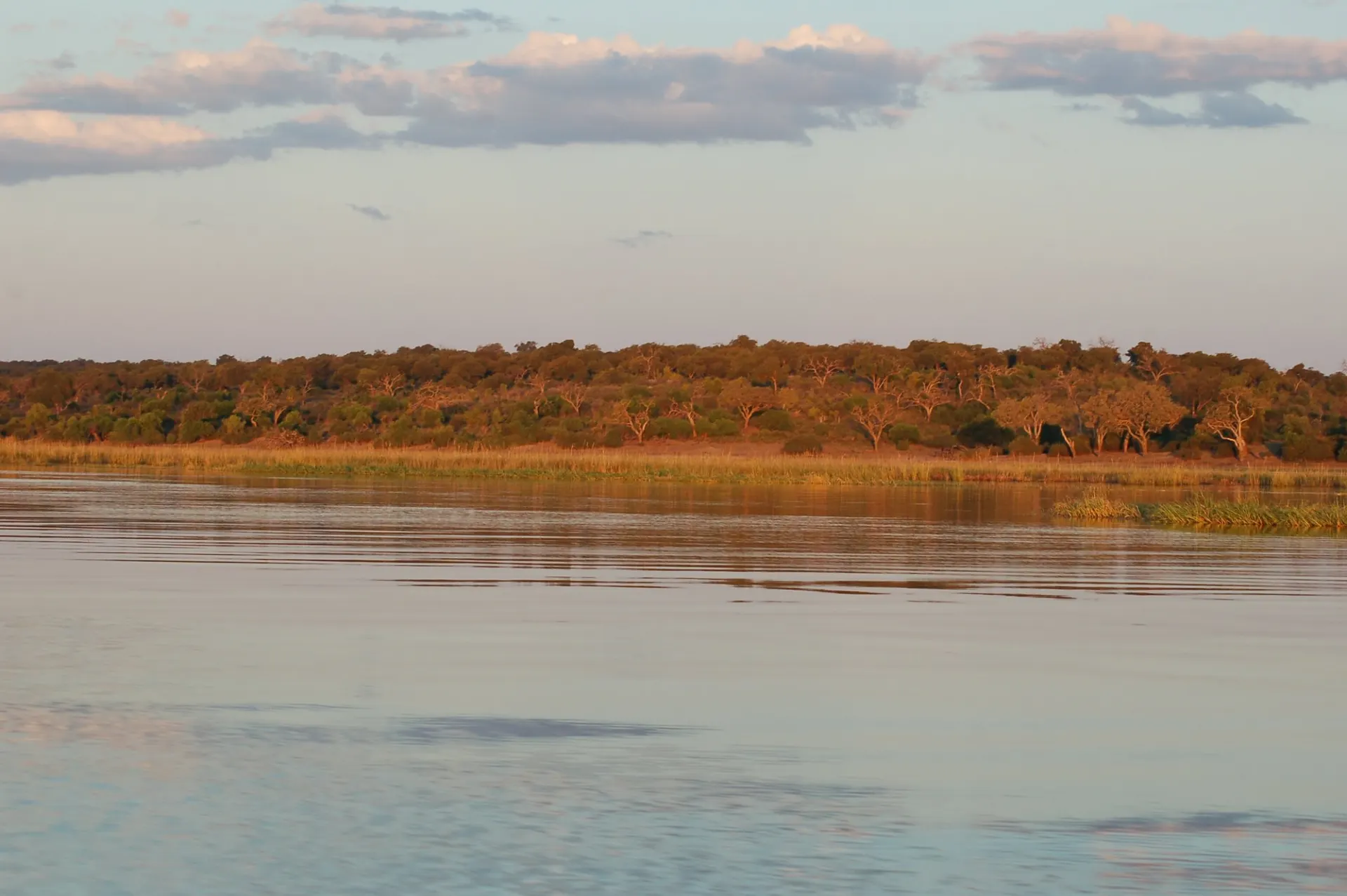
- Wild dogs: the Okavango and Linyanti hold one of the last big populations. Packs den from about June to August and stay close to the den, which makes them findable; from September the pups follow the pack and the hunting is on. Khwai, Moremi and the Linyanti are the strongholds.
- Lion and leopard: good all year on the land side, best August to October as the game crowds the shrinking water.
- Elephant: everywhere in the dry season, with the huge Chobe and Linyanti gatherings from August to October.
- Birds: more than 400 species. Migrants and breeding plumage November to March; Pel's fishing owl, African skimmer and wattled crane on the water in the flood months; carmine bee-eaters nesting in the riverbanks September to November.
- Newborns: impala and most antelope drop their young in November and December, which is when the green season pays off for predator action.
- Fishing: tigerfish and bream from the boat, best as the water recedes in September and October; the catfish run on the Panhandle is a spectacle in those months.
Getting There, and the Light Aircraft
From Australia the clean routing is Johannesburg, then about two hours to Maun, then a light aircraft of 15 to 30 minutes to the camp's airstrip. The small planes are part of the experience: the first sight of the Delta from 500 feet is something people talk about for years. Two rules we won't bend. Never connect same-day from an international flight to a bush flight if you land in Maun after about 1pm; the planes don't fly at night and camp transfers stop mid-afternoon, so you'd overnight in Maun or Johannesburg. And soft bags only, 20 kilograms in total including hand luggage. Hard cases don't fit in the hold and get left on the tarmac. The pilot has the final say.
Chobe is a 45-minute flight north from the Delta, and Victoria Falls is a short hop beyond Kasane, so the classic ten-day shape is three nights Delta, three nights Khwai or Linyanti, two or three nights Chobe, two nights at the Falls. We fly you between all of them.
Prices, Crowds and Booking
Botswana runs a deliberately low-volume model: a handful of beds in each concession, light aircraft in and out, and prices to match. Peak is July to September and the best camps sell twelve to eighteen months ahead. May, June and October are the shoulders, nine to twelve months ahead. The green season, December to March, cuts rates by 30 to 50 percent and six months' notice is usually fine. January to March is also when some camps close for a few weeks, so the choice narrows.
If the peak-season price is the problem, May is our answer. The water is arriving, the game is concentrating, the nights are cool, and the rates haven't stepped up yet.
Health and What to Pack
The Delta carries malaria risk all year, highest in the wet months around March and April. Take your itinerary to a travel doctor about eight weeks out and let them decide what, if anything, you take. We don't advise on medicine. Cover up at dusk and use repellent regardless.
In June, July and August you will be cold at dawn on an open vehicle or a boat, and warm by mid-morning. Beanie, gloves, a scarf and a proper jacket, then layers you can shed. Neutral colours, no camouflage (it's illegal for civilians in Botswana), a hat and sunscreen for the water, binoculars, and a soft duffel for the planes. October and November need the opposite: light clothing, a lot of water, and an early start before the heat.
Where We Stay
The camps we book and trust, top end first, then the mid-range ones that give you the same Delta for less.
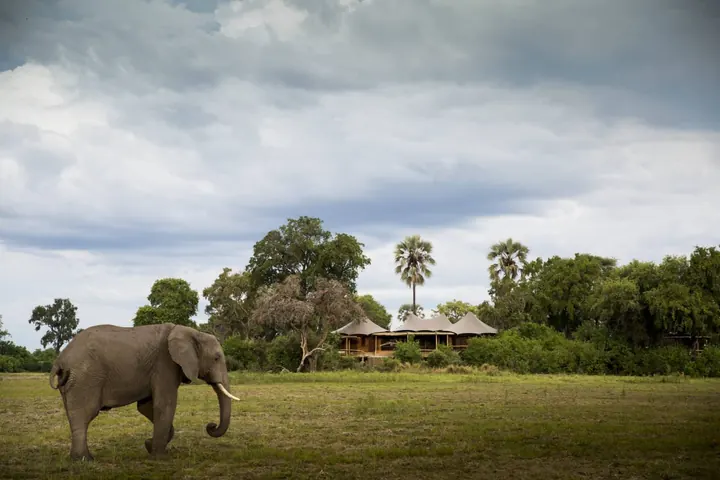 Mombo CampChief's Island, MoremiThe Delta's most famous camp. Predators on the doorstep, land-based, top end.
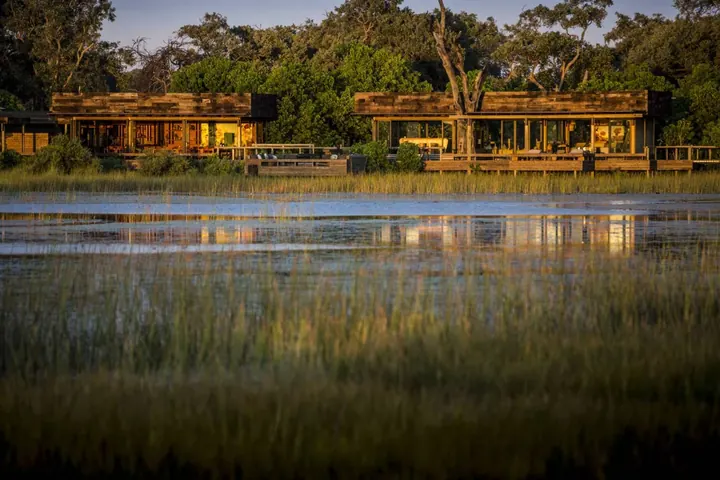 Vumbura PlainsNorthern DeltaA true mixed camp: mokoro, boats and game drives in one stay.
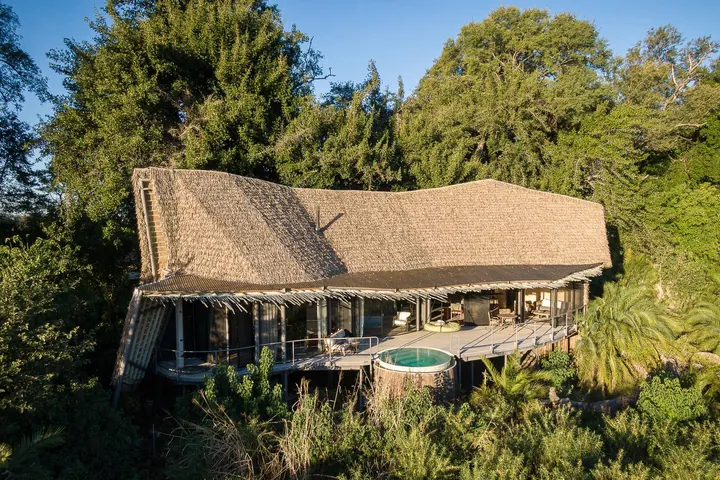 Jao CampWestern DeltaDeep water. Mokoro and boat country at its most beautiful, July to September.
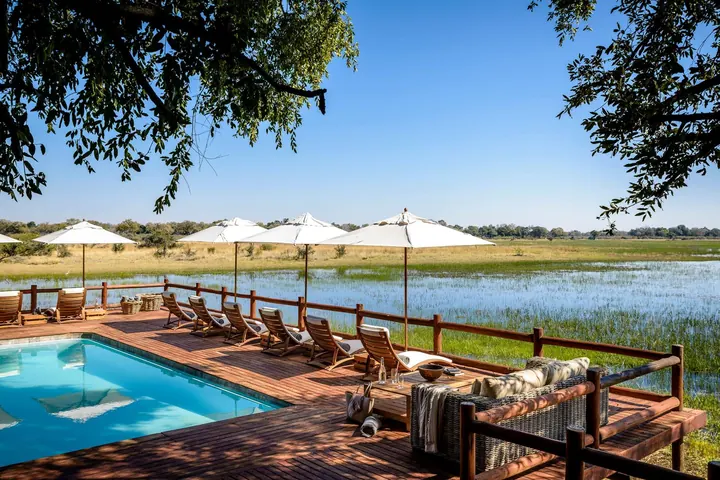 Chief's CampChief's Island, MoremiBig cats and wild dogs, with water activities when the flood is in.
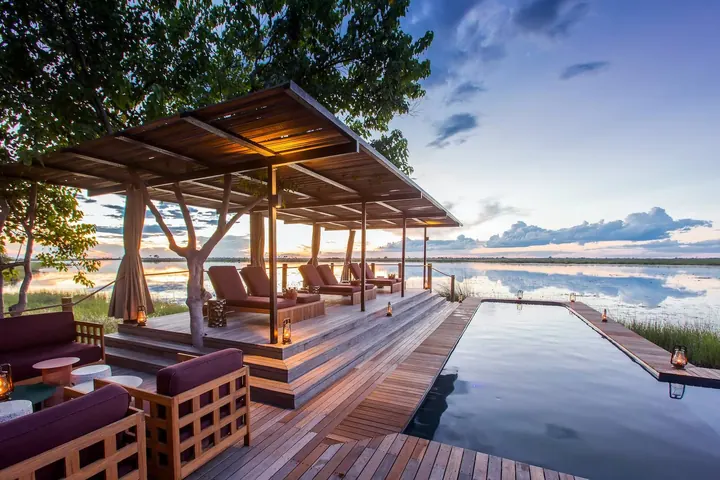 DumaTauLinyantiElephant country on the Linyanti channel, strong for dogs. Pairs with Chobe.
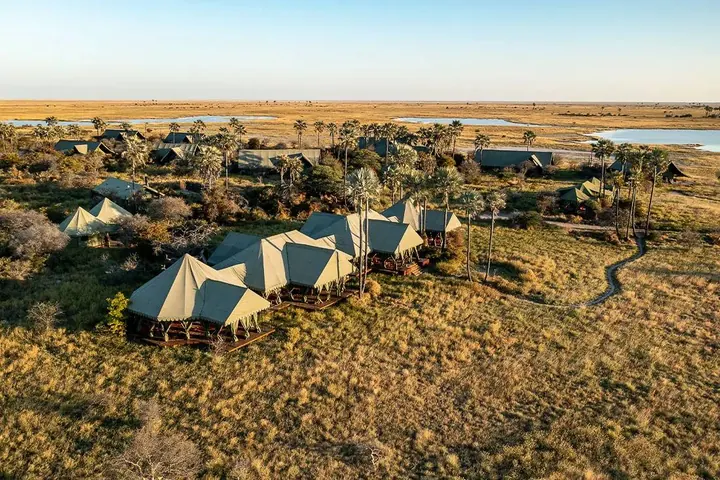 Jack's CampMakgadikgadiThe Kalahari leg: meerkats, salt pans, zebra in the green season.
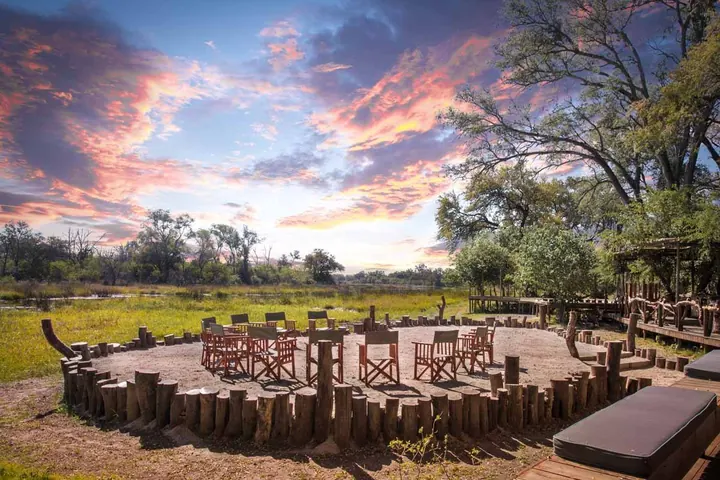 Saguni Safari LodgeKhwaiMid-range value on Moremi's boundary, night drives allowed.
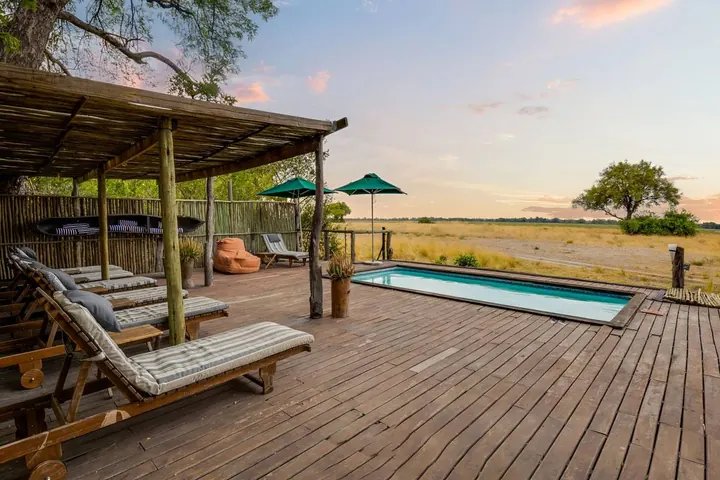 Kadizora CampNorthern DeltaMid-range, water and land, on the Panhandle side where the flood arrives first.
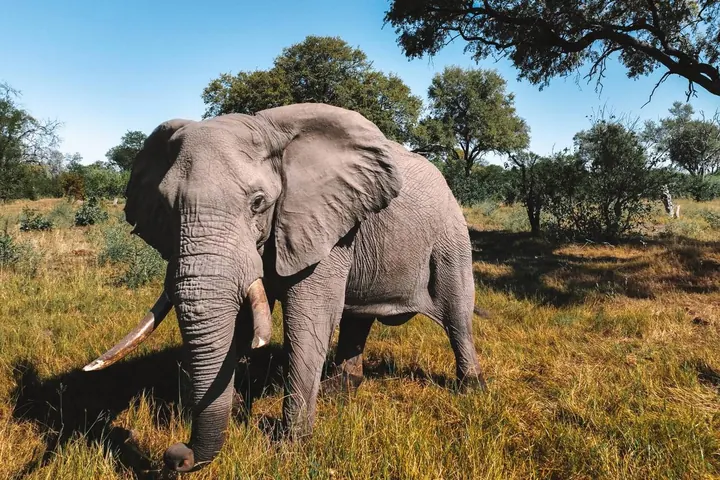 Hideaways MogotlhoKhwai RiverRiverfront tents on the Khwai, elephants in camp, honest prices.
A guided mobile safari through Moremi and Khwai is the honest mid-budget way into the Delta, and a walking safari in the northern concessions is the best way to feel it. Every camp here is on our where you'll stay page.
We don't sell self-drive here. The sand is deep, the campsites book out a year ahead and a stuck vehicle in the Delta is a long day. Fly-in camps or a guided mobile are the two ways we do it.
Frequently Asked Questions
When is the best time to visit the Okavango Delta?
June to September. The flood from Angola fills the channels through the dry winter, so you get mokoro and boat safaris and game drives in the same stay, with wildlife pushed onto the permanent water. July and August are peak water; June and September give most of that at lower rates.
Why does the Okavango Delta flood in the dry season?
The water isn't local rain. It falls on the Angolan highlands between December and March, then takes around four months to creep 1,000 kilometres south across the flat Kalahari sand. It reaches the top of the Delta around April or May and peaks in the lower Delta in July and August, when Botswana itself hasn't seen rain for months.
Can you do a mokoro safari all year?
No. Mokoro trips need water in the channels, which means roughly May to October at most camps, and shorter at camps on the Delta's edges. In the green season, December to March, most camps are land-based. We check expected water levels for your dates before choosing the camp.
What is the difference between a water camp and a land camp?
A water camp sits deep in the permanent swamp and offers mokoro, boat and fishing, with few or no game drives. A land camp sits on dry islands or the Delta's edge and runs game drives, often with better big-cat viewing. A mixed camp does both when the flood is in. First-timers usually want a mixed camp, or one of each.
When is the best time to see wild dogs in the Okavango?
June to August, when packs den and stay in one area for weeks, and September to October once the pups are old enough to follow the pack. The Khwai and Moremi areas and the Linyanti are the strongest.
Is the Okavango worth visiting in the green season?
Yes, if you know what you're getting. December to March brings newborns, migrant birds in breeding plumage, big skies and rates 30 to 50 percent below peak. Water activities are limited, the bush is thick and afternoon storms happen. Better for photographers, birders and second trips than a first safari.
How cold does the Okavango get?
Cold. June and July nights average around 9C in Maun and drop below zero some years, and you're on an open vehicle or boat at dawn. Pack a beanie, gloves and a proper jacket. By 10am it's shirtsleeves.
How far in advance should I book the Okavango Delta?
Twelve to eighteen months for July to September at the best camps, nine to twelve for May, June and October, and about six for the green season. Botswana runs few beds on purpose, so the good camps go first.
How do you get to the Okavango Delta from Australia?
Fly to Johannesburg, then about two hours to Maun, then a light aircraft of 15 to 30 minutes to your camp. Never plan a same-day international arrival onto a bush flight: if you land in Maun after about 1pm you overnight there or in Johannesburg, because the small planes don't fly at night.
Is there malaria in the Okavango Delta?
Yes, all year, highest in the wet months around March and April. Take your itinerary to a travel doctor about eight weeks out and let them decide. We don't advise on medicine. Cover up and use repellent at dusk whatever they say.
Ask Us About This Year's Flood
Every Okavango year is different, and the water in a given camp in June depends on what fell in Angola in January. We follow the flood forecast through autumn and match camps to it before we confirm anything. Tell us your dates and what you want out of it, the mokoro, the dogs, the birds, and we'll put you in the right camp for that year. Our wider Botswana month-by-month guide covers Chobe, the Kalahari and the pans.
Ready to Experience This?
Let us plan your trip
Every safari we build is tailored to you, the right camps at the right time, guides who know exactly where the water and the game will be. Tell us your dates and try the trip estimator, and we'll take it from there.