Every parent who calls us about a family safari is really asking the same three things, even when they don't say them out loud. Is it safe? Are my kids too young? And will they actually enjoy it, or will I be wrangling bored children through a long, hot drive. The short answers are yes it's safe, probably not, and they'll love it. The longer answers are what this guide is for.
A safari is one of the best trips you can take as a family. Kids who can't sit still for ten minutes at home will watch a herd of elephants for an hour. But the trip has to be built for them, not just resized from an adult itinerary, and that's where a lot of family safaris go wrong. Here's how to get it right, written for Australian families planning their first one.
What Age Can Kids Go on Safari?
This is the first question, and the honest answer is "younger than you'd think, with a few hard limits."
Most family safaris work well from around five or six. That's the age where a child can sit through a game drive, follow what they're seeing, and remember it afterwards. Younger than that is doable, and plenty of camps welcome toddlers with family rooms and babysitting, but a two-year-old won't get much out of the wildlife and the early starts are harder on everyone.
A few rules to know before you fall in love with a particular camp:
- Some luxury camps set a minimum age. Six, eight or twelve is common for the main game-drive vehicles, partly for safety and partly so other guests aren't sharing a quiet sundowner with a restless toddler. We check this for every camp before we suggest it
- Gorilla and chimp trekking has a strict minimum age of fifteen. This one is non-negotiable across Rwanda and Uganda. If primate trekking is the dream, it waits until the kids are older
- Balloon safaris and some walking activities have their own age limits, usually around six to eight. Easy to plan around once you know
The practical version: if your kids are five and up, a family safari is wide open. If they're younger, it still works, we just steer you to the camps and the pacing that suit little ones, and we leave the gorilla trek for a future trip.
Is a Safari Safe for Kids?
This is the worry that keeps parents from booking, so let's be straight about it. A well-run safari in Tanzania or Kenya is very safe for children. You're with an experienced guide the entire time. Wildlife is viewed from the vehicle, where the animals see one large shape rather than individual small people. Family camps are set up with kids in mind, with fenced areas and staff who keep an eye out.
The real risks on a family safari aren't lions. They're the same ones you'd plan for on any tropical holiday:
- Sun and heat. The plains are exposed and the equatorial sun is strong. Hats, high-factor sunscreen and water bottles do most of the work
- Tummy upsets. Stick to bottled or filtered water, which every camp provides, and the usual food sense. Camps catering to families are careful here
- Malaria. The one genuine medical thing to plan for properly, which gets its own section below
The headline worries, dangerous animals and crime, are far down the list on a guided safari with a reputable operator. We cover the wider picture in our honest guide to safari safety.
Malaria and Vaccinations
Most of East Africa is a malaria area, and this is the part of family planning you don't cut corners on. What your children take is a question for your travel doctor or GP. Repellent and long sleeves at dawn and dusk, when mosquitoes are active, help too. On yellow fever, we generally tell people the vaccine is worth having, as one shot lasts a lifetime, but your doctor always has the last say.
The right advice depends on your child's age, weight and the specific itinerary, so this is a conversation for a travel doctor or your GP, not a website. Book that appointment early, so there's time for whatever they suggest. If a malaria-free option matters to you, parts of South Africa offer it, though the East African plains are the more reliable first-safari experience for the reasons below.
Will the Kids Actually Be Engaged?
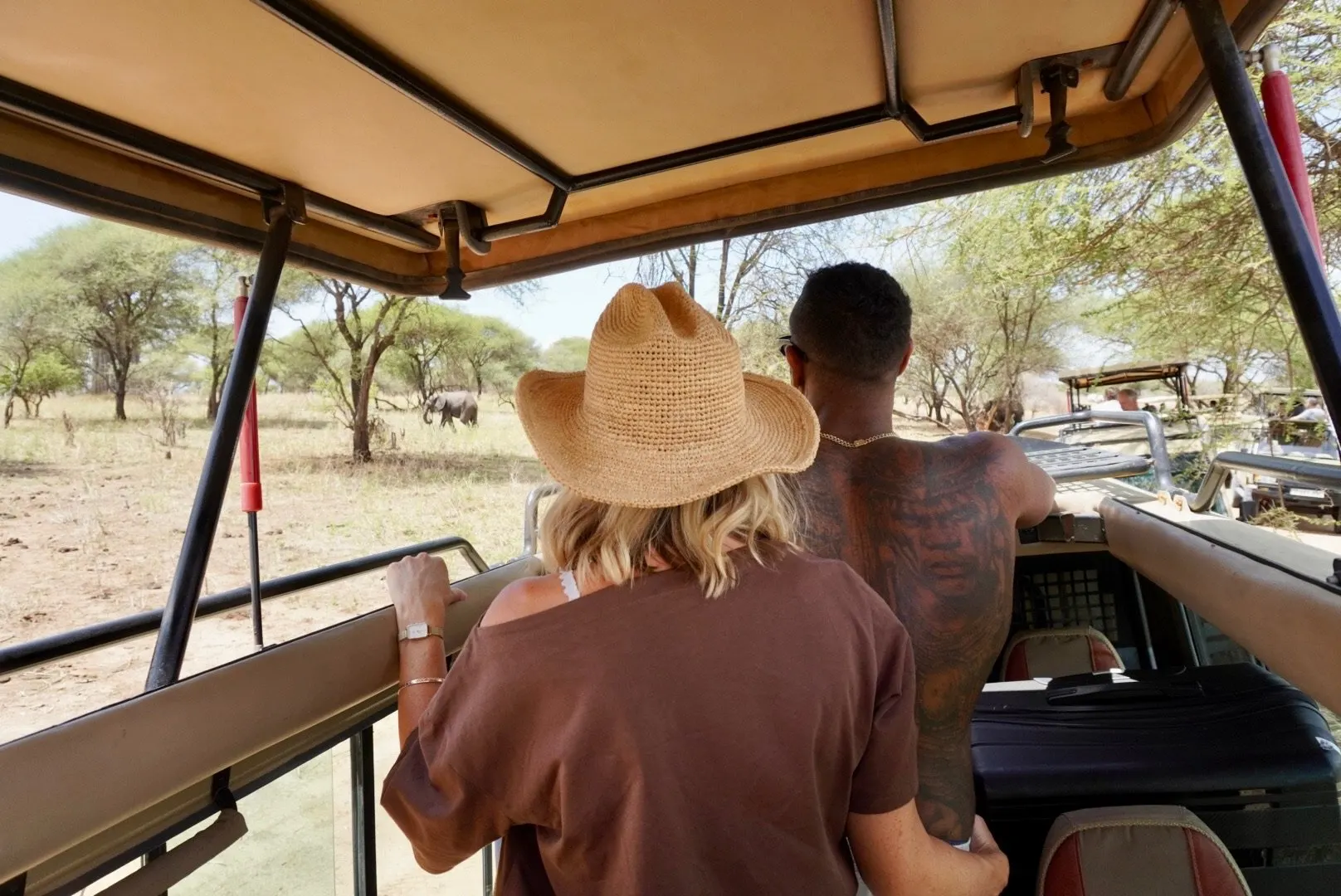
Yes, almost always, as long as the trip is paced for them. The animals do the heavy lifting. There's a reason kids who fidget through dinner will sit dead still watching a lioness with cubs. It's real, it's wild, and it's right there in front of them. The tracking, the radio chatter between guides, the search for the next sighting, all of it lands as a proper adventure.
Where families come unstuck is pacing. A four-hour game drive that's perfect for two adults will lose a seven-year-old in the first hour. The fix is simple and it's the whole reason a family trip is built differently:
- Shorter, sharper game drives. Out for the good light, back before the boredom sets in. Better one great drive than two long ones
- Downtime built in. Camps with pools, space to run around, and the middle of the day free. Kids need to be kids between drives
- A beach finish. Tacking a few nights in Zanzibar onto the end gives them sand, snorkelling and dolphins. It turns a safari into a family holiday and sends everyone home rested
- A good guide who likes kids. The right guide turns a drive into a treasure hunt, gets them spotting tracks and naming birds. This matters more than almost anything
Why a Private Vehicle Is Essential for Families
If you take one thing from this guide, make it this. For a family, a private vehicle and guide isn't a luxury upgrade, it's the thing that makes the trip work.
On a shared game drive you're stuck with strangers' schedules and strangers' patience. When your toddler needs the loo, or your eight-year-old has hit the wall and wants to go back, you can't, because four other people want to keep going. Every decision is a negotiation with people you've never met.
A private vehicle flips that. The day bends around your family. You head out when the kids are fresh, come back when they've had enough, stop for as long as the elephants hold their attention, and skip the long transfer drives when everyone's tired. The guide is yours, so the commentary is pitched at your kids rather than at a mixed group. For the money it costs to get an Australian family to Africa, the flexibility pays for itself in tantrums avoided alone.
The Best First Destinations for Families
Two regions stand out for a first family safari, for the same reasons they suit first-timers generally: reliable wildlife, short drives, well-run family camps, and malaria that's managed properly.
Tanzania's Northern Circuit
The Serengeti, the Ngorongoro Crater and Tarangire sit on one route with manageable distances between them, especially if you fly the long legs. The crater in particular is a winner with kids, a natural amphitheatre where you can see a huge amount of wildlife in a single morning without a long drive. Family-friendly lodges are well established here. Our full Tanzania guide walks through the parks.
Kenya
Kenya's Masai Mara and surrounding conservancies are the other classic family choice. Big-cat density is high, the access from Nairobi is easy, and the conservancy camps tend to be relaxed about families. Our Kenya guide covers the regions and the camps.
Add a beach finish
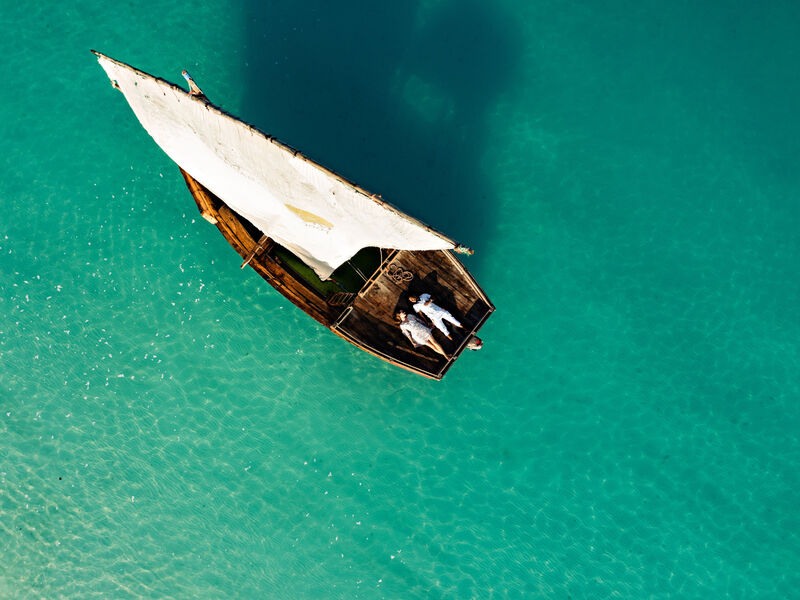
For families, we almost always recommend ending on the coast. A few nights in Zanzibar gives the kids downtime they've earned, warm shallow water, snorkelling and the chance to just play. It's the difference between coming home worn out and coming home happy.
Choosing Family-Friendly Lodges
Not every camp is built for kids, and the wrong choice makes the trip harder than it needs to be. When we put a family itinerary together, here's what we look for:
- Family rooms or interconnecting tents. So you're not splitting the kids across a camp, and the little ones aren't alone at night
- A pool. The single best piece of kit for the middle of the day. It's where the trip stops being only about animals and becomes a holiday
- Flexible meals and earlier dinners. Kids don't want a long, late dining experience after a big day. Family camps know this and flex around it
- Kids' programs. Some camps run junior ranger activities, bush walks pitched at children, tracking lessons and the like. Brilliant when you find them, and we know which camps do this well
- The right pacing built in. A camp that's relaxed about families won't blink when you skip a drive or turn up late to dinner
What a Family Safari Costs from Australia
A family safari is a serious spend, and there's no point pretending otherwise. Getting four people to Africa and into good camps adds up. The figures below are a broad orientation for a Tanzania and Zanzibar family trip, private vehicle and guide, based on a family travelling together. They're per person and don't include international flights from Australia. Children often cost a little less than adults, depending on age and the camps' child policies.
| Style | What It Looks Like | Cost Per Person (AUD) |
|---|---|---|
| Comfortable mid-range | Family-friendly tented camps and lodges, a pool, plus a beach finish in Zanzibar | $9,500 to $14,000 |
| Premium | Established family camps, superior locations, a higher-end beach property | higher again |
| Luxury | Top-tier camps with kids' programs, private guiding, a high-end villa on the coast | premium pricing |
A family of four travelling together brings the per-person cost down, because the vehicle and guide are shared across more people. Where you land depends on the kids' ages, your camps and your season, with July to September the priciest window. Speak in ranges and treat the table as a starting point, not a quote.
A note on numbers: Every family trip is custom-quoted from scratch around your dates, the kids' ages and your camp choices, so the AUD 9,500 to 14,000 band is a guide rather than a price tag. We quote in both AUD and USD and lock in rates at booking. For a fuller breakdown, see our Tanzania safari cost guide.
How We Help Families
Kingse Safaris is an Australian-owned, Tanzania-based operation. We design the trip, run the ground logistics, and our guides are our own team. For a family, that's the difference between a trip that's quietly built around your kids and one that's an adult itinerary with children bolted on.
We've sorted out which camps genuinely welcome families versus which ones tolerate them, which guides are great with kids, and how to pace a trip so the little ones never hit the wall. Tell us the kids' ages, your dates, and roughly where you'd like to land on budget. Use our cost estimator for a starting point, or get in touch and we'll build a real itinerary around your family, with actual numbers, within 24 hours.
Frequently Asked Questions
What age can kids go on safari?
Most family safaris work well from around five or six, when children can sit through a game drive and follow what they're seeing. Plenty of camps welcome younger kids and run family rooms, though some luxury camps set a minimum age of six, eight or twelve for their main game-drive vehicles. The one hard rule is gorilla and chimp trekking in Rwanda and Uganda, where the minimum age is fifteen, no exceptions.
Is a safari safe for children?
A well-run safari in Tanzania or Kenya is very safe for families. You're with an experienced guide the whole time, animals are viewed from the vehicle, and family camps are set up with kids in mind. The genuine risks are sunburn, dehydration and tummy upsets, all manageable with sensible precautions. Malaria is the one to plan for properly with your GP before you travel.
Do kids need malaria tablets and vaccinations for safari?
Most of East Africa is a malaria area, so what your children take is a question for a travel doctor or your GP. Repellent and long sleeves at dawn and dusk help too. On yellow fever, we generally tell people the vaccine is worth having, as one shot lasts a lifetime, but your doctor always has the last say. See a travel doctor or your GP early, since the right advice depends on your child's age, weight and exact itinerary.
Will my kids get bored on safari?
Rarely, if the trip is paced for them. Children love the animals, the tracking, the sense of a real adventure. The trick is shorter game drives, a private vehicle so you can come back when they've had enough, downtime at camps with pools, and a beach finish in Zanzibar so they get to just be kids. Boredom comes from over-long drives and a rigid schedule, both of which a family trip should avoid.
Where is the best place for a first family safari?
Tanzania's Northern Circuit and Kenya are the strongest first picks for families. Both have reliable wildlife, short drive times, well-run family camps and managed malaria areas. Adding a few nights on the beach in Zanzibar at the end gives the kids downtime and turns it into a proper family holiday rather than only an early-start safari.
How much does a family safari cost from Australia?
A Tanzania and Zanzibar family trip at a comfortable mid-range level is broadly AUD 9,500 to 14,000 per person, before international flights, with children often costing a little less than adults. A family of four is a serious spend, so every trip is custom-quoted around your dates, the kids' ages and your camps rather than sold at a fixed price.
What it costs
What a family safari costs, per person
Per person, twin share, for your time on the ground: private guide and 4x4, lodges, and every park fee. International flights sit on top. Where you land depends on your lodges, the season and group size.
AUD 7,000-9,000
per person
Comfortable lodges and tented camps in good locations. The essentials done properly, with a private guide and vehicle throughout.
AUD 9,000-14,000
per person
Characterful lodges and classic camps in prime locations, timed to the migration. Where most Kingse trips land.
AUD 14,000+
per person
The marquee camps, fly-in between parks, private everything. Singita, &Beyond, Four Seasons and their peers.
Get Your Real Quote
Tell us about your trip
Your dates, your group, what you want from the experience. We'll come back with real costs built around your specific trip, not a generic starting price.
Plan Your Family Safari
Tell us about your trip
The kids' ages, your dates, and roughly where you'd like to land on budget. We'll build a real itinerary paced for your family, with real costs, not a generic starting price.