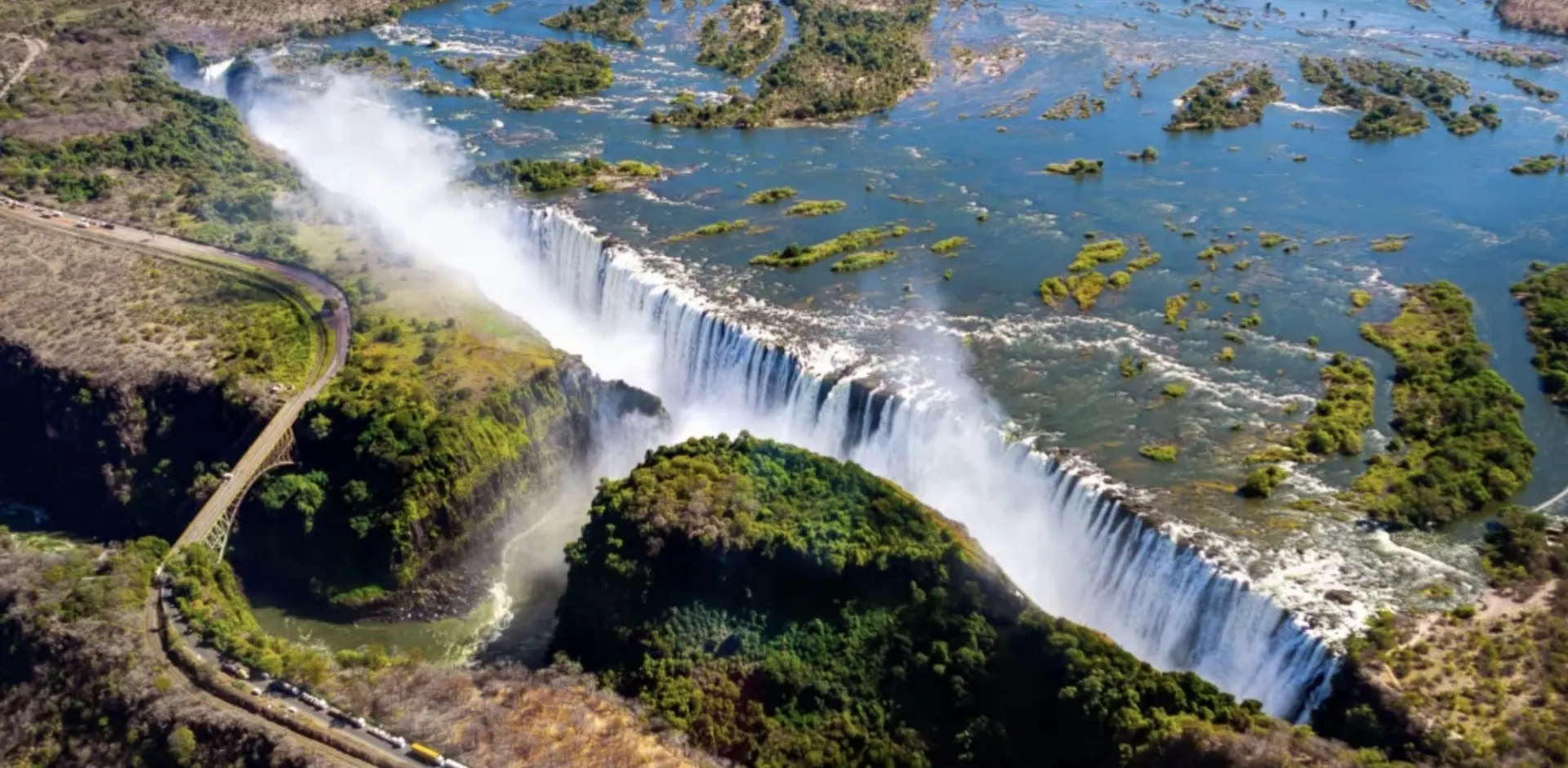
One waterfall, two countries, and a decision that trips up plenty of first-time visitors. Victoria Falls straddles the border between Zambia and Zimbabwe, and the side you stay on genuinely changes the experience: the view, the activities, the town, even how much water you'll see depending on the month. Here's the honest breakdown so you book the right side.
One Waterfall, A Shared Border
Victoria Falls, or Mosi-oa-Tunya, the smoke that thunders, sits on the Zambezi River right where Zambia meets Zimbabwe. The falls run about 1.7 kilometres wide and drop into a narrow gorge, and the international border runs down the middle of the gorge. Zimbabwe holds the longer, front-facing stretch. Zambia holds the eastern end and the closer-contact viewpoints.
The two towns that serve the falls sit on opposite banks. Victoria Falls town on the Zimbabwean side is the busier, more developed of the two, walking distance to the falls entrance and full of restaurants, markets and activity operators. Livingstone on the Zambian side is a quieter, more spread-out town about 10 kilometres from the falls, with a calmer feel and a strong cluster of riverside lodges.
The good news for anyone agonising over the choice: you can see both sides on one trip. The Victoria Falls Bridge links the two countries over the gorge, and a day visit across the border is easy. So the real question isn't which side to see, it's which side to base yourself on.
The View: Zimbabwe's Big Advantage
If the single sheet of falling water is what you've come for, Zimbabwe is the stronger base. Its national park faces most of the falls' width head-on, so you walk a series of viewpoints along the rim and take in the full panorama from across the gorge. Critically, the Zimbabwean side stays impressive all year, even in the low-water months when the Zambian end can dry up.
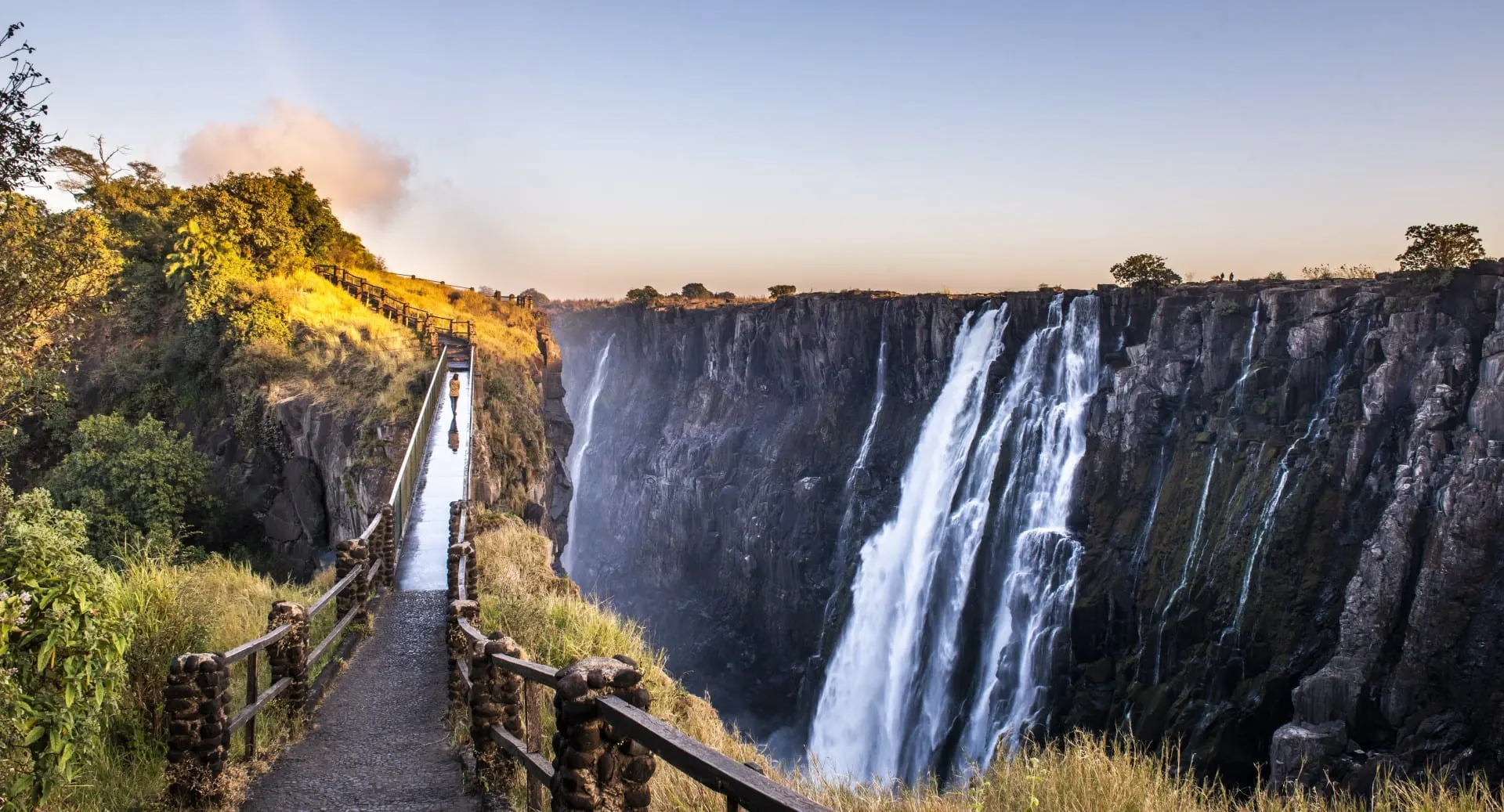
Zambia's side is about proximity rather than panorama. When the river is high, the Knife Edge Bridge walk takes you out into a wall of spray so heavy you'll be soaked through, with the gorge roaring beneath your feet. It's visceral and unforgettable. But when the water drops late in the year, the Zambian side can run nearly dry, and the famous view shrinks to a trickle while Zimbabwe still delivers.
Zimbabwe gives you the postcard, the full sheet of water all year. Zambia gets you in the spray, but only when the river is high.
The Activities: Where Each Side Shines
Both sides share most of the headline activities, but a few are tied to one country or one season.
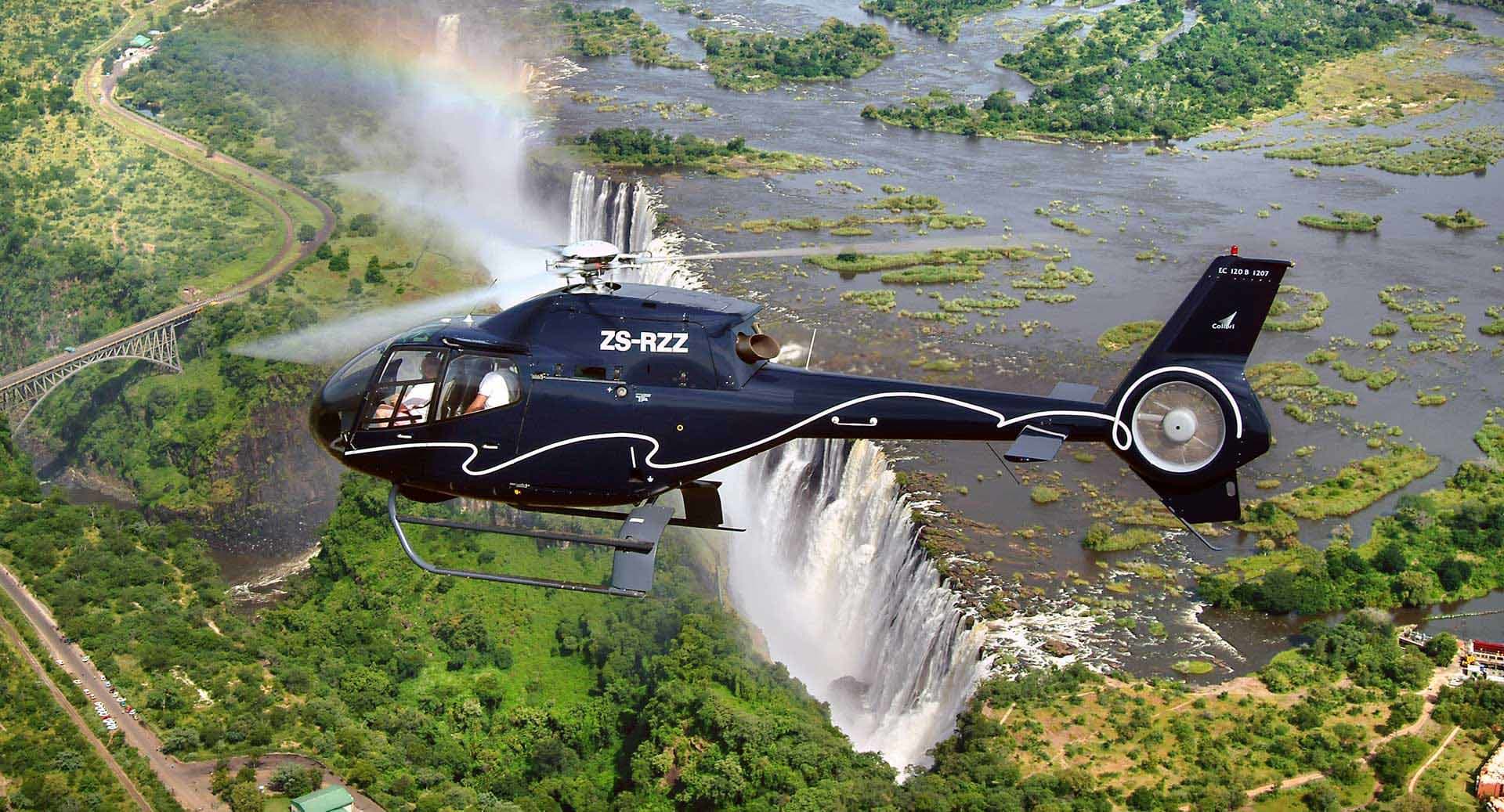
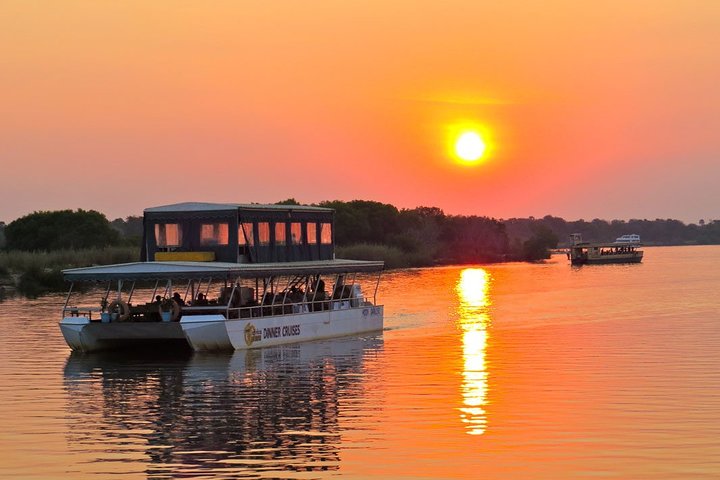
The big shared experiences are open to everyone: a sunset cruise on the Zambezi above the falls, a helicopter flight over the gorge (the famous Flight of Angels), a guided tour of the falls, and a day trip to Chobe in Botswana for the elephants and a river cruise. The Victoria Falls Bridge links the two countries over the gorge, and it's an easy walk from either side if you'd like the view down into the gorge.
Where it splits: Devil's Pool, the natural rock pool right on the lip of the falls where you can swim to the very edge, is on the Zambian side only, and it's open only in the low-water season, roughly August to December. If swimming at the edge of the world is on your list, you need Zambia and you need the right months.
Side-by-Side Comparison
| Factor | Zimbabwe side | Zambia side |
|---|---|---|
| Base town | Victoria Falls town, lively, walkable | Livingstone, quieter, more spread out |
| The view | Full panorama, faces most of the falls | Close-contact, dramatic in high water |
| Year-round views | Strong all year, even in low water | Can run nearly dry Oct-Dec |
| Walk to the falls | Short walk from town | About 10 km from Livingstone |
| Devil's Pool | Not available | Yes, low-water season Aug-Dec |
| Knife Edge spray walk | Not available | Yes, best in high water |
| Cruise, heli, Chobe day trip | All available | All available |
| Town atmosphere | Busier, more restaurants + markets | Calmer, riverside-lodge focus |
| Add-on cost (2-3N) | From AUD $1,500-$2,500 pp | From AUD $1,500-$2,500 pp |
| Pairs with | Hwange, Chobe, Botswana, Cape Town | Chobe, South Luangwa, Botswana |
Water Levels: The Month Matters More Than The Side
This is the part that catches people out. The falls are a living river, and how much water is flowing changes the experience completely. The side you pick matters less than the month you visit.
February to May, the high-water season. Just after the summer rains, the Zambezi is at full flood and the falls are at maximum power, a thunderous wall of water throwing spray hundreds of metres into the air. It's the most dramatic time to see them. The trade-off: the spray can be so heavy it obscures the view from certain angles, and Devil's Pool is closed.
June to August, the balanced window. Strong, clear views with the river still well fed, and the activity options widening as the water starts to drop. This is the safe middle ground and it lines up neatly with peak Southern African safari season, which is why it's our most-recommended window for an add-on.
September to December, the low-water season. The flow drops, the Zambian side can thin out to a trickle, but this is when Devil's Pool opens and the gorge geology is fully exposed. If activities are your priority over sheer volume, this is your window, and Zimbabwe keeps the view honest.
Cost: An Affordable, High-Impact Add-On
Victoria Falls is one of the better-value add-ons in Southern Africa, mostly because everything is concentrated in a small area, so you're not burning days or budget on transfers.
As a 2 to 3 night add-on, budget about A$400 to A$600 per person a night, roughly A$1,350 to A$1,950 for three nights, depending on the lodge. That typically covers accommodation, your falls entry and a sunset cruise on the Zambezi. Optional activities sit on top:
- Helicopter flight over the falls: priced separately
- Chobe day trip into Botswana: a popular add for the elephant herds and river cruise
- Devil's Pool (Zambia, low water only): a guided morning, priced separately
Lodge tier moves the number more than the country does. A riverside lodge with falls views costs more than a town-edge property, but both deliver the same falls.
Getting There From Australia
Victoria Falls sits deep in Southern Africa, so the routing for Australian travellers runs through Johannesburg. Qantas or South African Airways from Sydney, Melbourne or Perth to Johannesburg, then a short onward flight to either Victoria Falls Airport (VFA) on the Zimbabwean side or Livingstone (LVI) on the Zambian side. Total travel time is around 22 to 24 hours.
The neat part is that once you're in Southern Africa, the connecting flights are all short-haul. Adding the falls to a Botswana trip, a Chobe leg or a Cape Town finish adds very little extra flight cost, which is exactly why the falls work so well as part of a wider regional itinerary.
How It Fits A Safari
Victoria Falls isn't a safari in itself, it's a change of pace, and that's its strength. Two or three nights of waterfalls, river cruises and a bit of town atmosphere between game-viewing blocks gives a Southern African trip a natural rhythm.
It slots most cleanly into a Southern African circuit: the falls plus Chobe in Botswana, plus the Okavango Delta or Hwange, finishing in Cape Town. Our Botswana vs Tanzania guide walks through how the falls fit a Botswana-led trip. From a Tanzania or Kenya safari the falls are a longer add-on, but they work for travellers wanting to combine both regions in one big trip.
You can see the full picture on our Victoria Falls destination guide, including lodge options on both sides.
When Each Side Wins
Base on the Zimbabwe side if: you want the full panoramic view, you're visiting in the low-water months and want a reliable falls experience, you like a walkable town with plenty of restaurants and markets, or you're routing through Hwange or onward to Cape Town.
Base on the Zambia side if: you're visiting in low water and want to swim in Devil's Pool, you prefer a quieter riverside-lodge atmosphere over a busy town, you want the close-contact Knife Edge spray walk in high water, or you're combining with South Luangwa.
See both if: you've got the time. Stay on the Zimbabwe side for the view and the town, take a day trip across the bridge into Zambia for the closer experience. Where you're eligible, the KAZA UNIVISA covers both countries on one visa. Like any visa it's yours to arrange online before you leave home, through the official site, evisa.gov.zw.
What We'd Do If We Were Planning Your Trip
For most travellers adding the falls to a Southern African safari, we lean Zimbabwe side for the reliable panorama and the easy walk into the national park, with a day trip across to Zambia if the dates suit Devil's Pool. The exception is the traveller whose whole reason for coming is to swim at the edge of the falls, in which case it's Zambia, low-water season, no debate.
The right call comes out of a short conversation about your dates, your wider route and what you actually want from the falls, the view, the activities, or both. Use our cost estimator to ballpark an add-on in AUD, or get in touch and we'll fold the falls into the rest of your trip. You'll get a real proposal in AUD within 24 hours, not a brochure asking you to book a discovery call.
Continue Reading
Frequently Asked Questions
Which side of Victoria Falls is better, Zambia or Zimbabwe?
For the classic panoramic view, Zimbabwe wins. The Zimbabwean side faces most of the falls' 1.7 kilometre width, so you see the full sheet of water from across the gorge, and it's viewable all year, even in low-water months. The Zambian side gets you closer and more dramatic when the river is high, with the heart-stopping Knife Edge Bridge walk through the spray, but it can run nearly dry from October to December. If you can only stay one night, Zimbabwe gives you the more reliable view.
How many nights do you need at Victoria Falls?
Two to three nights is the sweet spot as a safari add-on. One night lets you see the falls and have one sundowner cruise, but it's rushed. Two nights covers the falls, a sunset cruise on the Zambezi and one activity such as a helicopter flight. Three nights gives you breathing room for a day trip into Chobe in Botswana, a guided tour of the falls, or simply a slower pace after a busy safari.
How much does Victoria Falls cost to add to a safari?
As a 2 to 3 night add-on, budget about A$400 to A$600 per person a night, roughly A$1,350 to A$1,950 for three nights, depending on the lodge, which covers accommodation, falls entry and a sunset cruise. Optional activities such as a helicopter flight over the falls or a Chobe day trip are priced separately, on top. It's one of the better-value add-ons in Southern Africa because the activities are concentrated in a small area.
Can you see Victoria Falls from both sides in one trip?
Yes, easily. The two sides are linked by the Victoria Falls Bridge over the Zambezi gorge, and a day visit across the border is straightforward, you can even walk across. Many travellers stay on the Zimbabwe side for the panoramic view and the lively town, then take a day trip into Zambia for the closer, spray-soaked Knife Edge experience. Where you're eligible, the KAZA UNIVISA covers both countries. Like any visa it's yours to arrange online before you leave home, through the official site, evisa.gov.zw.
When is the best time to visit Victoria Falls?
It depends what you want. For peak water volume and the famous wall of spray, visit February to May, just after the rains, when the Zambezi is at full flood. For Devil's Pool on the Zambian side and a fully exposed gorge, visit August to December when water levels drop and the rock pools open up. For the best balance of strong views plus clear activity options, June to August is the safe middle ground.
Does Victoria Falls pair well with a safari?
It pairs brilliantly. Victoria Falls sits at the heart of Southern Africa's safari cluster, so it slots naturally into a Botswana, Chobe or Hwange trip, and connects easily onward to Cape Town. It's a natural change of pace, a couple of nights of waterfall, river cruises and a town atmosphere between game-viewing blocks. From a Tanzania or Kenya safari it's a longer add-on, but it works for travellers wanting to combine both regions.
Is Victoria Falls safe for tourists?
Yes. Both Victoria Falls town in Zimbabwe and Livingstone in Zambia are well-established tourism centres with good infrastructure, and they're among the most visited spots in Southern Africa. As anywhere, use normal travel sense in town after dark and around markets. Cruises, helicopter flights and the other activities are run by local operators, and the Australian Government's current advice for Zambia and Zimbabwe is at smartraveller.gov.au, which is worth checking before you travel.