Water Safari
Okavango Delta
A UNESCO-listed inland water system the size of Wales that floods every winter, an island-and-channel world explored by mokoro, boat and fly-camp.

Okavango Delta · Chobe · Kalahari · Makgadikgadi
Africa's largest delta · 130,000 elephants · Low-volume, high-yield tourism
Botswana built its safari industry around a quiet bet: lower volumes, higher rates, more conservation funding. The result is the most rewarding wildlife-per-vehicle ratio in Southern Africa, and a country where you can sit at a sunset waterhole for an hour and not see another car. The Okavango Delta is the headline, a UNESCO-listed inland water system the size of Wales that floods every winter and creates an island-and-channel ecosystem unlike anywhere on the continent.
In the north, Chobe National Park holds the largest elephant population on earth, around 130,000 animals concentrated along a single river. The Kalahari and Makgadikgadi salt pans deliver the opposite extreme, vast, ancient lakebeds where meerkats stand sentry and the night sky is unbroken. Together, they make Botswana the most diverse single-country safari in Southern Africa.
On the ground we work with two trusted partners. African Elegance, a family-run team out of Windhoek running their own fleet of safari-prepared 4x4s, handle the Okavango, the Kalahari and the self-drive and cross-border routes across Southern Africa. For the Chobe riverfront and the hop across to Victoria Falls we work with Denovan at African Bushwalker Tours, who has run his family business in the region for over a decade. Between them, the Delta and the falls are covered by people who live and breathe this corner of Africa.
Botswana is the safari for travellers who want the wild without the crowd, and who don't mind paying a fair price for that quiet.
Botswana, Region by Region
Scroll through Botswana, from the water-world of the Okavango Delta up to Chobe's elephant herds and out to the Kalahari salt pans.
Map tiles: Esri, National Geographic. Locations are indicative.
A UNESCO-listed inland water system the size of Wales that floods every winter, an island-and-channel world explored by mokoro, boat and fly-camp.
The largest elephant population on earth, around 130,000 animals concentrated along a single river in the north of the country.
Vast, ancient salt lakebeds where meerkats stand sentry and the night sky is unbroken, the opposite extreme to the delta's water.
Featured Region
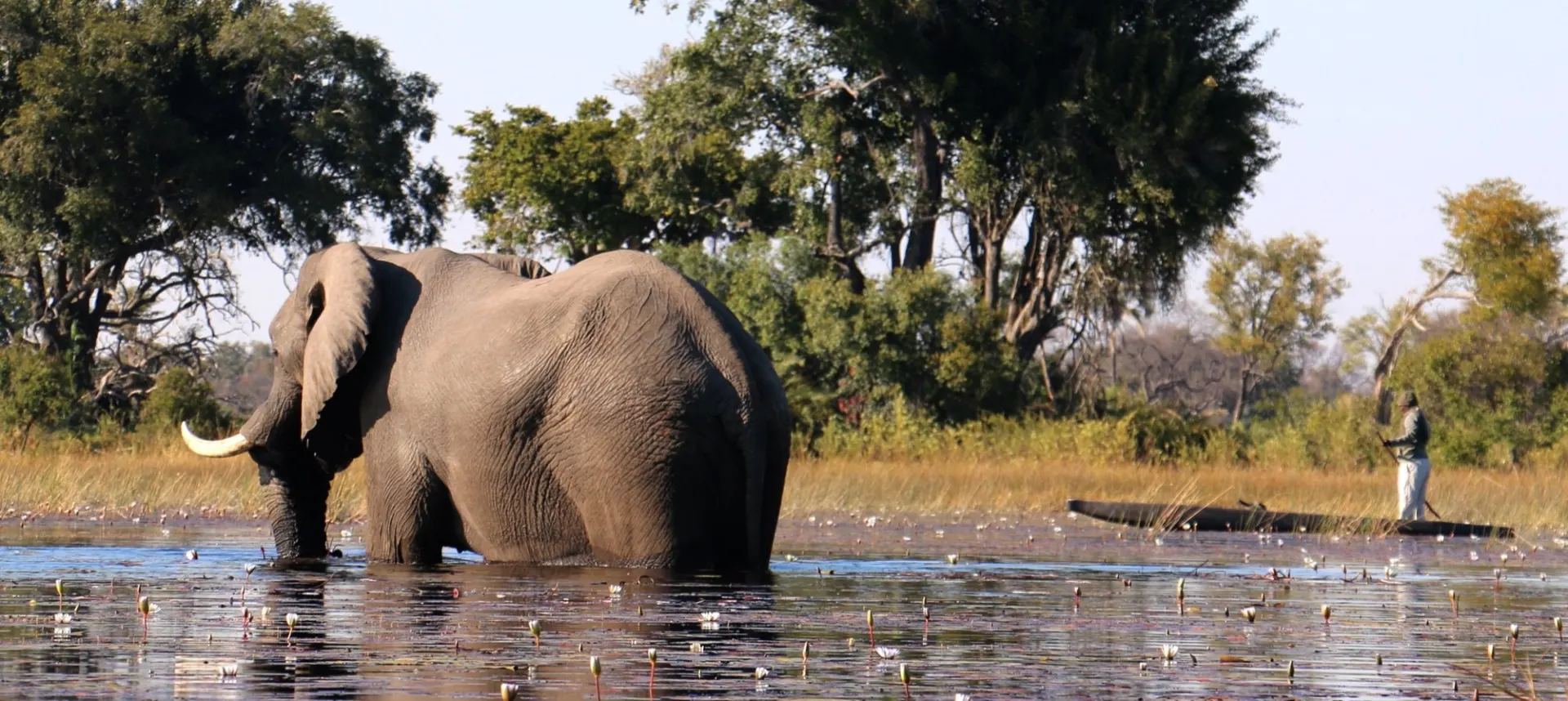
The Okavango is the only major inland river system in the world that ends in a desert. Each year the rains in the Angolan highlands push water 1,200 kilometres south to land on the edge of the Kalahari, where the river fans out into a network of channels, lagoons, papyrus reedbeds and palm-tree islands the size of a small country. By the time the flood reaches the lower delta in July, the landscape is more water than land. Wildlife concentrates here in numbers that defy belief.
The classic delta experience is the mokoro, a traditional dugout canoe poled silently through the reeds by a local poler who has grown up reading the water. You drift past hippo pods, lechwe leaping across the floodplains, and elephants wading chest-deep on their way to the next island. Game drives in 4x4 vehicles on the larger islands deliver lion, leopard, painted dog (Botswana is the world stronghold for African wild dog), and the full cast of the Kalahari ecosystem.
Helicopter and light-aircraft flights between the camps are part of the experience, the delta is best understood from above, where the patterns of water and land make sense. The Moremi Game Reserve in the central delta and the private concessions around it (Khwai, Vumbura, Mombo, Duba) deliver the elite tier of delta wildlife.
Featured Park
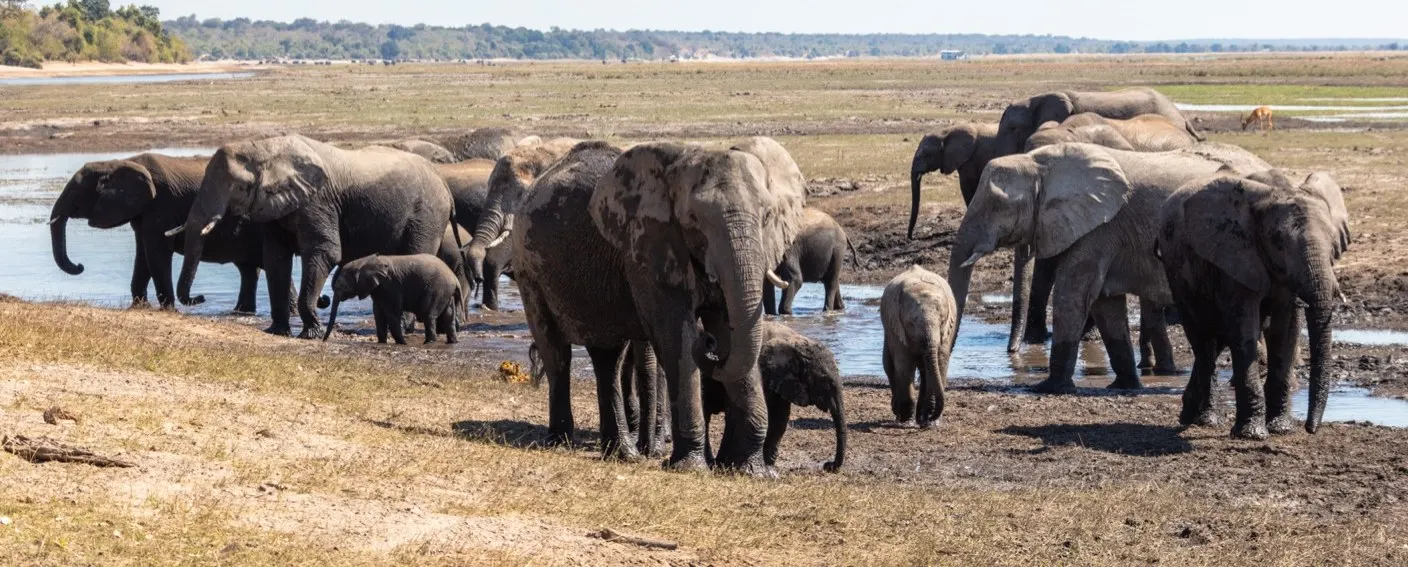
Chobe holds the largest elephant population on earth. Estimates run around 130,000 animals across the wider Chobe-Linyanti ecosystem, and during the dry season they gather along the Chobe River in herds that can hit several hundred at a time. The riverfront game drives and boat safaris run side by side, you can be 30 metres from a herd of fifty elephants drinking, with hippo, croc, buffalo and a dozen species of waterbird in the same frame.
The park has three distinct sectors. The Serondela riverfront is the busiest, the elephant capital, and the easy entry point from Kasane or Victoria Falls. Savuti, two hours south, is the predator sector, big lion prides, ancient marsh, the Savuti Channel that floods and dries on its own decade-long rhythm. Linyanti up north sits on the Linyanti Swamps and delivers wild-dog tracking, walking safaris and night drives in private concessions.
Many travellers reach Chobe on a day trip from Victoria Falls (90 minutes by road), and that's a legitimate short option. The longer answer is two or three nights inside the park to see the dawn light on the river, an afternoon boat cruise, and a Savuti or Linyanti add-on. See our dedicated Chobe page for the deeper detail.
Featured Region
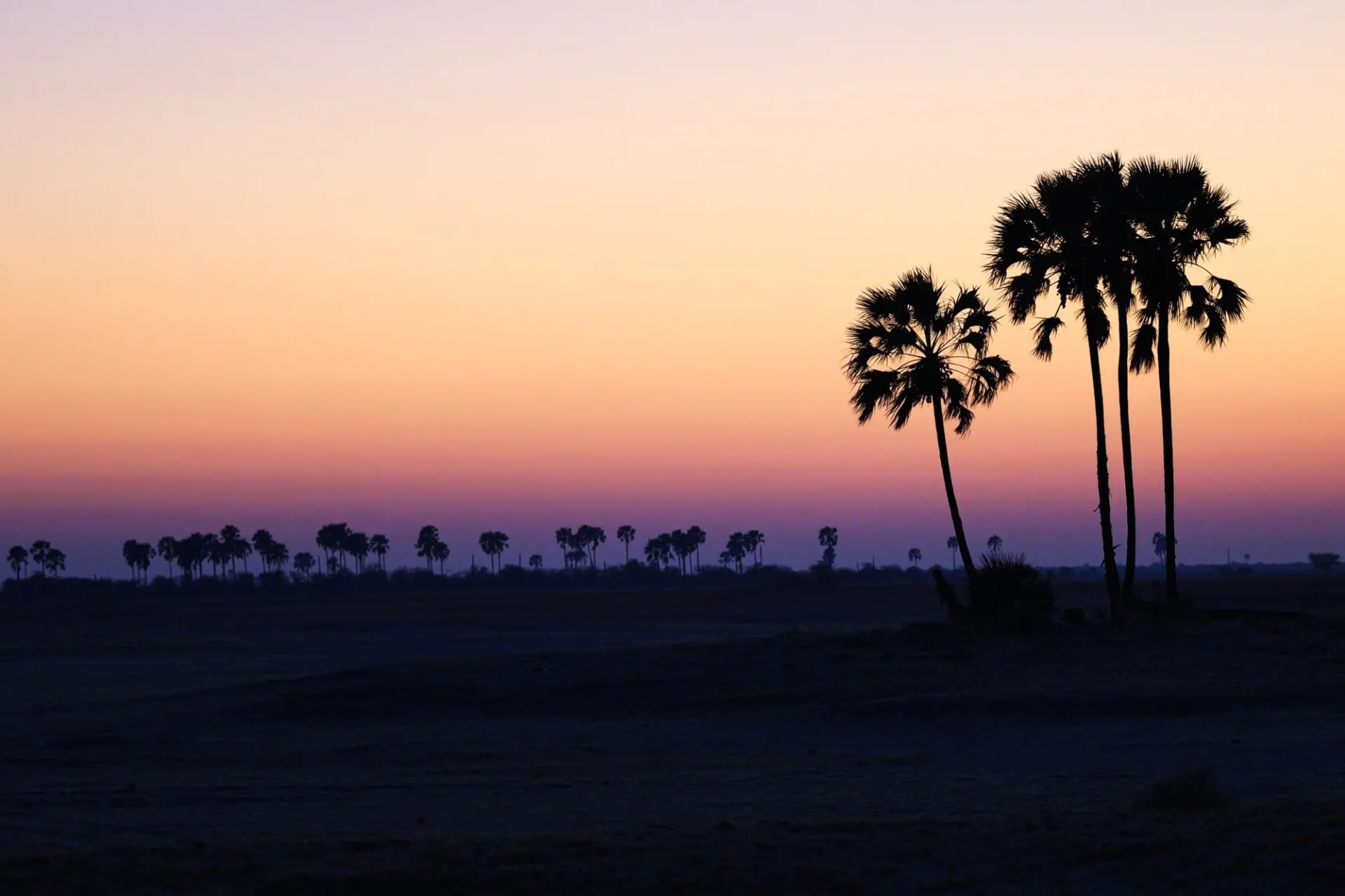
The Kalahari covers most of Botswana, a semi-arid savannah that turns lush green after summer rains and bleached gold for the rest of the year. At its eastern edge sits Makgadikgadi, the largest network of salt pans on earth, the ghost of an inland lake that dried out 10,000 years ago. The horizon here is a perfect flat line in every direction. In dry season the pans support nothing visibly alive, in green season they fill briefly with rainwater and become a flamingo and zebra migration corridor.
The Central Kalahari Game Reserve in the south delivers black-maned Kalahari lions, cheetah, brown hyena and oryx in landscapes that feel post-apocalyptic. Habituated meerkat colonies, where the animals will climb on guests as a vantage point, are a Makgadikgadi signature. Quad biking across the pan to a star-bed sleep-out at Jack's Camp or San Camp is the experience the brochures sell, and for good reason.
The Kalahari is the contrast trip. Add it to a Delta-and-Chobe loop and the country opens out into something genuinely strange. Two nights is the minimum to make the journey worth it.
How a Botswana Trip Comes Together
Four shapes that cover most travellers. Botswana works as a stand-alone trip or as the wild-bush layer in a Southern Africa loop.
Vic Falls + Chobe
Two nights at Victoria Falls, three at Chobe riverfront. The compressed Southern Africa intro, designed to bolt on to a Cape Town or Tanzania trip.
From
AUD 6,500 pp
Okavango + Chobe
Three nights deep in the Okavango (mokoro, game drives, helicopter), three at Chobe, one Maun arrival buffer. The Botswana-only essential.
From
AUD 12,500 pp
Delta + Chobe + Vic Falls
The Kingse default. Four delta nights, three Chobe, three Vic Falls finish absorbed into the international ticket via Johannesburg. Wildlife, water, the falls.
AUD 16,000 pp
+ Cape Town · Kruger
A tested loop: Cape Town, Kruger, then north into Chobe and across to Victoria Falls. Three nights each, the full Southern Africa story.
From
AUD 9,000 pp
From-pricing is a starting anchor on a two-person sharing basis, excluding international flights. Premium delta camps (Mombo, Duba, Vumbura, Jao) run substantially higher. Every Kingse quote is built live against the day's lodge, park and flight rates.
Where You Sleep
A small slice of the camps Kingse books in Botswana. Final lodge selection always flexes around your dates, group size and the season.
Plan Your Visit
The big shift here is the annual flood. Dry season (May to October) brings the water and the wildlife together. Green season is rains, calving, and the lowest prices of the year.
Flood arrives · Wildlife concentrated · Cool, dry days
The Angolan rains reach the Okavango from May, peaking the delta water levels in July and August. As the surrounding bush dries out, wildlife converges on the permanent water, this is when Chobe's elephant herds peak, the delta's mokoro channels reach their fullest, and predators stack up around the few water sources in Moremi.
Rains build · Calving · Birding · Lowest rates
Rains begin late November, peaking January and February. The bush transforms, lush, dramatic skies, migratory birds. Game viewing is harder because animals disperse, but predator action peaks during impala lambing (mid-November) and zebra calving across the Kalahari and Makgadikgadi. Many delta camps run shoulder pricing November and April.
The Practical Questions
Go Deeper
Long-form guides that help you decide before you commit. Real numbers, real photos, no fluff.
Trip Planning Guide
Okavango flood timing, dry-season game, and green-season birding.
Read the guide →Trip Planning Guide
What to actually bring (and what to leave at home).
Read the guide →Trip Planning Guide
How the two compare on price, wildlife, and safari style.
Read the guide →From a Chobe river cruise to a week deep in the Delta. Tell us your dates and what you'd like to see, we design the rest.
Get in Touch